Creating a workplace that works for neurodivergent employees starts with recognising that experiences can vary widely from person to person, and gender can play a significant role in shaping those differences. From how people are supported to how comfortable they feel being open about their needs, the day-to-day reality of work can vary widely.
To support our guide, ‘Work that works for everyone: your guide to building a neuroinclusive workplace’, we commissioned a OnePoll survey in March 2026 with 1,000 neurodivergent employees, to better understand people’s lived experiences at work. And the data clearly shows that men and women aren’t experiencing the workplace in the same way.
For employers, these insights can make the difference between well-intentioned neurodiversity policies and genuinely inclusive workplaces.
The disclosure gap and fear of stigma
Creating an environment where employees feel safe to disclose their neurodivergence is the first step toward a supportive workplace. However, the data reveals a notable difference in how comfortable men and women feel about sharing this information.
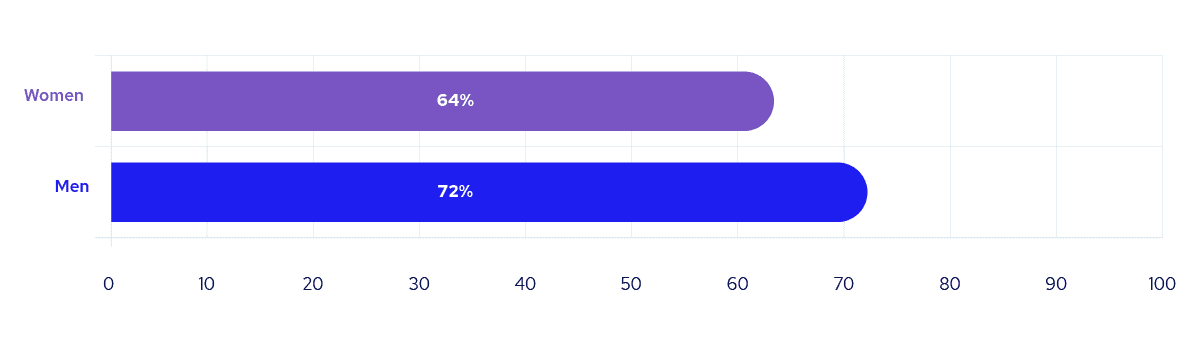
Seventy-two per cent of men have already shared their neurological condition with their employer, whereas only 64% of women have done the same.
When we look at the reasons behind this hesitation, the divide becomes even clearer. A significant 58% of women cite a fear of stigma or judgement as a reason for keeping their neurodivergence private, compared to just 42% of men.
The significant difference in disclosure rates, driven by a greater fear of stigma among women, points to a workplace culture where women feel more vulnerable to negative judgement. This apprehension isn't unfounded, it reflects a perceived risk that revealing a neurodivergent condition could lead to being misunderstood, overlooked for opportunities, or treated differently by colleagues and managers.
Daily challenges, burnout, and masking
The day-to-day challenges faced by neurodivergent professionals also reveal a gender divide.
Our survey shows that 37% of women cite burnout as one of their biggest workplace challenges, compared to 27% of men. Similarly, 36% of women report struggling with energy levels due to masking or fatigue, versus 25% of men.
For many women, this reflects the ongoing pressure to adapt or ‘mask’ in order to meet workplace expectations. Over time, this can take a significant toll on wellbeing and performance.
However, this doesn’t mean men are unaffected, it suggests their challenges may be less about internal strain and more about how they are understood externally. Where women may be absorbing the impact through masking and fatigue, men may be more likely to encounter gaps in understanding or consistency in support.
Simple adjustments such as flexible working, quiet zones or clearer communication around expectations and processes often cost very little but can dramatically improve the day-to-day experience for both groups.
Different barriers to success
Fifty-three per cent of neurodivergent employees we surveyed said they have felt they have been disadvantaged or held back at work due to their neurodivergence. When asked how they felt disadvantaged, men and women point to very different barriers. For men, the primary concern is often visible career advancement. The data shows that 40% of men feel they have missed out on progression or promotion opportunities due to their neurodivergence, compared to 29% of women. This suggests that even though men are more likely to disclose, it doesn’t always translate into equal opportunity.
Conversely, women are more likely to highlight immediate environmental and interpersonal hurdles. Nearly half of the women surveyed (49%) report communication challenges, such as unclear instructions or sudden changes, compared to 39% of men. Additionally, 46% of women struggle with environmental factors like noise and sensory load, while only 36% of men flag this as a major issue.
What employees want to change
When it comes to the changes employees want to see, priorities differ across genders, and that difference is telling. Men are most likely to call for greater awareness and education around neurodiversity within their organisation (42%), compared to 37% of women. This points to a cultural gap: while support may exist in some areas, many men still feel there’s a lack of shared understanding among colleagues and leaders about what neurodiversity means in practice.
For some, this can translate into being misunderstood, stereotyped, or having their needs inconsistently recognised, particularly in environments where knowledge varies widely from team to team. In this context, improving awareness is foundational to being able to work effectively and be understood.
Women, by contrast, are more likely to prioritise practical, day-to-day adjustments. Nearly half (48%) say flexible working is the most important improvement, compared to 39% of men - highlighting a stronger focus on managing workload, energy and competing demands in real time.
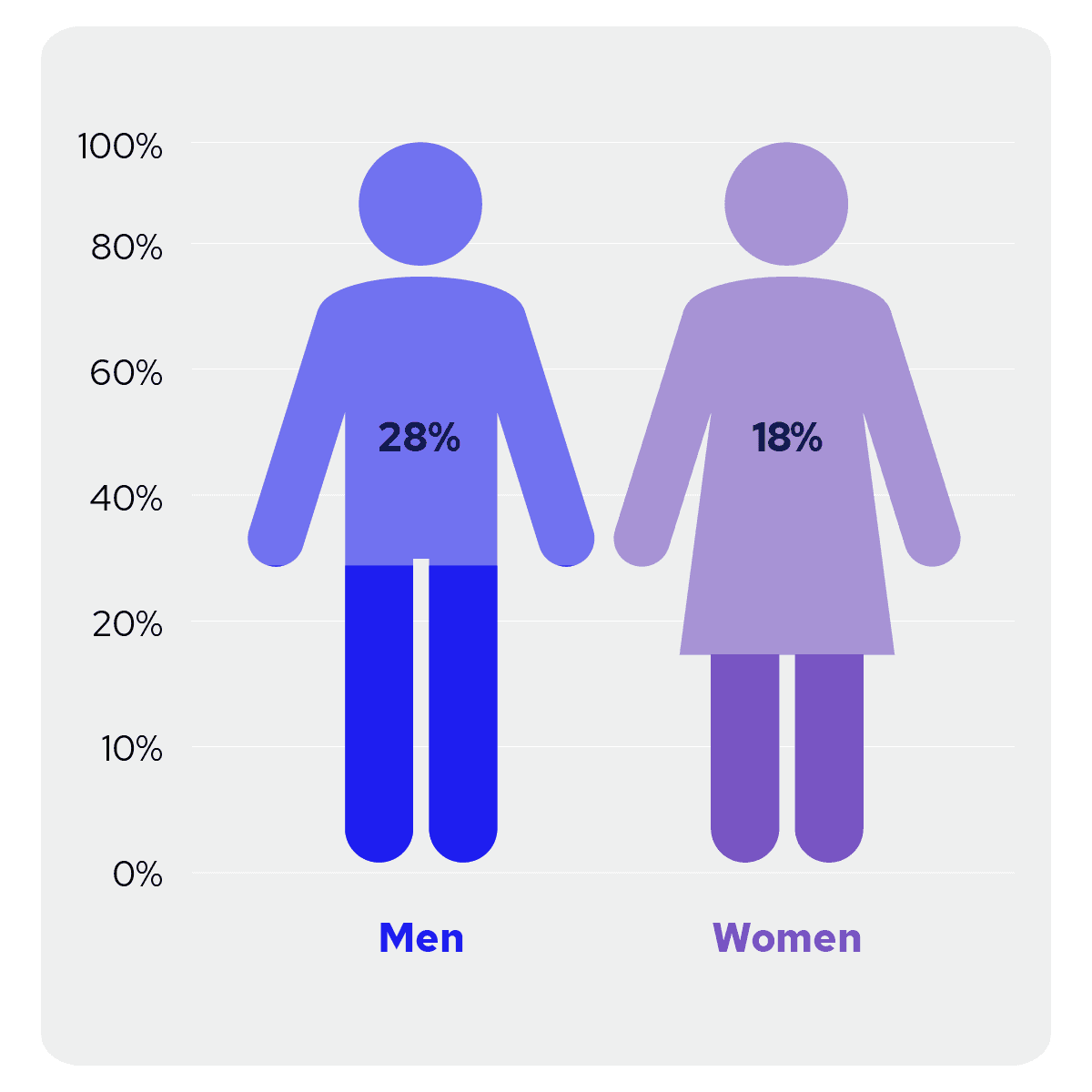
Confidence in management also reveals a divide. Only 18% of women feel ‘very confident’ that their manager understands their needs, compared to 28% of men.
Looking ahead
What these findings show is that neuroinclusion isn’t just about whether support exists, it’s about how that support is experienced. And those experiences aren’t uniform.
For some employees, the challenge is navigating day-to-day environments that don’t quite work for them. For others, it’s feeling misunderstood at a broader cultural level, or held back in longer-term progression.
Inclusion efforts need to account for different experiences, not assume a single one. Focusing only on one set of challenges risks missing others that are just as impactful.
By listening closely, building flexibility into everyday practices, and ensuring that awareness and understanding are consistent across the organisation, employers can take big strides in closing the gaps.
Looking to improve neuroinclusion in your workplace?
Download our eBook 'Work that works for everyone: your guide to creating a neuroinclusive workplace' to discover practical strategies for your business.