Organisations do not become more innovative, more creative, or more resilient by hiring people who all think, process, and communicate in the same way. They improve when different kinds of minds can do their best work without having to spend energy masking, navigating unclear norms, or working around systems that were never designed with them in mind.
While many organisations consider themselves inclusive because they are well-intentioned, good intentions alone aren’t enough. They may have a diversity statement, an employee resource group, or a mental health initiative - and those efforts can help. But true neuroinclusion goes further. It asks a more practical question: can neurodivergent people genuinely thrive here?
That includes people with ADHD, autism, dyslexia, dyspraxia, Tourette’s, and other cognitive differences, whether diagnosed or undisclosed. It also includes people whose strengths and needs vary across time, role, and context.
The challenge for employers is that exclusion is not always obvious. It is often built into everyday habits: how interviews are run, how meetings are led, what ‘professionalism’ looks like, who gets labelled as high potential, and whose needs are treated as reasonable.
If you want to test whether your organisation is truly neuroinclusive, start by checking for these nine red flags.
1. Your culture rewards conformity more than contribution
In some organisations, success depends as much on fitting an unwritten mould as on doing the job well. Employees are expected to communicate in a certain way, socialise in a certain way, and present themselves with a narrow version of confidence and polish.
That can disadvantage neurodivergent people quickly. Someone may be highly capable, commercially sharp, and deeply creative, but still be judged for being too direct, too quiet, too detailed, too literal, or not ‘visible’ in the expected way.
The implication is significant. When culture prizes sameness, talent gets filtered through style rather than substance. People learn to mask in order to belong, and that comes at a cost to wellbeing, performance, and retention. It also weakens the organisation’s ability to benefit from different ways of thinking.
2. Your hiring process assesses interview performance more than job capability
Many hiring processes still rely on speed, improvisation, eye contact, and polished verbal answers under pressure. Those conditions may favour certain people, but they do not always predict who will perform best in a role.
This is one of the clearest signs of poor neuroinclusion because it affects the talent pipeline from the outset. Leaders may say they value diverse thinkers, then use recruitment methods that reward only one style of thinking and self-presentation.
More inclusive hiring does not mean making the process easier for neurodivergent applicants. It means making it fairer and more accessible. That could include sharing questions in advance, offering alternatives to panel interviews, clarifying what will be assessed, or using work-based tasks that reflect the actual job you are hiring for.
3. Your communication norms rely on ambiguity and unwritten rules
Every workplace has norms. The problem comes when those norms are vague, inconsistent, or only visible to people who already know how to decode them.
Phrases such as “use your judgement”, “take initiative”, or “be a team player” may seem harmless, but they can hide a great deal of ambiguity. What exactly is expected? What does good communication look like? When is a response urgent, and when is it not? Is direct feedback welcome or frowned upon?
For neurodivergent employees, unclear norms can create unnecessary friction. People may spend valuable time trying to interpret tone, hierarchy, hidden expectations, or mixed messages instead of focusing on the work itself.
And ambiguity leads to errors, delays, stress, and inconsistent performance management. It can also create a workplace where those who understand the informal rules progress faster than those who do the work just as well.
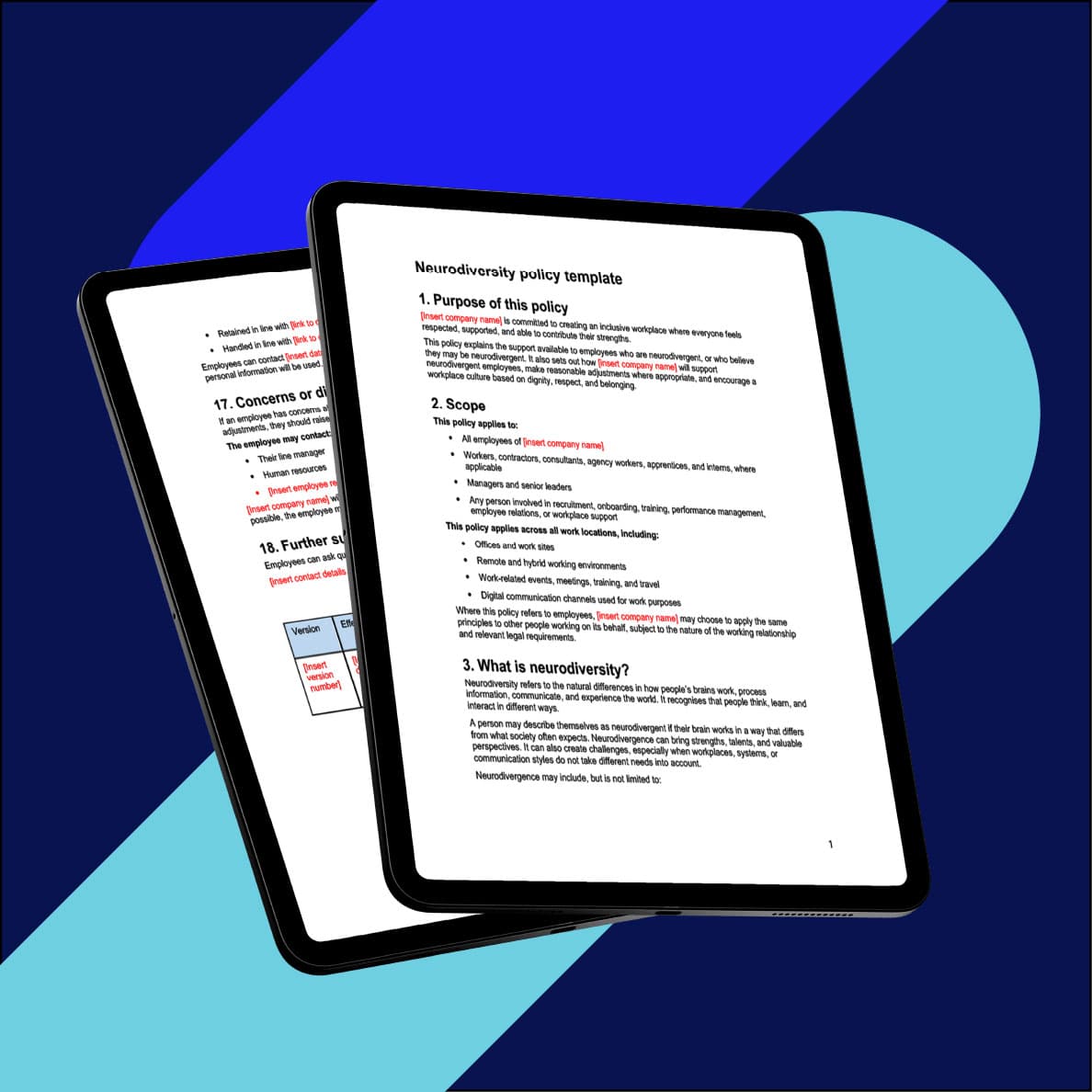
Neuroinclusive organisations communicate with more clarity by default. They make expectations explicit, reduce guesswork, and treat clear communication as a leadership discipline rather than a personal preference - embedding this approach within a formal neurodiversity policy that sets a consistent standard across the organisation.
4. Managers equate professionalism with one communication style
A common barrier to neuroinclusion is the belief that there is one correct way to behave at work. In practice, this often means valuing employees who are verbally fluent on the spot, socially smooth, comfortable with small talk, and able to present ideas in a particular manner.
Managers may not realise they are doing this. They may describe someone as “not quite client facing”, “too blunt”, or “lacking confidence”, when what they are really reacting to is difference rather than deficiency.
Take a high-performing employee who prefers concise emails, avoids office chatter, and challenges ideas directly in meetings. In the wrong environment, that person may be seen as difficult. In the right one, they may be recognised as focused, honest, and strategically valuable.
If professionalism is defined too narrowly, performance reviews, promotion decisions, and development opportunities become skewed.
5. Your workplace systems assume everyone can work in the same way
Many organisations still build work around a standard model: open-plan environments, constant digital communication, frequent context-switching, vague deadlines, and a heavy reliance on self-management without clear structure.
For some employees, that is manageable. For others, it is a daily drain.
Neurodivergent staff may need clearer task prioritisation, fewer unnecessary interruptions, more predictable workflows, written follow-up after discussions, or flexibility in how work is organised. Without that support, people can appear inconsistent when the real problem is a system that creates avoidable barriers.
This matters because organisations can sometimes misread strain as a lack of capability. If an employee is struggling to keep pace in a chaotic system, the solution is not always more resilience training or tighter supervision - it may be better work design.
6. Your meeting culture favours the loudest voices
Meetings reveal a great deal about inclusion. Who gets heard? Who gets interrupted?
In some organisations, meetings reward confidence, speed, and verbal dominance. Agendas can be unclear, decisions are made on the fly, and important points go to those most comfortable speaking first rather than those with the strongest thinking.
That can sideline neurodivergent employees, particularly those who prefer time to process information, who communicate better in writing, or who find noisy and fast-paced discussions harder to navigate.
Ultimately, poor meeting culture leads to weaker decisions because it narrows contribution, creates avoidable anxiety, and privileges performance over insight.
7. Your performance expectations reward ‘always on’ over sustainable effectiveness
Some organisations still treat high performance as constant availability, rapid responses, social visibility, and the ability to cope with noise, change, and pressure without visible strain.
That model can exclude neurodivergent employees even when they are delivering excellent work. Someone may produce exceptional analysis, creative thinking, or problem-solving, but be judged harshly because they do not thrive in last-minute chaos, back-to-back calls, or an always-on culture.
This becomes especially problematic when employees are praised for pushing through unsustainable conditions rather than supported to work in ways that allow them to perform consistently.
8. Your sensory environment is treated as a minor issue
Sensory factors are often overlooked in workplace design because they seem subjective or secondary. Bright lighting, constant noise, visual clutter, strong smells, hot-desking, and crowded spaces may be accepted as normal office life. But for some neurodivergent employees, they are not minor inconveniences. They are serious barriers to concentration, regulation, and wellbeing.
A person who seems disengaged in a busy office may be managing sensory overload. Someone who avoids communal spaces may not be antisocial; they may simply be trying to protect their focus. If leaders dismiss these needs as ‘preferences’, they risk excluding people from the environment where visibility and opportunity often happen.
This has become more important, not less, as organisations encourage office attendance. Return-to-office strategies that ignore sensory experience can inadvertently create new barriers while claiming to rebuild culture.
9. Employee support depends on disclosure and self-advocacy
One of the clearest signs an organisation is not neuroinclusive is when support is only available to people who are willing, able, and confident enough to ask for it.
In reality, many neurodivergent employees do not disclose. Some may not have a formal diagnosis. Others may fear stigma, career impact, or being misunderstood. Some simply do not want to explain themselves repeatedly in order to get basic adjustments.
If support relies on self-advocacy alone, the people most likely to access it may be those already most comfortable navigating the system. That leaves many others unsupported and unseen.
A stronger model is to normalise flexibility, make support visible, train managers properly, and create simple routes to adjustment without excessive bureaucracy. The goal is not to force disclosure. It is to reduce the need for it as the only path to being well supported.
None of these signs, on their own, mean an organisation is failing. But taken together, they highlight a pattern - one where systems favour a narrow way of working, and where difference is ‘managed’ rather than genuinely supported.
Becoming more neuroinclusive isn’t about overhauling everything overnight. It’s about noticing where friction exists, questioning long-held assumptions, and making targeted changes that allow more people to work effectively.
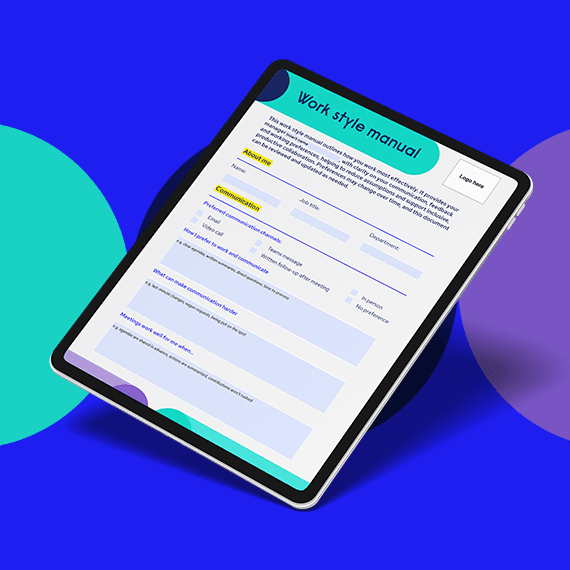
To find out how to become a more neuroinclusive employer, download our free guide, ‘Work that works for everyone: your guide to building a neuroinclusive workplace’, today.
It includes data from our national survey of 1,000 neurodivergent employees and 500 employers, as well as insights from leading voices in the field of neurodiversity.