Free job description generator for smarter recruiting
Create a job description in minutes – AI-driven, backed by recruiter knowledge to ensure high-quality results.
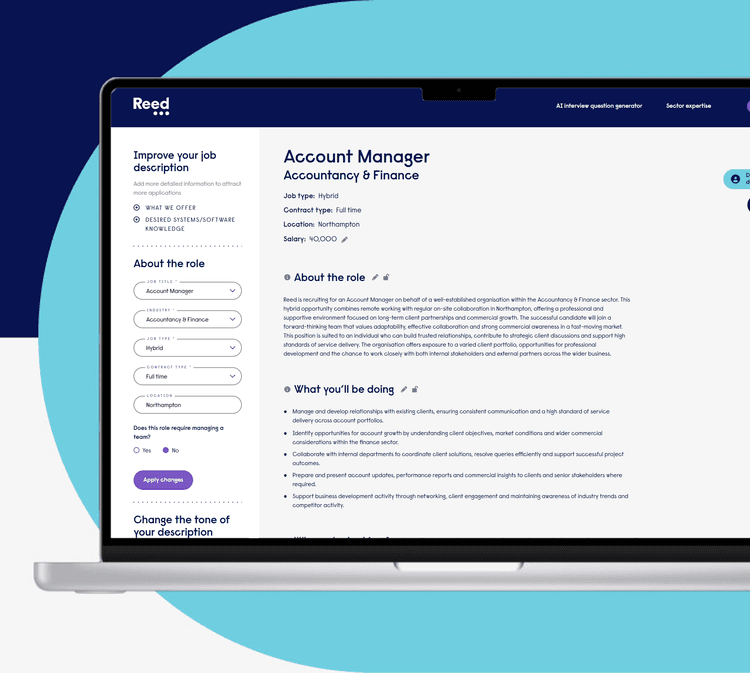

How does Reed’s job description generator work?
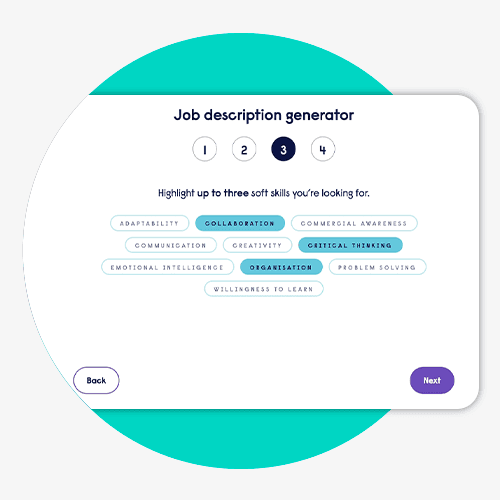
Step 1
Provide details of the job
Start by entering the essential information about the role you want to hire for. This includes the job title, salary, working hours, sector, and the key skills and attributes you’re looking for in a candidate. By supplying these core details, you give the AI a clear framework to build a relevant and tailored job description that reflects both the role and your organisation’s needs.
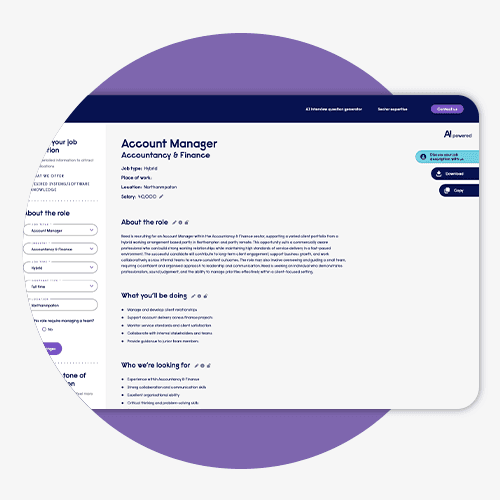
Step 2
Generate and refine
Within minutes, the tool produces a professional first draft that you can easily refine. You can add further detail such as benefits packages, required software or technical knowledge, and the level of experience needed. You also have full flexibility to adjust the tone, edit the content manually, or let the AI rewrite and improve sections for you - ensuring the final description aligns perfectly with your brand and hiring goals.
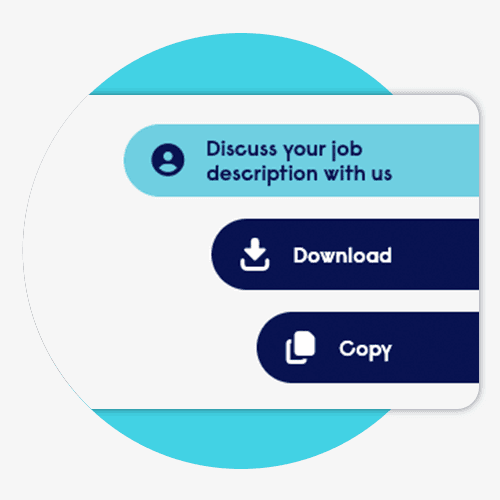
Step 3
Start hiring
Once your job description is ready, download it and begin hiring straight away. If you’d prefer extra support, our specialist recruiters can take the lead - leveraging their deep sector expertise and access to extensive talent pools to identify and engage the right people. With a combination of market insight and advanced recruitment tools, they’ll help you move from brief to successful hire quickly, efficiently, and with minimal demand on your time.
Frequently asked questions
Writing a strong job description shouldn't eat into your week, and with Reed's AI job description generator it won't. In just minutes, you can turn a few key details into a polished, professional draft, powered by AI yet grounded in the knowledge of recruiters who understand what attracts the right people. Our job description generator is also gender neutral - helping remove bias from hiring language, making your role more inclusive and attracting a broader, more diverse pool of qualified people.
A strong job spec does two things: it explains the role and sells your organisation. Done well, it attracts the right professionals and filters out poor fits; done badly, it wastes time and risks missing great talent.
Start with a clear, searchable job title - avoid gimmicks. Follow with a concise, honest summary of the role, its impact, and the team. Don’t oversell; realism helps attract those who will stay.
Outline responsibilities and required skills clearly, and keep language inclusive and gender-neutral, as overly long or biased lists can deter strong applicants.
Finally, be transparent. Share salary, benefits, and a genuine sense of your culture and values. A clear, honest, and inclusive description not only fills roles faster but attracts people who are more likely to thrive and grow with you.
To auto-generate a job description, enter a few key details into the tool, such as the job title, level, and core responsibilities, then let the AI build a structured draft for you. Our tool produces a complete description in seconds. You can then refine the output to match your tone, required skills and company benefits. Always review the draft carefully before publishing, since the human touch is what makes it feel authentic and accurate.
Yes, our AI job description creator is a brilliant starting point for writing your own job description. It can structure your ideas, suggest relevant responsibilities, and flag missing details you might have overlooked. Think of it as a smart assistant rather than a replacement - you still bring the judgement, context, and personal knowledge of the role. The best results come when you combine AI's speed with your own insight into what makes the position and your team unique.
A strong job description typically includes five core elements:
Job title: a clear, accurate title people would actually search for.
Role summary: a short, honest overview of the role and why it matters.
Key responsibilities: the main duties the person will handle day to day.
Skills and requirements: separated into genuine must-haves and nice-to-haves.
Salary and benefits: transparent pay, perks, and a genuine sense of what it's like to work with you.
Together, these give jobseekers a complete, balanced picture and help attract the right applicants.
Avoid anything that misleads, excludes, or confuses potential employees. Steer clear of gendered or jargon-heavy language (our tool writes in a gender-neutral tone), exaggerated claims that oversell the role, and long lists of ‘essential’ qualifications that deter strong but non-traditional applicants. Don't hide the salary either, as fair, visible pay builds trust and many professionals rank it above promises of fast growth. Keep the tone honest and inclusive so your description opens doors rather than closes them.
Absolutely. Our tool is designed to work across sectors, whether you're hiring a software developer, a care worker, a teacher, or a finance manager. Simply specify the industry and role, and the tool tailors the language, responsibilities, and skills accordingly. It's worth adding sector-specific detail yourself, such as relevant qualifications or regulatory requirements, to make the description truly fit for purpose.
Yes, a well-crafted job description can meaningfully improve your hiring outcomes. Clear, inclusive, and honest descriptions attract more suitable people and reduce time wasted on mismatched applications. Using neutral language (which our tool is programmed to do) can widen your applicant pool considerably, while a skills-first approach helps you focus on potential rather than just credentials. The result is better-quality applications, a smoother process, and fewer early resignations caused by mismatched expectations.
The most frequent mistakes include:
Overselling the role: painting an unrealistic picture that leads to early disappointment and resignations.
Vague or quirky job titles: creative titles like “marketing ninja" confuse applicants and hurt search visibility.
Overloaded requirements: intimidating lists that put off capable applicants.
Exclusionary language: gendered or jargon-filled wording that narrows your pool.
Hiding the salary: missing pay details that erode trust.
Avoiding these keeps your description clear, honest, and far more effective.
Review your job descriptions at least once a year, or whenever a role's responsibilities, skills, or reporting lines change. Roles evolve quickly, so an outdated description can attract the wrong people or set false expectations. It's good practice to refresh them before reposting a vacancy and to gather feedback from recent hires and hiring managers. Regular updates keep your descriptions accurate, relevant, and aligned with your current needs.
Once you’ve generated and refined your job description, you can partner with one of our local recruitment specialists to take it further. Powered by Reed’s advanced recruitment technology, your role will be promoted across our job board and a wide ecosystem of channels - maximising visibility among high-quality candidates.
Beyond our tech stack, what truly differentiates us is our network. Our specialists are deeply embedded in their markets, with access to extensive, sector-specific talent pools and established professional networks. Combining intelligent sourcing tools with expert-led headhunting, they’re able to identify, engage, and secure the very best people for your role.

What used to take hours, now takes minutes
Find a Reed office
Our national coverage allows us to offer a recruitment service tailored to your needs, with accurate local market intelligence on salaries, competitors and the best professionals who can help your business thrive.