Teachers are under constant pressure to deliver against an increasingly crowded curriculum. Yet alongside academic achievement, schools are also being asked to prepare young people for a jobs market that is becoming more competitive, placing greater value on transferable skills and workplace readiness.
More than one million young people in the UK aged 16 to 24 are currently not in education, employment, or training (NEET), while competition for entry-level and graduate roles continues to intensify. Young people need strong qualifications, but they also need the skills that help them secure opportunities and succeed after leaving education.
The good news is that developing those skills doesn’t always require a new subject, a dedicated employability programme, or substantial funding. In many cases, it simply means helping students recognise that what they're already doing in the classroom has value beyond school.
What employers are telling us
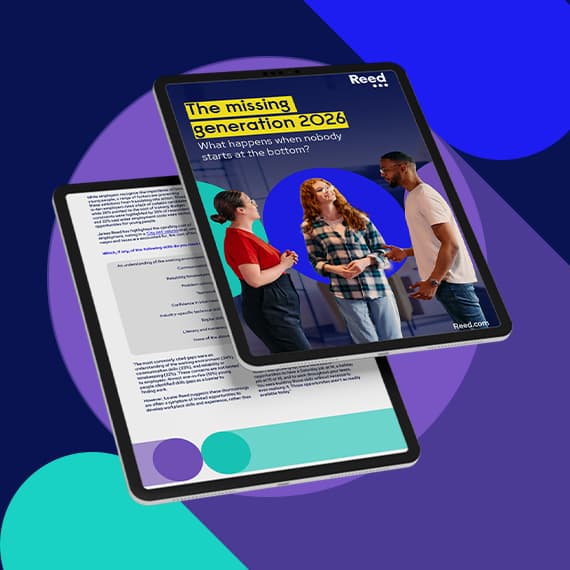
As part of Reed’s report, ‘The missing generation 2026’, we surveyed 2,000 UK employers. Encouragingly, 73% say bringing early-career talent into their business is a high priority. Yet 30% cite a lack of suitable applicants as a barrier and 26% point to gaps in job-ready skills.
We also asked employers…
‘Which, if any, of the following skills do you most often find missing among young applicants?’
The top five answers were:
An understanding of the working environment (34%)
Communication (33%)
Reliability/timekeeping (32%)
Problem solving (29%)
Teamwork (25%)
None of these are technical or sector specific. Every one of these skills is already being developed in your school, every day. Students debate in English, solve problems in maths, collaborate in science practicals, and turn up on time for registration.
The opportunity is in making those skills visible. Whenever teachers help students develop a skill and link it to the workplace, it’s something they can use on their CV or in an interview. Best of all, it doesn't need a new programme, a bigger budget, or an overhaul of your curriculum.
Here are five practical ways to do it.
1. Understanding the working environment
For many young people, the world of work is something they've only seen on television or through family members. Yet employers consistently tell us that one of the biggest gaps they encounter is a lack of understanding about how workplaces actually operate.
The challenge is that work experience opportunities are becoming harder to secure. Our research found that fewer than half (45%) of employers offer them, despite most saying early-career recruitment is a priority.
But students don't necessarily need to leave school to experience workplace behaviours. A simple group project can quickly become a workplace simulation. Students can take responsibility for coordinating tasks, reporting progress, managing deadlines, and presenting recommendations to a ‘client’ audience. By slightly reframing the activity, teachers can introduce many of the expectations young people will encounter in their future workplaces.
2. Communication
Employers value young people who can contribute to discussions, ask for help when they need it, explain their reasoning, and build positive working relationships.
That means every classroom discussion is an opportunity to develop an employability skill. When students explain how they reached an answer, challenge an idea respectfully, or build on a classmate's point, they're practising behaviours they will use every day in the workplace.
Rather than always relying on written responses, build in opportunities for students to verbalise their thinking.
That could mean:
Speed-networking activities where students rotate around the room discussing a topic.
Podcast-style discussions where small groups record a summary of what they've learned.
Student-led briefings at the start of lessons.
And don't overlook communication tools that many adults take for granted. How many students have ever left a voicemail? Called to rearrange an appointment? Written a professional email?
These small, practical exercises often generate the biggest confidence boosts because they bridge the gap between school and everyday adult life.
3. Reliability and timekeeping
Attendance and punctuality conversations can sometimes feel negative to students, focusing on what's missing rather than what's been achieved. But what if you positioned reliability as an employability strength instead?
Students often underestimate how valuable consistency is. Yet employers tell us that turning up on time, meeting deadlines, and following through on commitments are qualities they actively look for when hiring young people.
Consider creating an ‘employability portfolio’ where students track evidence of reliability throughout their time at school:
Excellent attendance
Strong punctuality records
Leadership responsibilities
Consistent homework completion
Commitments to sports teams, clubs, or volunteering
This helps students see that reliability isn't just something teachers reward. It's evidence of trustworthiness that can strengthen applications, CVs, and interview answers.
4. Problem solving
Many classroom activities focus on finding the correct answer. Workplaces are often different. Employees are regularly asked to make decisions with incomplete information, weigh up different options, and adapt when plans don't go as expected.
Problem solving can be developed across every subject. The key is creating opportunities for students to think independently, evaluate alternatives, and justify their decisions.
One approach is to introduce more open-ended challenges where there is no single correct answer.
How would you spend £1,000 to improve the school site?
How would you encourage more people to use public transport in your area?
How would you reduce food waste in the canteen?
Another way to build problem-solving skills is to make reflection part of the process. Rather than focusing solely on the outcome, ask students questions like, ‘what approach did you try first?’, ‘what didn't work?’, and ‘what would you do differently next time?’
This helps students understand that problem solving isn't about getting everything right immediately. It's about learning from setbacks and adapting your approach. Over time, these small shifts help students become more confident in their own judgement, resilience, and decision making; qualities that employers consistently value.
5. Teamwork
Schools provide countless opportunities for students to work together, from classroom projects to sports teams and extracurricular activities. What matters is helping young people understand the value of those experiences, identify the skills they are building, and articulate them confidently when applying for jobs.
One approach is to borrow from workplaces and sports teams by assigning specific responsibilities. Rather than simply putting students in groups, give them clear roles and objectives.
Try introducing a short debrief at the end of group tasks. Ask students:
What helped the team succeed?
Where did communication break down?
How did the group handle disagreements?
What would you do differently next time?
These conversations help students understand that teamwork is about contributing, adapting, supporting others, and finding ways to achieve a shared goal. They also give students concrete examples they can draw on when answering competency-based interview questions, such as, ‘tell me about a time you worked as part of a team’ or ‘describe a situation where you had to overcome a challenge with others.’
What's next for your school
The skills employers want are already growing in your classrooms. The next step is making the link explicit so students leave school knowing exactly what they can do and how to explain it.
A CV built around skills rather than a short job history gives young people a real advantage, especially when Saturday jobs and work experience are hard to come by. It helps students stand out, it supports your careers provision, and it costs nothing beyond a change in how we talk about everyday learning.
Looking for a talented education professional to join your school or seeking a new opportunity yourself? Get in touch with a specialist education recruitment consultant today.