AI won't replace recruiters. But recruiters who use AI well will outperform those who don't.
I've spent years in recruitment, and I've watched plenty of tools promise to transform hiring. Most add a little. A few change the game. AI belongs firmly in the second group, but not for the reasons the loudest voices suggest.
Here's what I keep coming back to: AI is a brilliant assistant and a terrible decision-maker. It drafts, sorts, summarises, and accelerates. What it can't do is sit across from someone, read the room, and understand whether they'll thrive in your business. That still takes a human.
So, the question isn't whether you should use AI in your hiring. If you’re not already, you soon will be. The real question is how to use it wisely.
1. Treat AI as your assistant, not your hiring manager
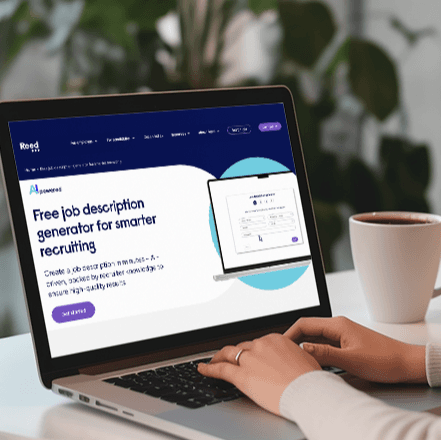
AI is exceptional at task-based work. It can draft a job description in seconds, suggest interview questions - in fact, we have free tools on our website that do both of these tasks - structure a scorecard, and pull together written communication in the blink of an eye. Used this way, it gives you time back to focus on the parts of hiring that actually decide the outcome: the conversations, the judgement calls, and the relationships.
The trouble starts when the assistant (AI) is mistaken for the decision-maker. AI is a probabilistic tool. It predicts what's likely, and occasionally it gets things wrong, sometimes confidently so. That's fine when it's drafting a first pass of an email response. It's a real problem when it's quietly deciding who does and doesn't make your shortlist.
My advice in this case is to let AI handle the admin and keep the decisions with the humans who'll live with them.
2. Remember that generic prompts produce generic results
One of the fastest ways to be disappointed by AI is to ask it something vague. For example, prompting to help you plan the details of a role will give you a generic job description, the kind every applicant has already seen 50 times, and every competitor is also posting.
The people who get the most from these tools treat prompting as a skill. They give AI context: what the role really involves, what 'good' looks like in their team, the tone of their business, the type of person who's succeeded before. The clearer your input, the sharper the output.
This matters because AI still needs you to define what good looks like. It can write the words, but you have to have something worth saying. Feed it your genuine expertise, and it becomes a genuine accelerator. Feed it nothing, and it hands you the average of everyone else.
3. Make live conversations count more than ever
CVs used to tell you something about a person's ability to present themselves. Now people can ask a large language model like ChatGPT or Claude to tailor a CV perfectly to your job description, producing an outstanding document in minutes. On paper, everyone can look like the perfect hire.
That's not a reason to despair. It's a reason to shift where you place your trust. When the written application is easy to polish, the live conversation becomes your most reliable signal. This is exactly why human-led screening is busier than ever: more employers want a person to double-check what's really behind the CV.
So, design your process to test for what AI can't fake. I'd focus on four qualities in particular:
Collaboration: how someone works with others, not just alongside them.
Communication: whether they can explain their thinking clearly and listen well.
Critical thinking: how they approach a problem they haven't seen before.
Creativity: the ideas they bring when there's no obvious answer.
You can't assess any of these from a keyword-matched CV.
4. Don't let keyword screening filter out your best people
Although not many companies are using them yet, most automated screening tools rely on keyword matching. Feed in a job description, and the system surfaces the CVs that echo it back. Efficient, yes. But it carries a real risk: strong professionals, with what I would call non-linear careers, getting filtered out simply because their CV doesn't use your exact language.
Some of the best hires I've been involved in over my 27 years in recruitment have had anything but conventional careers. For every role, I'm always looking for a wildcard candidate. The person who won't appear in a keyword search and whose CV might initially be overlooked by an algorithm. But when you dig into their experience, you find someone with all the right skills, behaviours and potential to make an immediate impact.
Think of a scientist transitioning into business. Their CV may not contain the expected commercial buzzwords, but years of applying the scientific method have given them a rigorous framework for analysing problems, testing ideas and making evidence-based decisions. Those skills transfer exceptionally well.
Technology can identify patterns. Humans can recognise potential. That's why the wildcard candidate is often the one worth paying attention to. And while larger organisations with bigger budgets are typically the ones investing most heavily in automation, that can create a real opportunity for SMEs. The candidates filtered out by automated systems are often exactly the resourceful, adaptable and entrepreneurial people that growing businesses need. By looking beyond keywords and conventional career paths, smaller employers can uncover talent their larger competitors may have overlooked.
5. Set clear boundaries for where AI belongs
Using AI wisely means being deliberate about where it stops. Some applications save time and improve fairness, like drafting personalised feedback for unsuccessful applicants so no one is left in silence. That's a small thing that does a lot for your employer brand.
Other applications should give you pause. I'd be very cautious about tools that claim to assess candidates by analysing physical reactions in video interviews, reading signs like eye movement or perspiration. The science is shaky, and the ethics are shakier still.
A simple step helps here: agree, as a business, where AI will and won't be used in your hiring. Be transparent with applicants about it. Anchoring your approach in fairness, privacy, and accountability isn't red tape. It protects your reputation and builds trust with the people you most want to attract.
What's next for hiring managers
The organisations that hire best over the next few years won't be the ones using the most AI. They'll be the ones using it wisely - letting it handle the tasks it's good at, and keeping human judgement firmly in charge of the decisions that matter.
AI won't take your job as a hiring manager. But a hiring manager who knows how to use it well might just outperform everyone still doing it the old way, or blindly trusting the machine to decide.
If you’re looking for a talented professional to join your team or a new career to help you develop and grow, contact your nearest Reed office today.