




Watch the episode
Listen to the episode
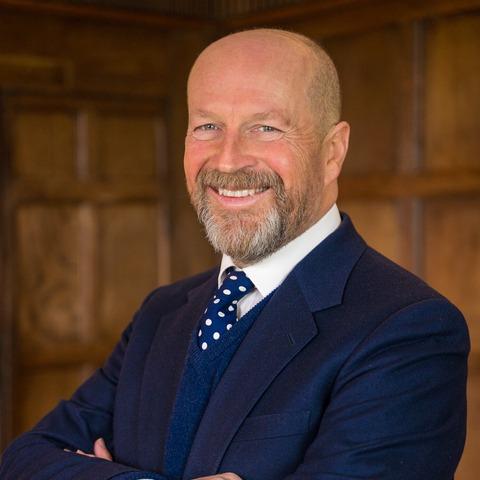
In this episode of all about business, James sits down with Ross Crane, Co-Founder at Subdial, to look at how founders can use high-level business strategy to fix broken, traditional markets. Ross shares the tough calls behind building a multi-million-pound company, including why he shut down an early venture after six months and handed back £220,000 of unused seed money to his investors when it hit a dead end.
The conversation breaks down how to take control of an unpredictable market using clear, real-time data instead of guesswork. Ross explains how showing customers true market values cuts out middleman fees, speeds up sales, and builds instant trust. He also shares how to keep your business steady through sharp economic drops, why speed of sales matters more than high margins, and why hiring people with the right mindset will save your company culture as you grow.
If you want to spot hidden opportunities in your own sector and build a faster, more resilient operation, this episode is essential listening.
Timestamps (Video)
02:44 from consulting to startups
08:27 pivoting into watches
11:20 data-driven pricing model
22:47 how Subdial works
33:58 watches as investable hobby
40:36 consignment pricing tiers
49:47 watches as store of value
Timestamps (Audio)
01:40 from consulting to startups
07:23 pivoting into watches
10:16 data-driven pricing model
21:43 how Subdial works
32:54 watches as investable hobby
49:32 consignment pricing tiers
Follow James Reed on LinkedIn:https://www.linkedin.com/in/chairmanjames/
Follow Ross Crane on LinkedIn: https://www.linkedin.com/in/ross-crane-3b079618/
Find out more about Subdial and their products here: https://www.subdial.com/
Submit your application to Reed’s Entrepreneurs Fund for a chance to win a £20,000 grant: https://www.reed.com/entrepreneurs
[00:00:00] James: Welcome to All About Business with me, James Read, the podcast that covers everything about business, management and leadership. Every episode, I sit down with different guests that bootstrap companies, masterminded investment models, or built a business empire. They're leaders in their field, and they're here to give you top insights and actionable advice so that you can apply their ideas to your own career or business venture
[00:00:32] today on All About
[00:00:32] Ross: Business, I'm really delighted to welcome Ross Crane. And Ross is the co-founder and
[00:00:39] James: CEO
[00:00:39] Ross: of Subdial. Subdial is
[00:00:42] James: described as a pre-owned luxury watch platform which was established in 2018.
[00:00:49] Ross: So a marketplace
[00:00:50] James: Ross, for
[00:00:50] Ross: watches
[00:00:51] James: is
[00:00:51] Ross: is how I understand Absolutely right Where you can buy and sell them. And, um, the platform is
[00:00:54] James: them.
[00:00:54] And, um, the platform is focused on
[00:00:56] Ross: transparency, market pricing,
[00:00:59] James: and [00:01:00] data-driven valuations, customers to buy and sell collectible wristwatches at fair prices. Um, and I think it's, it's important that
[00:01:09] Ross: This is sort of changing, to establish this is changing
[00:01:10] James: to establish this is changing the way people look at buying and selling watches and how that has been done traditionally compared to your new model.
[00:01:19] So Ross, I'm fascinated by this because it, it's a disruption
[00:01:23] Ross: of a market
[00:01:24] James: that, um, had probably been going on for a very long time where dealers would buy and sell that have been pre-owned. Um, you have transformed it. What made you think of this? How did
[00:01:37] Ross: of this? How did you-
[00:01:37] James: how did you begin?
[00:01:39] Ross: So when we came into this, we were actually not coming from a watches background. In fact, uh, both myself and Christy, who's my co-founder, were at, uh, Ernst & Young doing big data and tech projects. We'd left, or in fact, I'd left, uh, back in 2017. So you were analysts, right?
[00:01:57] We were management consultants. Management consultants- [00:02:00] Yeah ... at Ernst & Young? Yeah.
[00:02:01] James: organization.
[00:02:03] Ross: big tech projects with sort of FTSE 100 companies, S&P 500 companies, that kind of thing. And we originally left to do something entirely different. So I raised a small amount of seed funding to do a food tech startup, so we did that in 2017.
[00:02:20] James: Food tech.
[00:02:21] Ross: Food tech? Food tech. What was that, what was that involved? So, I mean, you-- going back 10 years, so you kind of have to cast your mind back to how things were in 2017, what did and did not exist. So this was right at the kind of nascent point where things like Gusto and HelloFresh and those kind of businesses were just starting to get going.
[00:02:40] And myself working in professional services, commuting every day, thought there was a more interesting way of doing that that had less friction. So those were subscription-based, delivery-based businesses where you sign up for a subscription and get four meals a week in a big, great big box with loads of packaging and all of that stuff.[00:03:00]
[00:03:00] So the concept with the food business was to do that but through small hubs that would be at big commuter stations. So at Farringdon Station, at Cam- uh, Clapham Junction, that kind of thing. And the idea was there was much less of a, a time delay. You could get to 5:00 p.m., you're leaving the office, you've got nothing for dinner, and instead of going to, you know, the Tesco Express and s- scratching around and going like, "Well, what am I gonna throw together?"
[00:03:25] You would actually go on a map on your phone, pick from a, um, recipe card and say, "Okay, I wanna do this recipe. I wanna do it for three people." And by the time you then get to the station 10 minutes later, it's picked and packed, ready to go for you. Just the ingredients that you need, no wastage, no requirement for, you know, big freezer blocks and all of that kind of stuff that goes along with it.
[00:03:46] So I think I was invested in the idea. I li- like sort of felt like a very academically clean idea. There was gonna be less waste. You could optimize for exactly the ingredients that you needed. That allowed you to do the most number of [00:04:00] recipes, but you could get high-quality stuff because you were doing a small number of ingredients.
[00:04:05] And we got that up and running. I think we probably delivered our first recipe within six weeks of getting the, the company going. Very manual, heavy lift on our behalf. Um, in the end, we only really ran it for about six months. So I think we probably started in the summer, and by Christmas we said, "You know what?
[00:04:28] We'll come back after a break, and we'll take a view on whether we wanna c- carry on with this." And as it happens, we both came back and we said like, "Okay, you go first. I think we should call it." And it wasn't because people didn't like it, but I think people didn't love it. And I think we For, for the unit economics to work, and I think for us to be really motivated to push on with it, we felt like we needed people coming back, you know, three times a week, you know, saying like, "I love this.
[00:04:57] I'm gonna get stuff." And the best customers were coming [00:05:00] back maybe twice. And modeling it out, it was very hard to see how you could get this thing to scale and to ever be profitable with that kind of customer retention. So- So people didn't-
[00:05:13] James: didn't love it. I think that's an interesting observation. They liked it, they didn't love
[00:05:16] Ross: They liked it. They didn't love it There was a sufficient impetus around it And
[00:05:18] James: around it-
[00:05:19] Ross: I think when you're, you know, when you're, when you're very early on in a, in a sort of startup journey, you almost need that energy coming from your customers to keep you going. Yeah. And I think y- you know, you obviously believe in your own idea.
[00:05:31] You believed in it enough to quit your job and raise a bit of money and put your own sort of ego on the line a little bit 'cause people are, you know, obviously surprised when you leave and they ask what you're doing. But you kinda need that feedback to keep you motivated in the idea. And I think we both felt like we-- there was-- we could spend our time better on something else.
[00:05:52] And there was also a sense of we'd raised this seed funding, we hadn't really spent any of it, and to get it to the [00:06:00] next level of testing, we would've had to deploy basically all of that money. And at that point, as you well know with, you know, e- early stage bootstrap seed funding is typically it's friends and family and not professional investors' money.
[00:06:13] To put that kind of money at risk when you think the chance of success here is-
[00:06:18] James: When you think the transfer- So how much money are we talking about here? How much do you have left? 250k we've raised.
[00:06:19] Ross: How much are we talking about here? How much you got left? It was 250K we'd raised. Yeah. And I think by the end we'd spent maybe 30K, you know. So we were-
[00:06:25] James: Yeah. So g- all credit to you. So you decided to pivot-
[00:06:28] Ross: Yeah
[00:06:28] James: do something else with the money. So we- Did
[00:06:31] Ross: And do something else with the money. So we, we re- You had to ask for their sort of support, didn't you? We returned the money. So we said, we said we're gonna, we're gonna wind this up. Yeah. We don't know what we're gonna do- Confused ... gonna do next. Sometimes that
[00:06:39] James: doesn't happen.
[00:06:40] Ross: doesn't help. And I think it's, it's something that I've seen in other people both before that point and since, where you, I think in your heart you know that it's not right and you, and you haven't quite got the traction that you want and probably it's not gonna work, but you're sort of stuck in the y- I've committed to it now, so I'm gonna [00:07:00] keep going.
[00:07:00] And the longer you go, the harder it gets to take that step back and go, "You know what? We're actually gonna do something different."
[00:07:05] James: I've seen that. You know, the more people put into something,
[00:07:08] Ross: And it, you, you, you, you feel like you built up this sort of external pressure on yourself to make this thing work. Um, so I think, yeah, in hindsight, we're both very glad that we did call it quite early.
[00:07:20] James: that your food
[00:07:21] Ross: So you did all that, your food tech business? Yeah.
[00:07:22] James: And then how did you come to pivot to watches?
[00:07:25] Ross: We, we pivoted within probably two weeks to watches, and I think it was in hindsight an easy decision. So we were both independently liked watches. You know, we had watches ourselves. We'd had some experience with the watch industry in the, in the pre-owned sense.
[00:07:41] James: you had a little
[00:07:41] Ross: a little collection. Little collection, you know, nothing major.
[00:07:44] While
[00:07:44] James: were working at Ernst
[00:07:45] Ross: you were working at Asos and then- Yes. Yeah. Or, you know, gifts from family and- Yeah ... these kinds of things. And I personally had had bad experience with some other pre-owned players. And I think it-- the nice thing, and the thing that s-still makes me as passionate about this [00:08:00] today, almost nine years later, as I was back at the start, is it is a brilliant intersection of all of the things that we care about.
[00:08:08] So it is a passion produ-product. You know, watches is something that I personally enjoy, get a lot of pleasure from looking at, collecting, doing all of that kind of stuff. But it sits across technology and data and a type of customer who is doing this not because they have to, but because they want to.
[00:08:25] And that is, you know, if you're, like me, most passionate about building a tech product, that intersection of something where you get to build for someone who's doing it for passion, and you-- if you do a good job, will be back on a weekly basis or even a daily basis, browsing the site, looking at new stuff, trying new features.
[00:08:44] There's not many other things I think we could think of that hit all of those kind of boxes.
[00:08:51] James: So you both came to the, uh, this sort of-
[00:08:53] Ross: you both came to the, this sort of- We both came to this conclusion
[00:08:55] James: happen? Were, were you in a café or a pub or? We were sat in Christie's house.
[00:08:59] Ross: We were sat in Christie's house. Yeah, we [00:09:00] were sat in Christie's house, which we'd, uh, through his very patient housemates, kind of taken over as the hub of the food business. Oh, right. 'Cause he had slightly more space than I did, and so we were running the, you know, picking and packing of bags and all of that kind of stuff from there.
[00:09:15] And we-- Yeah, I think we probably for about a week, we sat down on a daily basis and got a whiteboard and sort of ran through different ideas and tested them out a bit and said, "Well, do we think this has got legs?" Um, and with watches, as I say, a lot of things clicked, and I think crucially it's, it's not you, you have a nice idea, but you've also gotta think, "Do we have any advantage here?
[00:09:37] Is there something that's we think we have or know-
[00:09:40] James: Did you know that there are nearly one million 18 to 24-year-olds who are currently not in education, employment, or training in the UK? This is simply not good enough, and I want to do something about it. That's why Reed is launching a new initiative, giving £20,000 to young entrepreneurs [00:10:00] to help them grow their small business.
[00:10:02] Visit reed.com/entrepreneurs to find out more. We want to support and encourage the next generation of entrepreneurs. And what was that in your
[00:10:14] Ross: your mind at that time? It was the data and the technology. So I'd done a lot of data projects, uh, in the previous six years at Ernst & Young. And so we looked at the market and said, "There's something here. If you can collect enough data and process that data well enough, understand the demand for a particular watch model, you should be able to trade that almost like a commodity, but in a way that gives a better result for both the buyer and the seller."
[00:10:43] And so if you take a typical transaction that we would do, uh, where we are actually buying the watch, and we do, we do do consignments as well, but we're acting almost like a market maker in the middle. So customer submits their Rolex Submariner 2020 box and papers. [00:11:00] We would put that through the model, and we would say, "We know or believe that that watch will sell for within this price range of, let's say, £500, and 9 times out of 10, it will sell within 30 days."
[00:11:13] And if you've got those two things, you know what it's gonna sell for, and you know how quickly it's gonna sell, you can decide your spread. So you can say, "I'm confident in that, and it's a tight window, so I'm gonna take a tight spread." I can give the seller more money than for something else where I say, "Oh, this might take up to six months to sell, and the range is really unpredictable," 'cause there isn't the data to support the thesis.
[00:11:35] Right.
[00:11:35] James: Right.
[00:11:36] Ross: And so the idea- So the more watches
[00:11:38] James: that s- that you sell, the more informed you become.
[00:11:40] Ross: Exactly. And
[00:11:41] James: the more data we collect- Yeah
[00:11:42] Ross: the more data we collect. So it's not only our own data, although the first-party data is always the best kind of data, um, but it's everyone else's data too. So we collect on a daily basis about 750,000 listing records, pull those down- From all over the world
[00:11:58] from all over the world, [00:12:00] yeah. From every major platform, every major dealer. And we d- we pull that down and we process it to say, "What watch is this?" 'Cause you gotta pin it back to something. But on your site
[00:12:10] James: if you're looking, the watches are priced, but at a, as I understand it, a, a specific price.
[00:12:16] Ross: Yes
[00:12:16] James: So it's not like you're making a bid for them.
[00:12:18] Ross: No. So this is- You decide that price ... this is what we're using to inform our buying. So when someone offers us a watch, they said, "I'd like to sell this," we're using that data to say, "Okay, we, we could pay you X to buy that today." Or if they were looking to consign it or if we'd would advise them to consign it, then we're using that same data to say, "Put this with us.
[00:12:40] It's a 200,000 pound Patek." Our previous transactions and the market says this is the, the right point to price this watch, and if we price it correctly, it will sell within, let's say, 45 days. Right. And that's very different to how most people in this market approach it. So you can [00:13:00] really categorize it into two buckets.
[00:13:01] Either you've got traditional dealers who are purchasing, and the first question they will ask when you bring your watch in is, "How much do you want for it?" Which for us had always been the entirely wrong question. The question is, how much am I willing to pay for it? I'm the professional, or I should be, with all of the data, and so I should be telling you, the client, what it's worth- Right
[00:13:23] and therefore what I can pay for it. And we've always tried to be transparent about those two things.
[00:13:28] James: you have a good story about that.
[00:13:30] Ross: We do. Tell me that story. Yeah. So this, this was actually, um, this was very early on, so it was when it was, it was still just the two of us, uh, back in our first office. We're now in our third. And we were approached by a gentleman who had seen an advert that we'd placed in print media in a magazine called "The Oldie."
[00:13:50] And I think the, the advert said something like, uh, "Got an old watch?" You know, question mark, "Call Subdial." And he'd, uh- [00:14:00] I think it initially dropped as an email, and the email had a photograph attached, and he'd said, "I've got this watch. I saw your advert in 'The Oldie.' I love that magazine. Uh, what, what do you think?"
[00:14:11] And I thought initially someone was pulling our leg because I looked at the picture and I recognized the... not the exact watch, but I recognized the model and the configuration from a Phillips auction, which had happened maybe, uh, eight months before. And that watch had gone for big, big money, hundreds of thousands of pounds.
[00:14:29] Uh, and so I was like, the chances of someone just having this watch is so slim. Mm-hmm. And the pictures weren't very good, uh, but you think it's worth our while at least following up. So I sent a polite response and said, "Oh, can you send me some better pictures and give me a bit of the background of the watch?"
[00:14:46] And he'd come back with a very long email, uh, with all of the context. And at that point we started to think, "Oh, this might actually be real." Um, and so the, the long and the short of the watch is it's a, a Rolex Daytona [00:15:00] from the '70s, which in and of themselves are already a pretty popular, pretty valuable watch.
[00:15:05] So with no
[00:15:07] James: backstory
[00:15:07] Ross: backstory to it, it probably would've been a 60,000 pound watch anyway. Um, but what was particularly eye-catching about this one is it had the
[00:15:14] James: Armani, uh, red
[00:15:16] Ross: Omani, uh, red khanjar symbol printed on the dial, which is something with Rolex you, you never see because they're very reluctant to customize watches for individual clients in a way that a lot of other brands would.
[00:15:28] But they had, in that period, done a number of customizations for the Omani royal family, and this particular one, this already sought-after Daytona reference with this Omani khanjar on the dial, w- you know, maybe there's 10 in the world, and one of them had gone to auction, but the location of the other ones wasn't known.
[00:15:47] And the, the story of the gentleman who brought it to us was he was part of the, uh, British sort of force that had gone out there after the change in leadership in [00:16:00] the royal family. And I think the father had come over here, the son had taken over, and the son had then requested that a number of the British Ar- Armed Forces go out there and help train up their first fighter pilots 'cause they had no air force at that point.
[00:16:14] So they'd bought the planes. This guy was a commander in the RAF and had gone out there to train the pilots and had been sort of in charge of that division, and had then towards the end of his, I think, his second tour, received a telegram from the royal family saying, "Would you come to the palace?" We'd like to present you with a gift, you know, at the end of your service, and that this watch he'd be presented with.
[00:16:37] And this gentleman had kept everything. He had the telegrams, he had the epaulettes with the, the kanjars. He had photos of him in Oman. Because he thought people would be interested. It's, I mean, it's, it-- 'cause, because it never happens. So these, these watches come up to market, you know, now because the watch market's become more and more established and these types of watches are super collectible.
[00:16:56] But it'll be the third collector who's owned that watch, you know? And so it's sort of known [00:17:00] and, you know, they know it's an example, but they might be worried that someone sort of almost tried to make it better and they sort of like added bits in. This is coming from original owner with all of, you know, it, it-- you could not dispute it, um, given the telegram and everything else.
[00:17:17] It just never happens. Uh, so that made it particularly special and we ended up selling it to a collector who, as part of the deal said, "Would it be possible for me to take the gentleman out for lunch and just hear his story and do all of that stuff?" And he was very, very happy to do it. In fact, I think he loved the whole experience.
[00:17:34] So
[00:17:34] James: how much was it worth, this watch? It--
[00:17:36] Ross: how much did it worth? It, w-we were not allowed to... Part of the agreement was also that we would not disclose how much it went for, but it was w-well into the six figures. Right. And I think it was a, a life-changing amount of money for-
[00:17:48] James: Very good for his pension
[00:17:50] Ross: Very good for his pension. Very good for his pension. I think at that point, his wife was actually able to retire and they took us out for lunch in London to say- A lot of happy people.
[00:17:58] A lot of happy people. Yeah. It's absolutely, it's, it was [00:18:00] fantastic. Yeah. So but what-
[00:18:01] James: It was fantastic, yeah. So but what, what you said earlier, which struck me is, it, it wa- wasn't how much do you want for this watch.
[00:18:06] Mm.
[00:18:07] Ross: Hmm
[00:18:08] James: were establishing what it was worth. And he,
[00:18:10] Ross: He, he did say to us-
[00:18:11] James: from that approach because-
[00:18:18] Ross: And benefited from that approach ... he said through to, to us through the, through the process that he'd taken it to his local, uh, Rolex service center where they'd been... He'd been wearing this watch to the pub not know- not knowing what it was. Right. Um, and he'd taken it in for its sort of- Regular ... regular service.
[00:18:26] Yeah. And the, the guy at the... I don't know whether this was an authorized Rolex retailer or not, it was just some local guy, but he had offered to buy it from him. I think he'd offered him £8,000. Right. And maybe he didn't know, but- Yeah ... I would be surprised if he didn't know. Yeah. Um, and that I think is the, the thing that we, we absolutely wanted to fight against in the whole way through, is this mindset of, uh, using information as power.
[00:18:54] You know, 'cause we've, we've got probably more data around trading than anyone else and, you know, there's a temptation to say, "Well, [00:19:00] great, we can use that to our advantage because we know something that you don't." So I was very struck looking
[00:19:03] James: looking at your website about the, the variety and number of watches that you have that's on Subdial
[00:19:09] Ross: Yeah
[00:19:10] James: for sale, and the amount of knowledge that you must have to, you know, about each particular brand and specifically-
[00:19:18] Ross: Yes It's incredible because they all
[00:19:20] James: all priced sp-specifically. So this
[00:19:23] Ross: So this is
[00:19:23] James: is from your data analysis days back in Ernst & Young. You've built this. It's a mixture of
[00:19:27] Ross: It's a mixture of both. It's a mix- it's a mixture of two things. So
[00:19:31] James: incredible the amount of information there.
[00:19:32] Ross: on, on the data side, I think th-there is a real joy to having that data to hand because it does allow us to buy more confidently than most people. And so the fact that we have more variety is a direct consequence of that. So we-- y-you bring me something that's a little more esoteric than a Rolex sports watch, we still have the data on that.
[00:19:55] And so even if it trades less frequently than a Rolex, we can say every time that [00:20:00] it's sold globally for the last seven years, pretty much, you know, other than transactions that are happening offline. And so we can still price that with a, a fair degree of confidence, and that means we will pay more for stuff that other people would say either, "I, I can't, I can't buy that," or, "I'm just gonna, you know, really lowball you," because they're hedging their bets.
[00:20:20] And, you know, fair enough. If you don't know, you've gotta take a safe position. Um, so that's one benefit of it for sure, and I think it's why we over, you know, the, the sort of last eight years have really shifted towards a more enthusiast collector market because we have that breadth and we're happy to trade that breadth.
[00:20:38] The other side is the team. So we absolutely, uh, pride ourselves on hiring people who are watch nuts. And most of the people who come to us-- A lot of people who come to us are, are not coming from the watch industry, so they're actually similar to Chris and myself. They've worked in finance or law or professional services, but they love watches, and so they see an [00:21:00] opportunity to do a bit of a career shift and do something that they really love every day, which is great for us.
[00:21:06] They bring some different kind of expertise into the business, but also they take that intrinsic joy out of coming to work every day 'cause they're doing something that they love. And so it's a mixture of the two. I think the human side, particularly on the sort of rarer, more collectible pieces, is incredibly important.
[00:21:23] You know, not-- You can't tell everything from the data, and there's certain things that I think, uh, people within our team are very good at spotting, which is trends that are emerging in the market, things that are becoming more talked about, more interesting, and you won't necessarily see that in the numbers yet
[00:21:39] James: yet.
[00:21:40] Hmm. That's really interesting.
[00:21:42] Ross: So, I mean,
[00:21:43] James: I, I feel that for people who don't know
[00:21:45] Ross: I
[00:21:45] James: it deserves a little description. I don't know who better to do that th-than you, Ross. I mean, so first of all, where do people find you? It's Subdial is the brand. Subdial.com. Subdial.com. So tell us what's there just [00:22:00] quickly so- So-
[00:22:01] Ross: So- People might wanna go and have a look ... it's, it's buy, sell, collect is really the, the three things that we're about. So buying, we've got, uh, probably up to 1,000 watches live on the site at any given time. A huge variety, as you said. We are not necessarily selective about what we buy. We buy everything from our customers, so we don't go out to, uh, wholesale and buy up from other dealers and do that kind of thing.
[00:22:28] Everything that we have has been offered to it by our customers. But the nice thing, if you've got great customers, you get great watches, and the more great watches you have, the more great watches those customers bring to you. So there's a kind of positive cycle that goes on there.
[00:22:40] James: yeah.
[00:22:41] Ross: We offer two routes to sell.
[00:22:45] Uh, so you bring a watch to us, we will offer to buy it off you directly, or we can consign it for you. And because we've got this, um, focus on the lifetime of the collector, so most of our [00:23:00] customers are thinking about buying a watch pretty much 100% of the time. Maybe they, maybe they buy a watch once a year, maybe they buy a watch 10 times a year, maybe they do it more, but always they're thinking about, "What would be my next watch?"
[00:23:15] They've got watches in their collection, and so to buy that next watch, often they're looking to sell. Right. And so there's a lot of, um, trading that goes on, and so we put a lot of effort in the platform to making that process as seamless as possible. So you find a listing you like, you've got your watches that you're looking to sell, you upload those, and you can kind of build a virtual, uh, trade where you say, "Okay, it's gonna cost me 60,000 pounds to buy the one or two watches that I like, but I've got 40,000 pounds in my collection, so I can trade those out," top up the difference and make it as easy as possible.
[00:23:51] So the platform was really built around the, the buying process, the selling process, but the collection sits in the middle. So you have your collection on the platform. Your [00:24:00] collection leverages the data. So if you- So does it have your-
[00:24:03] James: your collection on the platform, what, what do you mean?
[00:24:05] Ross: So if you buy from-- if you buy a watch from Subdial tomorrow- Yeah ... it will go straight into your digital Subdial portfolio, and it will be tracked.
[00:24:15] The, the price will be tracked through our market data.
[00:24:19] James: for
[00:24:20] Ross: But yes, but you don't have to buy a watch from Subdial. So if you bought a watch from someone else or you bought it directly from Rolex new, you can still upload it and you say, "Okay, it's this model, it's this year, it's got its box and papers," and the pricing still gets pulled in.
[00:24:33] So regardless of where you got it, you might have a big existing collection. You can add it there, have the prices tracked for everything. You can also insure your collection, do various other things, request servicing. Um, but really what it is about for most people is then having it there ready to go when they see the next watch that they want.
[00:24:50] So you see the next watch that you want and you've already got your collection there. You've got indicative pricing because you've got the market data and so you say, "Okay, it's gonna be this one, this one and this one. These are the ones I haven't worn for six [00:25:00] months." But it's sort of sitting there virtually, isn't it?
[00:25:02] Because you've taken the watch home. I imagine you might be wearing it to the pub. Yes, exactly. Yes.
[00:25:07] James: but,
[00:25:07] So,
[00:25:07] to sell it, you have to br-bring
[00:25:09] Ross: you have to bring it back in. So at the point where you're happy with the proposal, so you say, okay, let's say you're doing a trade. Um, I'm happy with what I'm paying, I'm happy with what I'm being offered for the stuff that I'm selling.
[00:25:20] You click book and then either you're, uh, making an appointment to come in, drop everything off, pick up what you're collecting, or we arrange the shipping. So we would have shipping packs sent out, bring those watches in, inspect them, approve them, and then ship your watch out
[00:25:38] James: So there's a lot of logistics involved there. So you
[00:25:41] Ross: So
[00:25:41] James: as, as well as this being
[00:25:43] Ross: you also
[00:25:43] James: on a wonderful website, you also have a, a, a shop. Is that the right word? What do you
[00:25:48] call it? Clubhouse
[00:25:49] Ross: Clubhouse? Yes. So what happened?
[00:25:50] James: there? How does that work, Ross?
[00:25:52] Ross: the clubhouse we launched, uh, pretty recently. So we launched in, uh, May of last year. [00:26:00] Uh, so about one year in to the new space in Farringdon, and that was really a reaction to two things. So one, we'd just outgrown our previous premises, which was in Hoxton. Had a lovely s-space on the canal, which was lovely for the team, great for me living in Hackney, but w- we did not have a dedicated customer space.
[00:26:19] So we hosted people there, but every time someone came down, we'd basically be apologizing because we're bringing you into our office and it may be chaotic and there's dogs running around and all of this kind of thing. So the move to, to Farringdon was to facilitate the growth and the additional team, but it was also to, for the first time, have a proper dedicated customer space, and that is by appointment only.
[00:26:44] Anything you see on the site that you like and want to view, you can book an appointment and come in and see it. Anything that you are selling, you can book an appointment, come in, drop it off, or do both. And it's been absolutely transformational for us. I think when we set this up, [00:27:00] we did see it as an online-only business, and it is still primarily, it's 75%, uh, takes place online.
[00:27:06] But there is a really important place for face-to-face in this market in particular. I think in most luxury markets, there's still a, a, an important place for face-to-face, and we try to make that experience a special one for customers when they come in. It should feel a bit unique. It should feel a bit subtle.
[00:27:26] It shouldn't feel like going to a Bond Street boutique. Not that there, there's anything wrong with the experience when you go to a Bond Street boutique, but that's not who we are as a company. And so when you come in, the first thing that you see, you walk over a bridge. Well, you know you've been to the office.
[00:27:40] You walk over that bridge, and you've got the workshop down below you with a glass floor, and you see the watchmakers working on the watches. And that, I think, was something that we used to have at the old office because we were quite compact, and we didn't want to lose when we moved here. 'Cause I think when you're buying a, a pre-owned watch, you want to know that the people selling it to you care and that they're [00:28:00] not just, you know, flipping these things as quickly as possible for a profit, but they're actually taking the time, they're inspecting them, authenticating them, working on them, servicing them, all those kind of things.
[00:28:09] So we invested in the workshop, got accreditation now from most of the major luxury groups, which is incredibly helpful for sourcing parts and all of that. Um, but it's also an event space. So outside of the day-to-day appointments, um, people buying and selling, we host, uh, events in that space. We've got one coming up, which I don't think I can quite announce yet, but with, um, one of the big Swiss brands where they will be launching or relaunching one of their product lines in the space, and that's a kind of collaborative effort, and it's a way for us to utilize the space.
[00:28:45] Amazing for us to be selected by the brand to do that. Uh, but it also gives them the opportunity to tap into our collect a customer base, which is slightly different to what you would get as a primary retailer. You know, these are people who might not have your brand or might not be that familiar with [00:29:00] your brand, but they've got other brands which absolutely mean they could be a good customer for you.
[00:29:04] James: So, uh, uh, what is your primary-
[00:29:06] customer base? You mentioned that. I mean, who are
[00:29:09] Ross: It's, um, it's anywhere from someone who's got one or two watches and is just sort of starting out and they bought their first watch. Maybe they never thought that they would be a enthusiast, but they find that they actually quite like that watch and they-- so they start looking around and seeing other, other things that catch their eye, all the way through to people who've got, you know, multi-million pound collections of watches and they've got pretty much every Patek that's ever been made.
[00:29:36] And I think the thing-
[00:29:37] James: Patek that's ever been made. Well, how many are they?
[00:29:40] Ross: Not every Patek that's ever been made. Well, there's, there's many. There's many, but I think p-pe- But people actually have collections like that, yeah.
[00:29:44] James: collections like that, yeah.
[00:29:45] Ross: The-- it's, it's, it's a labor of love and a labor-- it's a big investment to work your way up that food chain- Yeah ...with the big brands to be offered the pieces.
[00:29:57] So when, when Patek release, [00:30:00] uh, the 5811, the new white gold Nautilus, there's only so many made. They are genuinely limited by production, and there's an awful lot of people that want them. So everything is sort of by allocation or by, or by waitlist. So the prices are almost immediate. For, for a lot of these pieces it does, yeah.
[00:30:15] So for the most sought after Rolex, for the most sought after Patek, the day that you leave the showroom, the watch might be worth double what you paid for it on the secondary market.
[00:30:26] James: So the op-opposite of buying a
[00:30:27] Ross: So the op-opposite of buying a car. It's the opposite of buying-- it's the opposite of buying the vast majority of cars, yeah.
[00:30:31] James: you're getting one of these one-off collector's items again.
[00:30:34] Ross: Unless you're getting one of these one-off collections. Exactly. Yeah. Yes. Yeah, and, and so the watch market does... I mean, it, it fits in both categories. Some, some areas behave more like the car market. You know, if you buy, I'm not gonna name and shame any particular brand, but you might go in and pay retail price for a, uh, you know, £6,000 sports watch, and the day that you leave the, the VAT is gone for sure.
[00:30:52] But really, like, if you're gonna sell it, you probably-- you've lost 30, 40% of your money. And so there's a, there is a certain pool of [00:31:00] customers who will go pre-owned simply to save that money, 'cause exactly like you would in cars, you buy it six months old. But I'd say the majority, particularly of our customers, it's not, it's not really about saving money, it's about getting the watch that you want.
[00:31:14] And most of the watches that are the most interesting are not in production. You know, so there's... It, it's almost like the art market in that sense. There's certain new watches that are being released every year, but there's 50 years of watches that have been made which people collect, which are not in production anymore.
[00:31:29] And so if you're only collecting the things that are coming out every week, you're missing a, a big chunk of the market. And so I think that's wh-where it sort of blends into collectability and it's not just about, you know, pre-owned and making a discount or the, the gray market, I think as people would've previously have called it.
[00:31:46] James: I'm
[00:31:46] Ross: Right. Um, so I, I, uh... You talk about-
[00:31:48] James: about your customers, I'm imagining they're mainly male?
[00:31:51] Ross: Yes, although that's changing. city. Yes. Yes. So, uh, how many folks that sort of, uh, focus? We-- I mean, we ha- we have all, [00:32:00] absolutely all types. I would say we are very well represented in that demographic that you've just described. That the m- Yeah. A-and we're well located for that demographic. Yeah. You're well, uh-
[00:32:09] James: That's why you're in Farringdon, I guess. They can come
[00:32:12] Ross: Yeah.
[00:32:12] Yeah, Farringdon's brilliant for connections to almost everywhere. Um, but- Well, I think that's similar the world over
[00:32:17] James: over, isn't it? I mean, people who collect watches in
[00:32:20] Ross: It, it is
[00:32:21] James: or America would be
[00:32:23] described. it is,
[00:32:23] Ross: it is dominated by that sort of demographic. It is changing, which is brilliant. And I think- How is it changing? So I think we've seen more younger customers of late, so, you know, mid-20s through to mid-30s, and more female customers.
[00:32:40] And I think those two things are two areas that have been historically quite underrepresented. Now, there is obviously, for a younger buyer, a price point that you've gotta get over, and if you're early in your career, that could be more challenging. But I think th- the nice thing about watches, actually, it's not a particularly expensive hobby- [00:33:00] Mm
[00:33:00] if you can get over that initial purchase price. And I'll tell you what I mean by that. So it would be crazy to buy a watch for £1,000, £3,000 or £30,000 if you believe that that money was gone, you know, that was consumption. But I think almost all of our clients absolutely do not think of it like that. You think of it as, "Well, this thing is a, is a, is an asset in its own right.
[00:33:21] Maybe I'll sell it for less, maybe I'll sell it for more, maybe I'll sell it for the same." But you know that you can get your money back, and I think a big part of the buying decision is the, is having that confidence that the price is right, and that when you come to sell it, you can sell it with, with relatively low friction.
[00:33:35] So it's a sort of alternative asset
[00:33:36] James: how-- to having cash in the bank or having a few shares in a company or some bonds or something like that. You have
[00:33:41] Ross: Yes. And I think that there's a healthy way of looking at that and there's an unhealthy way of looking at that. Most people are in a fairly healthy place where- Well done ... the unhealthy way of looking at it was what happened th- post-COVID. Wow. Where, where-- Well, it was-- I mean, it was, it was in watches, but it was in a lot of other asset classes as well, [00:34:00] where, uh, people were at home, they had more disposable income, maybe they're getting some government checks, and all assets were going up.
[00:34:07] And I think a lot of people felt like they would al- they would always go up. It followed some new, uh- It, it followed, uh, a lot of the tech stocks, the crypto prices. Right. Watch, it-- Watches probably came to it one of the last, you know. So if you trace the, the curves on the different asset classes, I think watches would've been one of the last to go up, but they all popped, right?
[00:34:29] They, they reached a peak post-COVID. I can't tell you the exact date, but you can see it on our data page when it hits the peak and it's a fairly sharp inflection point, and then prices came right down. So you had a bubble. There was a bubble, and it was-- I think it was, it was brought about by a few things.
[00:34:45] A lot of new people coming into the market, so new buyers who saw it and hadn't previously been into watches, but thought, "Well, this is a quick way to make some money." And it-- and that for a period was true. You could buy a Nautilus on one day [00:35:00] and you pay £40,000 for it, and maybe you sell it in a month and it was £60,000.
[00:35:04] And that you think, "Well, that's brilliant. I'll just do that." That's a-
[00:35:07] James: you're not gonna earn a living like that forever, I suppose, 'cause at some point the bubble bursts The bubble
[00:35:10] Ross: The bubble bursts, yeah. And, and indeed it did. There was also a lot of inter-dealer trading at that point. So, uh, bec-because actually it's a relatively scarce commodity, although sometimes it can seem like there's a lot of watches out there.
[00:35:25] It doesn't take that much of a change in buying behavior for prices to suddenly move quite quickly. You know, so if you imagine a particular model reference, and this, this was focused in on certain models, you know, probably like 50 models that were really the brunt of this bubble. If, if someone is buying at every given point on any given day the cheapest on the market as a dealer, they go, "Well, we need one of these, so I'm gonna go out and see which is the cheapest and I'm gonna buy that."
[00:35:52] Now the, the reference price is the next one, and then the next dealer comes along and goes, "Well, I'm gonna buy that." And now the reference price has gone up. [00:36:00] And i-if that's happening quickly enough, it snowballs quite quickly. We were fortunate enough, I guess, that we weren't heavily invested in those particular models.
[00:36:09] We were taking a slightly more cautious and data-led approach and not buying. We never buy from other dealers anyway. Um, so when that bubble burst, we were not particularly exposed, but I know it was a, it was a, it was a rough time for the market. Um, I know a bunch of dealers went out of business and a bunch of actually well-backed venturing watch companies went out of business through that period because they were sat on a huge amount of inventory, which was now worth, you know, 40% less than what they paid for it
[00:36:36] James: Yeah. So that's quite high, high risk.
[00:36:39] Ross: So this is, this is intrin-
[00:36:40] James: to me though that, that, that you track the... Like, like it's like a, a market FTSE
[00:36:48] Ross: うん。
[00:36:48] James: for watches. you do this, I believe, with Bloomberg.
[00:36:52] Ross: Yes
[00:36:53] James: The, um... So w- what's it doing at the moment? Where are we at the moment?
[00:36:56] Ross: So we've
[00:36:57] James: looking like with all this going on in the world?
[00:36:59] Ross: We're back to [00:37:00] a, a h- a fairly healthy market actually. So the, the post-COVID bubble is well in the rearview mirror. We had steady price deflation for probably two years after that. Right. And the last 12 months, we've seen a return to a steady and gradual level of price inflation, so 5% a year. And actually, if you look back over, you know, 20 years in the watch market, that is the average.
[00:37:27] So watches- Yeah. Watches have been an appreciating asset for a long time, but they've never been an investment in the sense of, you know, you expect to be able to buy it and double your money in a year. You know, that's an unrealistic expectation to come with. But the idea that you can buy it, hold it, and sell it in five years' time and make your money back, that, that's a realistic thing to believe.
[00:37:50] And you might be a bit wrong. You might do better than you think. But like, if, if you take that as a, as a baseline, you're in a fairly healthy place. And so we absolutely never [00:38:00] advise people to buy things. And we do get asked, you know, "Should I-- Which one of these is the better investment?" And the answer is neither.
[00:38:07] You know, you should buy the one that you enjoy because you can't lose that way. You'll enjoy wearing it for the next X number of years and what will be, will be when you come to sell it. Um, you shouldn't-- Uh, I mean, people can do what they want, but I would never advise someone to buy simply because they think it's a good investment.
[00:38:24] Yeah. So, so that-- in
[00:38:26] James: way, that's those speculators around the time of the post-COVID bubble were sort of literally hoping to get a quick buck or
[00:38:36] Ross: Yes. As, as, as they were in almost every market. Yeah. Well, they- Yeah
[00:38:40] James: but that's gone and now it's back to a more sort of stable but appreciating-
[00:38:45] Ross: Yes. And I think in the, in, in the meantime, a few people maybe stuck around in the market who previously wouldn't have been there. So I think the- Yeah ... the customer base did grow over that period. And I think, when we were talking about demographics earlier, I think probably the last, you [00:39:00] know, 18 months, I think we've seen a bit of an acceleration in that as well.
[00:39:03] You know, you get actors like T-Timothée Chalamet investing in, um, watch brands and making a big deal out of what they're wearing when they're on the red carpet. And I think there, there just is a bit of a groundswell of interest in it as a, uh, as an expression of, you know, y-your identity, as a thing to own, as a whatever, whatever it is you wanna see it as.
[00:39:25] Um, but I think f- you know, for us, that's great 'cause it brings a new type of person into the, to the market.
[00:39:31] James: So some questions around the sort of business model.
[00:39:32] Ross: the sort of business model. You said pre-
[00:39:33] James: can consign watches to you and, and you'll sell them on their behalf, I
[00:39:37] Ross: Mm-hmm.
[00:39:37] James: Mm-hmm. What, what would you charge for that? How does that work?
[00:39:40] Ross: So that works on a tiered basis. So we really try and encourage people to stick with us for the long run, and in return for that, they get ever cheaper consignment rates. So when you start with us, you start as a bronze tier and it's 12% plus VAT to consign, which is still one of the cheapest rates that you will find anywhere, [00:40:00] and with the best service, in my view.
[00:40:02] You, you
[00:40:02] James: 12%
[00:40:03] Ross: take 12%.
[00:40:04] James: sale- Yeah achieved. Yeah.
[00:40:06] Ross: We take 12%. So you sell cheap. Yeah. And for that, you know, you're getting free collection, inspections, insurance. We add a warranty to the watch. We will polish it free of charge, do all of the sales process, handle the payment fees, which could be, you know, 2%, 5%. So all you've got to do is get the watch to you.
[00:40:22] All you've got to do... In fact, we, we will pick it up, so all you've got to do is book it on- Right ... and then someone will turn up at your house, collect the watch, and we'll take care of the rest of the process. If you're trading with us on a really frequent basis and you're doing high values, that 12% goes all the way down to six, so.
[00:40:36] That's a gold standard. That's a black tier customer. Right. So we've got, uh, bronze, silver, gold and black, and to get to black tier you really have to be trading like a bit of a nut. But, but we've got quite a few people who do get to that level.
[00:40:49] James: And then, and there you're taking 6%?
[00:40:51] 6%, yeah.
[00:40:51] Ross: 6%. At 6% at that point. Yeah.
[00:40:52] James: Yeah. The-- And, and what about when you buy the watch? What do you look for as a sort of margin? That will depend on
[00:40:59] Ross: That will depend on the [00:41:00] demand for that watch What do you consider? And how quickly. Right. Yeah. Yeah, so we, we don't take a fixed margin approach, and deliberately so, 'cause I think that's how a lot of other people will operate. And it, it means that you don't buy the things that really you want the most, and potentially you ov- actually overpay for things that you don't particularly want.
[00:41:19] So by looking at both the speed and the price, we come to the margin. So we say if we're gonna sell this really fast and we're confident in that, the margin will come all the way down to basically a consignment rate, at which point there's not really any, uh, anything to pick between the two routes. Right.
[00:41:36] If we're less confident in it, the margin goes up because we're, we're saying we might be holding this for six months and we've gotta pay for that inventory. So from the seller's point of view- Yes
[00:41:56] James: Saying we might be holding this for six months and we've got to pay for that inventory So from the seller's point of view, I suppose if you go the second route, they're, they've been paid off straight away and they know what they're getting. Yes. With the, with the consignment route, you- you're relying on finding a buyer.
[00:41:57] Ross: Yes
[00:41:57] James: that might take a while or it might not happen [00:42:00] even.
[00:42:00] Ross: It might not happen. There's less certainty with the-
[00:42:01] James: but, you know, you
[00:42:03] Ross: But we can- More money in the end ... we can guide them with our data as to what the likelihood of sale is, and we will always guide them to price it on the true market price. So you will like, uh... I guess, you know, similar to property market, if you take your, um, commission to sell your house out to a bunch of agents, they've got slightly competing incentives to get the commission, but then also to sell the house.
[00:42:29] And they first of all wanna get the commission, 'cause then they can slowly bring the price down to actually make the transaction happen. But you do get people in the watch market and like every other market that will just overpromise and they'll say, "Oh, your watch is brilliant. Yeah, that's worth £100,000."
[00:42:43] The reality is they're not selling at £100,000. They're selling at, let's say 80, and we can see that on the data and we can prove that to a client. We can show them the records of the ones that are moving and the ones that are sat. And so they'll say, "Well, what about this one? This one's at 100,000." And we can say, "That particular listing has been [00:43:00] there for 1,062 days.
[00:43:02] If that's what you want your watch to do, we can do that."
[00:43:05] James: reverse. You know, employers who don't put enough salary on their vacancies sit there for longer
[00:43:09] Ross: Exactly. Yeah. Be prepared to pay a bit more. Yeah. So it comes down to like, you know, are you really serious about selling it? If so, this is where it should be priced.
[00:43:17] James: the market and be fully informed as to what
[00:43:19] Ross: The market is moving forward- You've got to be realistic. Yeah. So c-customers, when they've been with us for a while, they tend to migrate to doing more consignment because they just get more back.
[00:43:28] You get a better return in almost every scenario, and their rates come down, and so that's good too. Where we tend to buy most stock is when people are trading, because then you need that immediate liquidity, and that's another good housing market analogy. That if you're stuck in a chain and you need to sell this to buy this, it's no good for anyone because e- you know, everyone sort of has found the thing that they want, but the transaction can't quite complete because no one's able to take the, the capital position in the middle and kind of unlock all of those different things to happen.
[00:43:58] And so that we [00:44:00] absolutely see as being our role and it's why we operate both models, even though it, you know, does add some complexity to operating the business. I think it gives the best experience to the most people.
[00:44:11] James: to the most people.
[00:44:12] Ross: So there's a lot, lot of-
[00:44:12] James: lot, lot of, forgive the pun, moving parts
[00:44:14] Ross: Yeah.
[00:44:15] James: this business, but the, the, the, um... you, you have to have a lot of different knowledge points to make it, to make it work.
[00:44:22] Ross: What, what do you find interesting?
[00:44:23] James: your principal challenges are running Subdahl? What, what are the things that
[00:44:28] Ross: Keep me awake at night,
[00:44:28] James: keep you awake at night if,
[00:44:29] Ross: yeah I, I, uh, so honestly, I think our biggest challenge has been keeping focused. I mean, it-- th-there are a lot of moving parts even to keep the core business on track, you know, logistics, watchmaking, sales, marketing, you know, all of those things that you would have in any business that's selling consumer goods, but ours are pre-owned, and so that comes with its own challenges.
[00:44:50] You're having to negotiate every single item that arrives with us. There's some form of negotiation. There's a, you know, you're not buying a thousand of these things and negotiating once, and you're not [00:45:00] photographing once. You know, if you are selling, uh, a brand new Omega, you take one set of photographs, you put a lot of effort into them, and then you sell a thousand of them off the back of those photos.
[00:45:08] Every single watch that comes to us is photographed, and new, fresh pictures of that watch. And I would like to believe that the photos we take are as good, if not better, than most that you would find from the brand when they're only selling that thing one time. You have a photo
[00:45:21] James: photo studio in your Clerkenwell
[00:45:23] Ross: got a, a photo studio, we've got photographers, we've got an incredible photo process, which has been set up by our head of creative, which makes the whole thing as seamless as it can be, you know, including lifestyle photography, where we've got people in the team modeling the watches and all of that stuff.
[00:45:38] So it i-it is a lot, but I think we, probably myself and Christie as founders, are a little bit restless to always try something new. And I think that the challenge for us has, has been to keep focused and not actually try and do too many things all at once, you know, try and compete on every front all at the same time, um, which I [00:46:00] think we've got, we've got better at as the years have gone on.
[00:46:02] We've become more focused on really what the business is about, and it's that buy, sell, collect, trade side of it.
[00:46:07] James: You've also got very valuable stock that you're holding. I mean, have you, have you had any problems with shrinkage as it used to be called in retail? Have
[00:46:15] Ross: No. We're, we are as- Avoid that ... as you can imagine, laser-focused on that. So we have put a lot of effort obviously into security. Every single person who comes down for an appointment has to do an, uh, a digital identity check in advance. So we, we take physical security incredibly seriously. We also keep extremely robust records of where everything is.
[00:46:39] So any movement of any watch within the premises is scanned, and so at any given point, you could, you could say within a s- one square foot where an individual watch is, including its box and papers. And I think that that's just r- it's required for efficiency and it's required for security.
[00:46:57] James: So there's a great attention to detail with that. And the, [00:47:00] the, um, customers, I mean, when, when, when you're sending them out, I mean, there must be some sort of concern about shipping
[00:47:11] as well, you know, 'cause the customers aren't necessarily coming to you, they're-- you're sending... I mean, have you managed-- H-how do you manage to make that sort of copper bottom?
[00:47:19] Ross: Uh, that I think is the, the comfort that you take from buying from a big established company. And, you know, that-- the same would be true if you went to, uh, Watches of Switzerland or, or Watchfinder, that you're, you're buying into the, the trust that that brand is gonna get that thing to you. And if they don't, they're gonna make it right.
[00:47:38] And so w-we have bl-block insurance coverage from the minute it leaves us to the minute it, it's in the buyer's hands. And if anything happens, courier drops it, uh, en route, then that's all covered. And that, that's a really important part of it, obviously. And I think it's particularly important when you're getting into this early on in your kind of watches [00:48:00] journey.
[00:48:00] These things really stress you out as they should. Authenticity- As a buyer and a seller. As a buyer and a seller. You know- Yeah ... authenticity is a big question for them. Uh, how does the insurance work? How do I know who I'm handing over to? All of these things. So that's been, uh, something that we've refined over the last eight years and, and thankfully have now got a supply chain process that works really efficiently and without shrinkage, as you put it.
[00:48:24] Well, I, I mean-
[00:48:25] James: I, I'm happy to share with our listeners that you've got 4.9 on Google reviews and 5 on Trustpilot,
[00:48:31] Ross: Trustpilot, yes So we've got that nailed We're very proud of that
[00:48:35] James: people... Yeah, I, I mean, you should be. It's, uh, it's hard to get five on Trustpilot, and there are lots of reviews. So, um, is there anything we, we should be thinking about a- as watches an
[00:48:48] Ross: asset class because we had, um, we had a
[00:48:50] James: very interesting guest just recently who was making lab-made diamonds- Mm ... Natalie Morrison, and
[00:48:57] Ross: Natalie Morrison.
[00:48:57] James: she was saying that she didn't see them as [00:49:00] an asset class any longer or if, if indeed they ever had been. She says, you know, "There are lots of diamonds, and now that you can manufacture them, you're gonna be making more and more high-end diamonds.
[00:49:10] People
[00:49:10] Ross: Shouldn't think
[00:49:11] James: them in a, as an asset class." in a sense surprised me because I always
[00:49:15] Ross: always thought, you know, diamond was
[00:49:16] James: diamond
[00:49:17] Ross: to hold onto. Um, it seems to me
[00:49:19] James: hold on to. it seems to me that watches have managed to
[00:49:22] sort of
[00:49:24] carry
[00:49:24] Ross: on a-
[00:49:24] James: an asset class from what you're saying, and do you
[00:49:27] Ross: Do you see that as a sort of divergence, or
[00:49:30] James: and do
[00:49:30] Ross: you see that as something
[00:49:31] James: that will continue into the future?
[00:49:32] I think
[00:49:33] Ross: think so. I mean, so I think the nice thing, the, the thing that works about watches as a, let's say, a store of value,
[00:49:41] James: So it's stored value
[00:49:41] Ross: uh, as opposed to an investment, is they are homogenous enough that you can track to an individual sort of SKU level, a relatively accurate price point, and you can then trade in and out of it relatively frictionlessly.
[00:49:59] And that- [00:50:00] that's very much the core premise of Subdial is to make that more frictionless and to make that transaction cost lower, and that by doing so, you actually increase the number of transactions that are happening because otherwise you would've gone, "Oh, well, I'm gonna lose 40% when I sell it, and so I won't.
[00:50:15] But now if I can do that slightly cheaper, maybe I'll do this more frequently." Um, but I think the, the confidence that you have about your ability to exit that thing at will is crucial to it. So, you know, uh, collectible cars are an asset class, or art is an asset class, but the level of expertise and connection that is required to trade your art efficiently and really know what your particular version of this painting, 'cause there is no homogeneity unless it's a print, is ex- is worth, is actually makes the whole thing a bit of a headache for the average person where this is not their job.
[00:50:57] You know, they're just like, they just quite like [00:51:00] paintings. And so actually using that as a store of value becomes a little bit stressful. You don't think, "Well, I could just draw down on this when I need to do my extension." Whereas watches, you pretty much you can. You know, you, you, you might be- It's more liquid in a sense.
[00:51:13] It's more liquid. It's more liquid. It's more confident- You can turn it into cash than- Exactly that. Exactly that. You, you've got some confidence that should push come to shove, you can liquidate those things for a, you know, pretty well-determined price point and actually have money in your bank account within 48 hours.
[00:51:32] And that I think makes it very attractive to people. And if you're on your laptop
[00:51:35] James: platform, on your collectors platform, you can see basically what it's valued at
[00:51:42] Ross: In real, in real time. Exactly. Yeah, and I think-- So I think, you know, as a, as a store of value, as an alternative place to put some money, I think it's, it's ever-growing in popularity. There, there are absolutely are people who are now coming into watches in the same way as they've come into, uh, you know, gold [00:52:00] bullion and sovereign coins and these kind of things, because they're looking for ways to diversify their portfolio in a way that's a hedge against inflation or it's a hedge against other macroeconomic uncertainty.
[00:52:11] And I think they s- they're seen as a collectible class, but a collectible class where the barrier to entry is relatively low in terms of expertise
[00:52:19] James: Yeah. No, that's really interesting, and there are so many things we need to hedge against at the moment. I can see the, can see the attraction of this. So just looking back
[00:52:28] Ross: I can see the attraction of it. So just looking back over
[00:52:29] James: your career and the, the, you know, starting the business Subdial back in 2018, you know, reflecting when you think about it, what's been the hardest part of building this business for you and your team?
[00:52:43] Ross: I mean, it's changed year to year. I think the, the biggest strategic challenge for us has always been keeping us focused on the things that really matter to grow the business. I think the hardest part day-to-day is, is keeping all of the plates spinning. You know, it's-- there's an [00:53:00] awful lot of moving parts in this business, and I think it requires an incredibly good and supportive team to keep everything going.
[00:53:07] And I think, you know, Christy and I are not in the, in the minutiae of all of the operations now as we would've been, you know, five years ago. And a lot of that credit goes to the people that we've brought into the team and now run those departments without, you know, any real oversight required.
[00:53:22] James: You've used the
[00:53:23] Ross: You've used the
[00:53:24] James: and the import-- and stressed the
[00:53:25] Ross: word focus and the important stress- Mm-hmm
[00:53:26] James: focused more than once. I mean, what are the
[00:53:28] Ross: What are the distractions that have
[00:53:29] James: that are threatening that then? Is it your entrepreneurial mind thinking, "Why don't we try this?" Or is
[00:53:34] Ross: It is a little bit of that ... customers or what is it? What- I th- I, I, I think both probably Chris and myself are fairly competitive people in slightly different ways. And I, you know, when, when you see someone else doing something, I think we almost have a slightly hubristic sense that, well, we can do that better.
[00:53:51] And so we'll take stuff on that isn't necessarily, you know, core to what we're doing. We'll build things instead of buy things in ways that may, maybe you think, [00:54:00] "Hey, we could have just bought that." You know, right into the deep operations of the business. We've got very much a build first approach. Uh, and I think that's getting ever more tempting.
[00:54:09] So you can build faster now- With AI ... with AI than you could ever build previously, and that's fantastic. And you can build better quality software than you could build previously. But it makes keeping focused on the things that you should be building even more important because the cost and the time to deliver new stuff has gone, has gone down.
[00:54:30] James: over here and try something
[00:54:31] Ross: Build this over here and try something else. Exactly. Yeah. And in, and in the end, you end up with kind of spaghetti both for yourself and for your customers, where they're not really clear what is, what am I supposed to be doing here? Like, what is it that you guys do? So that's a core reflection
[00:54:43] James: to be doing here? What is it that you guys do? So, so that's a core reflection, keeping focused on what the customer is most interested in. Yes.
[00:54:48] Ross: And why they come to us versus coming to someone else. Yeah. The other,
[00:54:51] James: the other aspect you mentioned was building a team. How, how have you gone about that?
[00:54:55] How do you sort of look for people? What sort of people are you,
[00:54:59] Ross: So [00:55:00] we, we try to-- the, the phrase that I often use is, uh, we have a good egg first hiring strategy, which is hire for personality first. Is this- A good egg first. A good egg first.
[00:55:13] James: Yeah, I haven't heard that before. I like
[00:55:14] Ross: I like it. I-- the... Is this a person that I would want to spend time with, you know, and, and trust to have around?
[00:55:21] Are they a good egg, first and foremost? Because if they are not, then everything else is irrelevant. They may be the smartest person I've ever met. They may be incredibly good at data finance, whatever it is that we're hiring them for. But fundamentally, like if the, if we don't believe in the values of that person, the per- that, uh, person's values don't align with our own, then we're off to a very bad start.
[00:55:43] So taking that to one side, let's assume that everyone that we've got into the interview process is then a good egg. Having some passion for watches, having a clear understanding of what it's like working in a, you know, small early-stage startup with, you know, a [00:56:00] lot that's going on, people that are stretched across multiple areas and not the level...
[00:56:04] You know, if you're coming from a big corporate, there will not be the, all the support structures in place that you might be used to. There'll be other things which are brilliant. There'll be flexibility, there'll be, you know, management, visibility, and speed of change. The things that are, you know, I think attract people to working in smaller companies.
[00:56:22] But I think we always try and make it very clear what people should and should not expect when they come to work for us. And if they're accepting a job, you know, hopefully they're familiar with that. Um, and then it's obviously, you know, competence for what it is that they're actually doing.
[00:56:37] James: So
[00:56:38] Ross: So when-- I mean
[00:56:38] James: I mean, when you're interviewing people and hiring people and also meeting people, what, what's something about the watch market that most people misunderstand?
[00:56:47] Ross: Uh, so I think if you're not a watch person, most people would look at the watch market as a whole and maybe see it as a sort of frivolous or slightly crazy world when they look at the price points. [00:57:00] And I think in pre-owned in particular, if you're not familiar with the watch market, you know, people will see it in the same way as they would see pre-owned cars.
[00:57:08] You know, they'd see it as, uh, the sort of lesser version, the sort of like slightly grubby sibling to the primary market. This is where people go to get the one that's lost its box and papers, and so it's a bit cheaper or it's, you know, last year's model line and so it's a bit-- get a bit of a discount.
[00:57:24] And I think what, what that misses is that actually this is where the most interesting stuff is happening. That's where all of the most expensive sales are happening is in the secondary market because it's where the rarest and most collectible stuff is, and all of the other stuff as well. You know, for absolutely you can get great deals.
[00:57:41] You can get things that are a fraction of the cost of new- So some of the, the secondary
[00:57:45] James: So, so the, the, the secondary market's where the bigger prices are achieved?
[00:57:47] Ross: It's where the bigger prices are achieved, you know, at auction and- I didn't know that. That's interesting. But it's, you know, it's similar, I guess- It makes sense 'cause they're rare. They're rare and it, and it takes while-- it takes a while for things to be established [00:58:00] as being in demand. You know, in, in, in exactly the same way as it does in the art market.
[00:58:03] You know, the, the primary art market, the things that are coming out of the studio on a yearly basis is only a tiny fraction of the art market. And really, if you spoke to most people about the art market, what you're talking about is the secondary art market, not the primary. Right. 'Cause actually, to get an allocation from so and so is incredibly hard, and you've gotta be very well connected with the, you know, the representation of that artist.
[00:58:26] And it's g- you know, kind of similar but at a bigger scale in the watch market. And so really, I think most people don't really un- I think appreciate the kind of scale and importance of the secondary market, including the primary brands. And then that has changed over the years, but I think there is a growing appreciation from the brands that really the ability and ease with which you can sell a new watch is inextricably linked to its success on the secondary market.
[00:58:55] Yeah. Because when-- just like buying a car, if you know that you're gonna take a [00:59:00] 50% head, uh, haircut the minute you drive it off the forecourt, you're much less willing to, to buy that or you're gonna negotiate much harder for a lower price. Whereas if you're in the in, you know, enviable position of a Ro- a Rolex, where the minute that person walks out of the showroom, the thing they've got on their wrist is worth twice what they've just paid for it, that's a very nice position to be in.
[00:59:20] And that's all about the secondary market. So I'm very interested
[00:59:23] James: interested in Rolex as a company. Um, I know it makes beautiful watches, but it's also a philanthropy
[00:59:29] Ross: うん。
[00:59:30] James: owned by a charitable foundation. What, what, what's made Rolex so special? I mean, for-- You-- I mean, you're a watch specialist. You sell a lot of Rolex on the secondary market. Why Rolex? What, what is it about Rolex? Why have they done so well? Why are they the sort of premium brand in this space?
[00:59:45] Ross: It's a, it's a great question. I think it's a an, an, an essay or a novel in and of itself. I think what they've achieved from... So I think we-- let, let's take as given that they're brilliant watches. They're- Yeah ... incredibly engineered [01:00:00] at scale, you know, and have a sort of durability that, you know, most other watchmakers can't get close to.
[01:00:07] They've done a great job of keeping their product line very focused. So, you know, the Rolex is almost like a, a Porsche, that they haven't massed this huge product line of different things and special editions and things that, uh, pe- people don't recognize. They've stuck to the basics and it's-- they, they innovate slowly.
[01:00:29] Right. So they, they very rarely change or introduce a new model line, and when they update it, there's great fanfare. You know, when they changed the, the stainless steel Daytona year before last, the big innovation was instead of having just a ceramic bezel, there was a tiny, uh, metal ring around the outside of the ceramic, and that was big news.
[01:00:53] You know, they'd like-- they'd completely overhauled the Daytona, but that was it. And now it's a completely new model. And the, [01:01:00] the sort of irony of that is you really establish the value of those core models, so everyone knows them, and everyone knows what they're worth. And so when you go to buy it, new or secondary, you have such confidence in what that thing is gonna be worth because it's not the special edition one of 25, but do people care about this particular special edition versus that one?
[01:01:21] You just... You know. It-- A Rolex is a Rolex, and so that generates its own demand. But I'd say beyond that, your guess is as good as mine how they have managed to pull off selling, you know, up to a million watches a year and still have a wait list and still be seen as scarce. That is an incredible achievement I think no other brand has really managed to pull off, to do something at such volume but still be seen as scarce and still have people queuing.
[01:01:49] So I think the, the expression I always use is Rolex is limited by demand, not by supply, in a way that Patek is limited by supply. They-- Patek genuinely produce very few watches. [01:02:00] Lange & Söhne produce very few watches, you know, in the thousands. Rolex produce in the hundreds of thousands, you know, close to a million by most estimates.
[01:02:09] But they're har- but they're still hard to get. Yeah, they're still hard to get. They're hard to get because so many people want them. So they've built up-
[01:02:15] James: up an incredible demand over, over time.
[01:02:18] Ross: Yeah. They do advertise on Formula 1, don't they? They do, but then so do Tag Heuer, you know? And I think Tag Heuer would love to have the, the wait list that, that Rolex do.
[01:02:27] Yeah.
[01:02:28] James: No. No, that's very interesting. So your, your platform, do you, do you, do you see it becoming a broader asset platform in the future? Is that a, an ambition of yours?
[01:02:38] Ross: It's, it's been a topic of conversation. I think it's intellectually interesting, but the reality is probably not. And I think that the reason is there aren't many other asset classes that fit this model quite as well as watches do. So I personally like classic cars, but, you know, to do this for classic cars, there's ima- you know, it's the [01:03:00] logistics of watches multiplied by 100 'cause they're huge, and they depreciate every time you drive them, and they need an oil change and, you know, shipping.
[01:03:07] Whereas watches are actually pretty small, they're pretty easy to move. They can be serviced, you know, hundreds of them can be serviced in a workshop of 500 square feet, this kind of thing. So, you know, I, I like the idea of it, but I think the reality is our proposition is quite coupled to watches, and the market itself is, is massive, and I think we barely scratched the surface of, you know, how, how big this could be.
[01:03:33] And so I think to, to the point of focus, I think we absolutely wanna stay on the straight and narrow with really nailing this for, for watches before we think about anything else. So, so that's really my final question then. I mean, you used the focus word again, but where do you-
[01:03:42] James: then. I mean, you used the focus word again, but where do you hope to take Subdial over the next five years, say?
[01:03:48] Ross: So we're, we're very clear that in the next two years, we would like to be the number one pre-owned watch platform in the UK, and we're on track to do that. I think we're probably number two or number three as of today. [01:04:00] And beyond that, I think it's then to take this on tour. And I, you know, we would love to be able to take the Subdial model and deliver it into Europe and deliver it into the US.
[01:04:10] And unfortunately, those things have got, uh, there's, there's become more barriers thrown up through the life of this business. Uh, first with Brexit and then with, uh, the recent trade tariffs with the US, has meant that trading with those markets from a UK base has become harder. But equally, the opportunity to go and set up there and trade locally has become greater.
[01:04:33] Um, so I think that will be the next big move for us, is to establish a hub in a different market where we can pr-provide the same level of service to people in that market that we do here, which is all of the things that make it really work for a, for an enthusiast, which is the ability to sell in, to buy, to trade, to do all of that stuff.
[01:04:52] So you own the UR-
[01:04:55] James: and you can make that operate in different geographies according to-
[01:04:58] Ross: Yes.
[01:04:59] James: based, yeah.
[01:04:59] Ross: [01:05:00] Yeah, and we have, um, we do have a l- a, quite a number of users in other markets. So people use Subdial who never trade with us. We've got, I think 80, 90,000 registered users on the site, and that's people who are uploading their collection and using the price tracking and doing all of that, watching the videos, doing that stuff.
[01:05:18] Um, but they're currently-- It's-- They're quite restricted in what they can do transactionally. They can buy from us, um, and buying into the US is still relatively common for us. But to do the full experience, buying and selling, visiting the clubhouse, you obviously need to be, uh, locally present. But I think we've got a good jumping off pad, particularly with the, the YouTube channel, where we've got a lot of viewers in the US, uh, and some in the EU as well.
[01:05:44] So YouTube's
[01:05:45] James: in... You,
[01:05:46] Ross: in... You, you said you wanted
[01:05:46] James: to establish yourselves as, as number one in the UK. You might be two or three, you said. How are you gonna do that? I mean, that, that seems like a... There's always
[01:05:55] Ross: always a fight for that position. There is, yeah. I mean, the, the simple [01:06:00] answer is, you know, keep our head down, keep doing what we're doing. I think we're, we're on the right path. Uh, the, the biggest players in this market have been basically stationary for the last five years. Um, Watchfinder, who's probably the biggest as of today, have been with Richemont now probably coming up to maybe a little over five years.
[01:06:21] And, and, you know, still a great brand, still does a huge amount of business, but, but hasn't pushed on beyond where it was. And so I think the way that the, the trajectory that we're on, we would like to s- to take over that- Yeah ... number one position. One of, one of the things you do that caught my-
[01:06:36] James: is your weekly drop. Tell us what that is, 'cause I, I, I like the theater of that.
[01:06:41] Ross: Yeah. So the, the w- the weekly drop has, has, uh, kind of grown into its, uh, own thing over the... We st- we probably started it six years ago. And it was, uh, initially it was a convenience. It was a way, because it was just two of us and then four of us, to actually like get ourselves organized into a weekly [01:07:00] cadence and say, "Right, we've got to photograph all this stuff, price all this stuff, you know, get all this stuff ready for sale."
[01:07:05] And then we thought, "Well, we can make a bit of an event out of the fact that we're dropping it on a certain day at a certain time, and people will over, over time remember that. And we can send one email that they're waiting for, and they'll jump on and that'll, you know, that'll be a thing." So y- we've done it now for a, for a good number of years, but as it's grown and matured, it's become, uh, more sophisticated.
[01:07:28] So we now do a weekly video that goes with it, which is, uh, it gets hundreds of thousands of views. And people are-- You can watch the traffic on the site building as you're approaching 11 o'clock. So
[01:07:39] James: o'clock on a Thursday.
[01:07:40] 11
[01:07:41] Ross: o'clock on a Thursday. 11 o'clock on a Thursday. And, and some of that is just, you know, it's fun.
[01:07:44] The videos are really good fun. Tim, who fronts them, is, you know, incredibly passionate. He's the most passionate watch person you'll ever meet. And so is a, is a great person to- But it's a bit of an event. To-- He talks you through everything. Well, not everything. There's too many watches going live to talk through everything.
[01:07:57] But talk you through the best things. Yeah. And show you [01:08:00] things that you might not otherwise have thought about or even know about.
[01:08:03] James: But people who are interested in starting on this collection journey or maybe have one or two watches and want to buy a third, I mean, it's a good thing for them to watch and engage with, isn't it? Absolutely, 'cause you, you- Yeah ... so you're, you're learning something
[01:08:04] Ross: But people who are interested in style A-absolutely. 'Cause y-y-you-- so you, you're learning something. You're, you're being entertained, I hope. But also, y-you know, it's got that sort of Rightmove-esque element to it where it's, you know, th-there's something about looking at a nice house, but there's something more interesting about looking at a nice house that has a price tag on it.
[01:08:29] Yeah. You know, 'cause it's more engaging. You think, "Well, actually, I could buy that. Should I? Yeah, that'd be crazy." And then you sort of go through that whole process. So the weekly drops have, have been brilliant. I think we've now reached a point where there's a little bit too much going live every week for that to be our only mechanism for getting things live.
[01:08:46] But we, we are looking at stuff this year to broaden out a little bit beyond. But the, the best and the most interesting stuff will still stay on a Thur- on a Thursday 'cause I think people, people genuinely love it. Loves it.
[01:08:56] James: and no one should feel bad watching it 'cause it's elevenses, isn't it
[01:08:59] Ross: It's [01:09:00] elevenses, yeah In Britain at that time, you could have your coffee Have your coffee Have a little break or Yeah, your employer won't mind.
[01:09:04] So yeah, it's, it's absolutely fine Hey Ross, thanks so much
[01:09:12] James: in to talk to me about this. I've learned so much about watches a- and your Subdial business,
[01:09:17] Ross: You're having me
[01:09:18] James: on what you've built. I'd just like to ask you a
[01:09:21] Ross: Couple of questions
[01:09:21] James: which I always ask my guests at the end. I mean, the first, because we at Reid love Mondays, is what gets you up on a Monday morning?
[01:09:30] Ross: I, I genuinely, and this is gonna sound cheesy, I do love my job. Uh, so I've never struggled to- I was hoping you were gonna say watches ... to find motiva- yeah, yeah.
[01:09:38] James: on it.
[01:09:40] Ross: Not many of our watches come with alarms. Some of them do, but they're incredibly expensive.
[01:09:44] James: You're too ready to go. Yeah.
[01:09:46] Ross: You'd be the one. I'm too lazy to go. Yeah. Um, but no, I mean, I j- I j- I'm incredibly passionate about what I do.
[01:09:49] I think we always feel like we're under-delivering on what we would like to deliver. You know, we're never quite satisfied with where we've got to- Yeah ... in terms of the product, in [01:10:00] terms of the presentation, the mar- like everything, but in a good way. In a, in a sort of restless way that, you know, I think we, we wanna get in and make it, make it better.
[01:10:08] And I also am a, I'm a morning person, so Monday morning, 6:00 a.m. is basically my favorite time of the week. Well, glad to hear that. And then my last question is-
[01:10:16] James: um, from my interview book, "Why You? 101 Interview Questions You'll Never Fear Again," is where do you see
[01:10:22] Ross: See yourself
[01:10:22] James: in five years' time?
[01:10:25] Ross: Uh, hopefully in our second market, so wherever that ends up being, whether it's US or, or Europe. But I'd, I would love in five years' time to be established in a, in a new market and feel like we've got the same level of, you know, customer engagement, the same collector pool that we have here, but hopefully, you know, at an even bigger scale and that the, the company is- Would you go and live in one of them?
[01:10:48] James: markets? You said hopefully in our second, would you be in America or
[01:10:51] Ross: TBC. TBC, yeah. I, I think b-both b-between, um, between the two of us, yeah, we'll, we will need someone in market, uh, [01:11:00] you know, getting things set up, which is, yeah, it's another fun challenge to have. Very much so. I wish you every success with that. Thank you. Thanks very much for coming to talk to me. We'll follow this with great interest.
[01:11:08] Thank you very much for having me. And, uh, pick it up again in the future. No, fascinating. Thanks. Of course. Thank you. Very welcome
This podcast was co-produced by Reed Global and Flamingo Media. If you’d like to create a chart-topping podcast to elevate your brand, visit: http://flamingo-media.co.uk/