
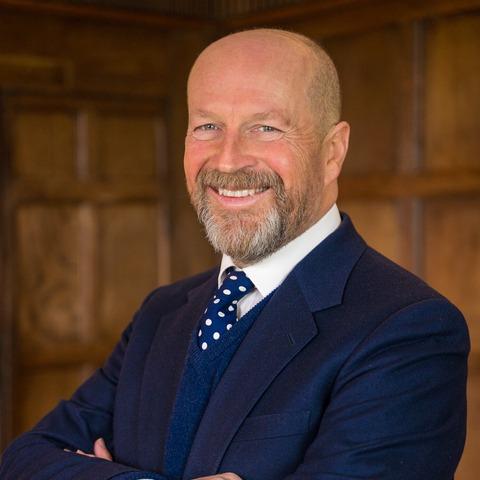




Watch the episode
Listen to the episode
And what does that tell us about the future of luxury businesses and the shift in consumer values?
In this episode of all about business, James speaks with Nathalie Morrison, Founder and CEO of Astrea London. Her high-end jewellery brand focuses on ethical luxury, using the top one per cent of lab-grown diamonds and 100% recycled gold to offer flawless purity that gives consumers more carats — and less weight on their conscience.
Within just one year of launching, Astrea hit one million dollars in sales, prompting Nathalie to leverage her banking network to raise four million pounds at a £14 million valuation. The company has since attracted celebrity backing from Sarah Jessica Parker, who became both an investor and creative director after meeting Nathalie in New York.
Together, James and Nathalie explore the rapid shifts in consumer behaviour and the strategy required to position a disruptive brand at the highest end of a competitive market. They discuss the unique marketing channel she created by opening luxury boutiques inside world-renowned hotels such as the Mandarin Oriental, and the realities of challenging a century-old industry monopoly.
They also examine the changing values of the next generation of consumers, why diamonds are built for emotional enjoyment rather than financial investment, and the power of cold outreach — even when it leads to one of the world's most influential style icons becoming a business partner.
Timestamps
03:23 Nathalie finance background
07:51 how lab diamonds are made
15:49 Diamond Pricing Myths
23:33 celebrity investor partner
30:16 supply chain and quality
37:31 scaling challenges and hiring
Follow James Reed on LinkedIn:https://www.linkedin.com/in/chairmanjames/
Follow Nathalie Morrison on LinkedIn: https://www.linkedin.com/in/nathalie-morrison-34bb60131/
Find out more Astrea London and their products here: https://www.astrealondon.com/
Submit your application to Reed’s Entrepreneurs Fund for a chance to win a £20,000 grant: https://www.reed.com/entrepreneurs
James: Welcome to All About Business with me, James Read, the podcast that covers everything about business, management, and leadership. Every episode, [00:02:00] I sit down with different guests who have bootstrapped companies, masterminded investment models, or built a business empire. They're leaders in their field, and they're here to give you top insights and actionable advice so that you can apply their ideas to your own career or business venture
James: Today on All About Business, I'm really delighted to welcome Natalie Morrison, who is the founder and CEO of Astrea London. Um, this is a high-end lab-grown diamond jewelry brand that you founded, Natalie, in 2023, and the brand focuses on ethical and sustainable luxury using the very top end of lab-grown diamonds, um, with a very high level of purity, I understand.
James: So, um, this is a level of purity rarely found in nature, but you can make these diamonds in your laboratories, Natalie. Is that right?
Nathalie: Absolutely.
James: So thank you for coming[00:03:00]
James: and talk to me 'cause this is a really disruptive, new, um, uh, focus in the jewelry industry. Um, you're leading this change. I'm fascinated by, you know, this story. Could you begin by saying, you know, how did you get into lab-grown diamonds? How... You know, start about- But some origin story, I suppose
Nathalie: First of all, thank you for having me.
Nathalie: It's nice to see you again- Lovely to see you ... from my previous life. Um, so I... Very quick background. I grew up in a place called Saint-Emilion in the south of France, where we make wine. As I was saying, we have a few vineyards around the world. Went to Cambridge here, and then started in banking. So this is, um, previous life where I set up some wealth management firm that I sold to private equity, and I thought I will never work again after I sold.
James: So there's a lot in what you just said, Nathalie. So you, you came from France to England, you studied at Cambridge.
Nathalie: Correct.
James: You then went into wealth management. You had a career in wealth management- Correct ... in banking for, for how long?
Nathalie: 20 years.
James: So you worked in wealth management, and you raised, [00:04:00] I understand, huge amounts of money-
Nathalie: I-
James: for your clients ...
Nathalie: I was okay.
James: How much are we talking about? You're being modest.
Nathalie: I set up the private office for Coutts, which is the ultra high net worth business, where we raised around 30 to 40 billion, I think it was.
James: Coutts Bank. Now, it's g- I mean, it's famous for private wealth management.
Nathalie: Mm-hmm.
James: So you set that up.
Nathalie: I set up the- And you raised 30
James: to 40
Nathalie: billion ... ultra high net worth business, which is- Right ... everybody with 10 million plus.
James: Right.
Nathalie: And then I decided to do it on my own, and I set up two wealth management firm that I sold the latest one to a private equity group six years ago.
James: Right.
Nathalie: And I was really keen on spending time with the children and not working again.
Nathalie: Right. I had done pretty well. Um, and I... So I sp- I started doing a lot of charity work for two years. One is because I've got my own charity in South Africa, giving education to kids from underprivileged background, um, and also because I started doing it with the school. And interestingly enough, um, when I realized doing all this [00:05:00] charity work, how many of these kids, you know, come from background in the mining industry where all them or their family has been damaged or hurt or died in mines, and I realized, uh-
James: So you saw that firsthand in South Africa.
Nathalie: Yeah, yeah. So we've got... In the charity we have, it's in a place called Limpopo. Right. It's, um, around two hours north of Johannesburg. I started this program with some girlfriends, um, 15 years ago, and we've got around 160 kids, which we got out of poverty and gave them an education. And so we spent a lot of time understanding where those kids come from, how can we help the wider community.
Nathalie: And if you see the damage that the mining industry is doing in Africa- Honestly, I am going to use a bad word, but it's disgusting. And that's what gave me the idea. And then Mom was- Well,
James: there's the film Blood Diamond, isn't it, that I've seen-
Nathalie: Yeah ...
James: which describes that or shows that-
Nathalie: Which Leonardo DiCaprio, yeah
James: very graphically. But you've seen it for yourself, [00:06:00] and you s- so you're aware of children dying in mines still today in Africa.
Nathalie: Well, it's better than it used to be.
James: Yeah.
Nathalie: So they have much more process in place. It's called the Kimberley Process that they put in place. But still, I mean, even if you just go not as extreme as children dying, it's also, you know, the deforestation, the, uh, the amount of energy and water that they use, the explosive that they use.
Nathalie: Um, th- there are some villages which have actually completely gone because of it. So m- my, my point is there is no need today to damage our planet for wearing those beautiful jewelry. We can now make them in a lab, and I always used to say that actually I love mined diamonds. I'm still wearing some. My engagement ring, it's emotional and everything.
Nathalie: Mm. But I think with science and technology, we can embrace the past and welcome the future. I think it's just going to change completely the industry, and it's already... You can see it in the numbers [00:07:00] already
James: Well, this is very interesting. I mean, you're... I mean, for people who can't see, you're wearing quite a lot of sparkling- Things, some of which are, are your own products, I think.
James: Um- Well,
Nathalie: they all are actually. Um, yeah, I mean, beside my engagement ring, which actually is a Cartier one that I got from my engagement because it's sentimental. And-
James: Yeah ...
Nathalie: and also I really, as I said, I really think the two industry can really work together, whether it's mine or lab. They keep fighting. I don't think there is a reason
James: for that.
James: So what... So, so okay, so I can see the logic that you, you think there's an alternative here that people- Mm-hmm ... are going to embrace, which is diamonds that are made in labs and don't involve blowing up parts of the planet and doing a lot of damage to- I- ... sort of communities and-
Nathalie: Exactly ... and the landscape And you get exactly the same result.
Nathalie: They are much cheaper as well, obviously, because it doesn't cost as
James: much. Exactly the same result?
Nathalie: Exactly the same result. You
James: know, I- So, so, so, so for, for those like me who don't know how this process works- Yeah ... how, how do you make a diamond? What... I mean, what are you actually doing in the lab- [00:08:00]
Nathalie: Okay ...
James: to deliver exactly the same result?
Nathalie: So let me first answer the question how I got there. That was your first question. Okay. I did two years of research to answer the question you just asked me right now, and I put a lot of my own money into this. I really wanted to understand, is it really true that they are exactly the same? Because that's the main question, and the answer is yes.
Nathalie: It's a seed of carbon who instead of growing in the ground and being pushed up by the mantle and then taking years to exploit to go down and get, you put the same seed of carbon, which originally the first one was natural, in a lab.
James: Sorry, a seed of carbon?
Nathalie: Yes. It's a s- What,
James: what is that?
Nathalie: It's a little flat- Yeah
Nathalie: little piece of carbon, basically-
James: Right ...
Nathalie: that you put in like, like a big microwaves. Right. Right? And they... We replicate exactly what happened in the Mother Nature.
James: Over millions of years, I
Nathalie: suppose. Over millions of years-
James: Yeah ...
Nathalie: into those reactors-
James: Right ...
Nathalie: which are like microwaves. And by doing that, they grow within [00:09:00] four to six weeks, and you get exactly the same product.
James: So you're putting
a
Nathalie: bit of
James: carbon in a microwave, and four to six weeks later, I mean, this
Nathalie: sounds- That's, that's a, that's the quickest way to say it That's a crazy
James: summary- But- But it sounds amazing ... yes, it is You have a sort of sparkling bauble that comes out.
Nathalie: Actually, a lot of people don't realize, but it takes the same time to make the diamond under the earth.
James: Right. It
Nathalie: just takes billion of years for it to go back up the surface and for us to be able to extract it from the planet.
James: Oh, I see. So it's sort of happening sort of deep in the-
Nathalie: It's happening deep- ... planet ... in the mantle, yeah. Yeah,
James: and then it takes a long time to surface.
Nathalie: That's correct. Yeah.
James: Interesting.
Nathalie: So but in our reactors/microwave- Yeah ... as I call it, you just have to put the seed there of carbon, which is exactly the same seed as you will have under the ground, and se- four to six weeks later, it will have grown, and you open, and it becomes a diamond.
James: Right.
Nathalie: And then it, it's a little bit of a black diamond.
Nathalie: There is a lot of polishing and, um, the, the same, the same- But you- ... exercise than with a diamond who come from the [00:10:00] ground.
James: But your, uh, your business, Astra, as I understand it, really focuses on the high-end diamonds.
Nathalie: That's correct.
James: You've made a decision to do that. What i- what, what makes a diamond high-end, and, and why did you take that path?
Nathalie: Okay. So when I looked at the industry, and first of all, I was amazed by the fact that there is zero difference chemically, optically, structurally between a lab and a mined diamonds. I always make a pretty bad analogy saying I've got four children, two of them IVF, two of them are natural conception. Are you telling me that there is a difference between them?
Nathalie: No. And it's a, it's not the nicest one, but it's true. Right?
James: But, but you, I mean, you couldn't tell obviously that one was one and one was the other is what you're saying, huh?
Nathalie: That's my point. Yeah. And it's the same. There is no gemologist in the world who can see the difference between the lab and a mined diamond.
Nathalie: Why? Because there is none. Right. It's the same DNA inside.
James: Did you know that there are nearly 1 million 18 to 24-year-olds who are currently not in education, employment, or training in the UK? [00:11:00] This is simply not good enough, and I want to do something about it. That's why Reed is launching a new initiative, giving 20,000 pounds to young entrepreneurs to help them grow their small business.
James: Visit reed.com/entrepreneurs to find out more. We want to support and encourage the next generation of entrepreneurs. But- So this is hugely disruptive for the traditional diamond
Nathalie: industry, then. Oh, it's massive. I mean, just to give you numbers, it's $100 billion market a year, the diamond industry. Diamonds.
Nathalie: Yeah. Really? Um, it used to be 1%
Nathalie: of the market in 2015.
James: Were lab-grown.
Nathalie: Lab-grown versus mined.
James: Right.
Nathalie: It used to be 5% of the market in 2021. I think they will announce 40% for last year.
James: Right.
Nathalie: They're already saying that 70% of the engagement ring in the US are lab grown.
James: Right.
Nathalie: Um, The Economist forecast it to be, um, between [00:12:00] 80 and 90% by 2030.
Nathalie: The DMCC in Dubai say it will be 100%. Realistically, it will be a pretty high number. And why? Because you can access exactly the same product, first without hurting the planet, second at the real price because they are 70 to 80% cheaper, because it doesn't cost as much to make them. 70 to
James: 80%. Yeah.
Nathalie: Um-
James: You can see the appeal here
Nathalie: it, and you get exactly the same, and you can get better quality than the one you had previously.
James: Well, I, I mean, I can see a world pretty soon where people won't know the difference anyway, and it's just these are cheaper diamonds. But, yeah.
Nathalie: And you get the same certificate, so that's another thing. So to answer your question, in diamonds you have a different quality of diamonds.
Nathalie: It's called the four Cs, um, cut, clarity, color, and carat. And what happen is by putting those criteria, you've got some independent firms called IGI and
James: GIA. So let's just say, so cut, clarity- Cut ... color, and carat.
Nathalie: Correct, the four Cs.
James: Right. Those are what you're looking [00:13:00] for.
Nathalie: Yes. And then you have independent firms called IGI or GIA who gives you the characteristic of your diamonds versus those crite- criteria.
James: Right.
Nathalie: Depending on how high the color is or the clarity, it shows you the price of your diamond. So the highest, obviously the most expensive. The highest one are what we call D and E color.
James: D
Nathalie: and E. And that corresponds to 1% of the mined diamonds in the world.
James: Right.
Nathalie: 1%. We only do those c- we only do those color.
Nathalie: I only do D and E, VVS+ in terms of quali- of, um, clarity, which put us into the very, very high end. Why did I do that? Because when I set up the company, the market below, I will say 2,000 pounds, the very low end, which is below I color, is saturated. So today Swarovski, all the brands on the, on the more mass market only low use lab diamonds.
James: Really?
Nathalie: They don't do mine anymore because there's no point- Right ... [00:14:00] paying more- No ... for the same thing. Um- I wanted to position ourself on the very top end. So I started by putting my own money into this, uh, traveled the world, went to see which factories are the best factories in the world. Um, fell in love with, uh, the one in Dubai and in India.
Nathalie: There's 71 factory in the world today, uh, mainly between China and India, and a little bit in Dubai, and I work between India and Dubai. Um, and then decided to-
James: So you're not, so you're not operating the factories. No. You're, you're effectively a brand that sources from these suppliers.
Nathalie: We source from the factories.
Nathalie: Mm-hmm. And then those, those diamonds, when they are polished and cut, 90% of the diamonds in the world- Hmm ... are polished and cut in a place called Surat in India.
James: Right.
Nathalie: From all the diamond- 90%? Yeah. Really? From all the diamonds in the world. And when you go into Surat, so I open a little office in Surat, where I've got gemologists there who choose the diamonds, make sure that [00:15:00] they are the color and clarity that I want, and then we put them to the lab, the IGI or GIA, to get the right certification.
James: Right.
Nathalie: And, and then after that, we mount them into diamonds.
James: Amazing. So, so if people are interested in finding your diamonds, Nathalie, uh, I mean, your brand is Astrea. Astrea. What, what's your URL? What's your web address? How, how, how will people find these products?
Nathalie: So on Instagram, we are @astrealondon, because that's where the, the new generation looks at.
James: Astrea London, yeah.
Nathalie: And on, um, on, uh, our website is w, w, uh, a- .astrealondon.com
James: Right. And- Very good. And how much... So you say you're just producing the very high end-
Nathalie: Correct, yes ...
James: D and E, as you describe. How much do these diamonds cost?
Nathalie: So today... Well, let me start from a little bit going back on this. So the diamond industry has started exploding 100 years ago now, and we've been told that diamonds were rare, [00:16:00] right?
Nathalie: That means that the, the reality is diamonds are not rare. There is enough diamonds in the world so that eight billion people can each have half a carat.
James: Right.
Nathalie: They've been high hidden, um, and they've been kept so that the price went up.
James: Right.
Nathalie: Um, it's a lovely company called De Beers who has had the monopoly on those.
Nathalie: Yeah,
James: they've done very well out of diamonds, haven't they? I mean-
Nathalie: Well, they're not at the moment. No, not at the moment. In fact- They are trying to be sold and, uh, I think the maximum they are getting, they were valued at 12 billion-
James: Yes ...
Nathalie: in 2022. Today they are trying to sell it for less than a billion and they can't.
James: Because of what's happening in this space.
Nathalie: Because of what's happening in this space. This
James: disruption, yeah.
Nathalie: It's a massive disruption.
James: Yeah.
Nathalie: Um, but also because people are realizing that diamonds are not rare. There is a beautiful Netflix series called Nothing Lasts Forever.
James: Right.
Nathalie: It's a documentary where Netflix was actually sued for 40 million pounds to put that series out, and, um, they won against De Beers.
Nathalie: The [00:17:00] series is out, and you can just watch it. It's absolutely- Nothing
James: Lasts Forever. Yeah. And that's about diamonds, is it?
Nathalie: It's the story about how we've been lied about the diamond industry for so long.
James: Oh, right. And that's on Netflix. It's
Nathalie: fascinating.
James: Nothing Lasts Forever. Yeah. I'll, I'll have a look out for that.
James: And that was a, that was a controversy with De Beers-
Nathalie: That
James: was a massive
Nathalie: controversy- ... when it came
James: out ...
Nathalie: with De Beers. Right. Yes.
James: Okay.
Nathalie: Um-
James: So all right. But, uh, you still haven't answered my question, which is how much do one of these cost, Nathalie?
Nathalie: So they are,
James: they are worth- They're, they're not as rare as people think.
James: Yeah.
Nathalie: So yeah. So the lab diamond today versus the mine diamond is around 70 to 80% cheaper for exactly the same cut, color, clarity, and price. So with the same certificate.
James: Right.
Nathalie: So, but the reason I mention pricing here, and I come back to De Beers, is because everybody thinks diamond is an investment. But the reality is diamonds are not an investment, whether it's lab or mine.
Nathalie: Diamonds is a beautiful things we love wearing, but nobody really makes money in the diamond industry unless they go into the very, very rare stones. To give you an example, today if you buy a two [00:18:00] carats D color in the mine industry- You probably, if you go to Cartier or De Beers, pay between 50 and 70,000 pounds, right, for two carat.
Nathalie: The same equivalent in mine will be 5,000 pounds with the same certificate, the same baby, with the same DNA, right?
James: Right.
Nathalie: So why on hers do you want to buy a 50 to 70,000 one when you can buy a 5,000 one? The only reason would be if they go up in value, right? Right. But the reality is, by the time you leave De Beers or Cartier or any of the big brand shop, you've already lost 50% of the money.
Nathalie: Today, if you try to resell a mine diamond, if you get 20 to 30% of what you paid for, you'd be lucky. So, and I'm not saying it's better- So
James: these are not an investment, they're for enjoyment is
Nathalie: what you're saying. Correct, and I'm not saying it's better with a mine, with a lab diamonds. But at least one you lose 5,000 pounds at the worst, the other one by the time you lose the sh- leave the shop, you've already lost 25,000.
Nathalie: So, but some people like the idea that it comes from the, the [00:19:00] ground instead of coming from the lab. So it's a, it give customer choice, which is what is amazing.
James: You, you, you mentioned that in America, 70% of engagement rings are now-
Nathalie: Lab
James: grown That's very interesting, 'cause I, I, I, I wonder w- you know, that se- feels to me like the new generation is really embracing this, and they don't feel that it needs to be dug out of the ground to, to represent what they want it to.
James: Well, that's- Is that, does that change happen really fast- It's- ... or has it been gradual?
Nathalie: No, it's really fast. I mean, look, in 2015 it was 1%. It on- they only started, IGI, GIA only started grading them the same way, lab and mine, really in 2019. I mean, IGI started early, but GIA started-
James: So what do you s- ... in 2019
Nathalie: explain what, what does
James: GIA stand for? Is-
Nathalie: GIA is, uh, and IGI, they are the firms who give you the cut, carat, clarity, the four Cs.
James: The main companies that will say what it is, yeah. The,
Nathalie: the main companies who- Right ... will grade diamonds.
James: Right. So there are two of [00:20:00] them, um-
Nathalie: The two main one are IGI- Yeah ... and GIA.
Nathalie: There's a few, but these are the- Yeah ... two main ones that everybody trust.
James: So I suppose this point you've made about them being identical is pretty k- key to people saying, "Well, I may as well get a lab grown one."
Nathalie: Well, if you get the same certificate-
James: Yeah ...
Nathalie: meaning that they are real, you get the authenticity, and frankly, you get the same quality, color, and everything between, look- Why wouldn't you?
James: Yeah ...
Nathalie: why would you? And it's 70% cheaper. Then it's a question of choice. I'm not saying... Some people still wanna buy diamonds who come from the ground, right? And I'm not criticizing it. At least it give customers choice. The young generation is very caring about sustainability. Like, my little boy, who is 12, if I put a piece of paper on the floor, he, "Mommy, we grew up by throwing, you know, Diet Coke on the window."
Nathalie: Uh, or cigarettes, right? So that's how we grew up. It's a very different generation. They really care, and they need to care about the planet.
James: Yeah, no, I've-
Nathalie: So this gives them- I'm
James: pleased to hear that ...
Nathalie: the strategy-
James: Yeah ...
Nathalie: about everything- Yeah ... 'cause you can get [00:21:00] exactly the same thing in a way that doesn't hurt our planet.
James: Yes. So how, how are you, um- How are you finding the market in Britain for this? I mean, you mentioned that-
Nathalie: So it's interesting. So when I set up the company, I was just a, a mom setting it up on my kitchen table, right? And we sold around $1 million within the first year, which was- Good, huh ... amazing. Yeah. At £7,000 on average, so it was amazing.
Nathalie: Um, but then I said, "Okay, this has legs." So I went and raised £4 million at 14 million valuation of the company, and I did it with the head of Goldman Sachs Asia, the head of Bridgepoint, the head of Vangard,
James: my- Well, these were your investors ...
Nathalie: my investors
James: and my- These were from your previous life networks.
James: Exactly. That was... That's pretty good. So- So you had some good backers ... yeah.
Nathalie: And by doing that, I started opening shops. So we opened here in Windsor. So
James: you have a shop in Windsor?
Nathalie: We have a shop in Windsor, in the Fairmont.
James: Right.
Nathalie: Um, I s- my strategy was, look, education is key in life, and education is what [00:22:00] needs to understand lab versus mine, for example, and make your own decision.
Nathalie: But I can't spend, um, two hours or one hour that we have today speaking to eight billion people. So I thought if I go into hotels and I put brochures everywhere in the rooms, I will be able to communicate.
James: Oh.
Nathalie: So we- So that was
James: your channel ...
Nathalie: that was my channel. So we opened there. I opened two stores in Dubai at the Mandarin Oriental and the Five Lux.
Nathalie: And now, now opening in Paris at the Mandarin Oriental. We're announcing it
James: tomorrow. So you're really chan- you're really going for the hotel market or-
Nathalie: I started like this, and then I thought, who in the world has the biggest voice, which is loved by my 80 years old- Mother-in-law, and my 13 years old daughter wants to watch- I can guess
James: the answer to that.
James: Go on, who is it?
Nathalie: Sex and the City. It's Sarah Jessica Parker.
James: Right.
Nathalie: So I wrote to Sarah Jessica, and I say, "Would you like to, would you be interested in discussing..." I mean, she's the queen of the fashion industry. She's influenced our [00:23:00] life and generation, and also, I think she has very good values, which matters a lot to me.
James: So Sarah Jessica Parker is American, huh?
Nathalie: Correct.
James: Based in America. But, uh-
Nathalie: So I wrote to her ...
James: Sex and the City was her main, or-
Nathalie: Yes ... right ... Sex and the City was obviously our main, uh-
James: Series ...
Nathalie: our main series, but-
James: But she's very well known. So you wanted to have a, a person
Nathalie: who would help you. I wanted somebody who can communicate the message.
Nathalie: First of all, she need to understand the message.
James: Yeah.
Nathalie: And Sarah Jessica is a very, very clever lady, by the way.
James: Yeah.
Nathalie: Um, she was with the Queen last night actually, because she's a, she was also a judge at the Booker Awards.
James: Right.
Nathalie: So she met the Queen in, uh, in New York yesterday, wearing our pieces. I was very proud, actually.
Nathalie: Um, but I wrote to her, and flut, she invited me to come to meet her in New York. We had a, a very long lunch, and she end up actually becoming an investor. Right. She owns 10% of the company, and is our creative director as well.
James: So she owns 10%. Correct. So, so you've got about 50% then now, is that right?
Nathalie: A bit more than that.
James: Little bit more than that. Okay, so you're maintaining control, but you've- Yeah, yeah, yeah ... got some really good business partners [00:24:00] and- I still own
Nathalie: 70% of the company.
James: 70%. Um, so she's your creative director. What does that involve? What does she do?
Nathalie: So she does, um... First she's the face of the brand.
James: Yeah.
Nathalie: Um, and she's also, so creative director means she does two collections a year, around 14 pieces, that she literally create herself with our designers.
James: This is a, this is a, a growing phenomena, isn't it, having celebrity investors, directors, in all sorts of businesses now. I mean, we had a, we had a guest on the podcast who specialized in connecting people-
Nathalie: Okay ...
James: in this way. So that's worked well for you so far.
Nathalie: Well, the, the thing is that, as you said, it's a very fast-moving, and it's a transformation industry, right?
James: Yes.
Nathalie: Um, there's so much going on with, uh, with lab-grown diamond, which is not just the re- the jewelry industry. It's also semiconductors, cancer research. There's so much you can do with lab diamond, right? It's fast-growing so rapidly that you, [00:25:00] I needed the voice who can communicate the message. And so Sarah Jessica is one of them.
Nathalie: I also have Maro
James: Itoje, um-
Nathalie: Okay ... who is the- The
James: rugby player ...
Nathalie: rugby captain of England.
James: What's he doing for you?
Nathalie: He's the face of the men industry, 'cause a lot of men are starting to wear jewelries.
James: Right.
Nathalie: So we do a lot of black diamonds bracelets.
James: Right.
Nathalie: Um, but what I've tried to find- How much
James: would one of those bracelets set me back?
Nathalie: Around 10,000 pounds-
James: Right ...
Nathalie: it will be for a black diamond bracelet. Right. It's beautiful, actually. Okay. My husband wear two. I'm very proud. Two. And he's a lawyer.
James: And he's a lawyer. Awesome. Okay. Well,
Nathalie: this is- But, um-
James: This is very
Nathalie: interesting ... the reason I mentioned celebrities- Uh ... I think it depends which celebrities as well.
Nathalie: Because for me, Sarah Jessica and Mara both share the same value as mine. One thing which matters to all of us is that we give a percentage of what we make every year to charity, and I really believe that corporate should do this.
James: Yeah.
Nathalie: So, um, Sam Mandla, which is our charity in South Africa who give [00:26:00] education to kids from underprivileged background, is our main charity, and I'm really, really behind this.
James: Right. So well, I would support that. I mean, I'm a, I'm a big fan of philanthropy companies. Um, uh, so w- where, that's where, uh, a portion of the shares are owned by a charity. So that's another- Okay. That's even better ... another way of, of, of approaching it. Yeah. Yeah, even better in a way. So, um, so you've... I mean, it sounds to me you've been quite astute, if I might use that word, in, in getting your brand out there in a, at a, at a point in the history of this market where there's rapid change and, and a lot of new competitors, I imagine, coming out, uh, growing- But that's,
Nathalie: that's the reason I'm going so fast.
James: Yeah. Or
Nathalie: trying to,
James: because- You needed... So you raise money. You got some good high-profile partners. You've got some good channels through Marriott and other Fairmont and other hotel groups. Mandarin.
Nathalie: Mandarin Oriental. M- Ma- Mandarin, sorry. Um,
James: so that, that's very strategic, isn't it?
Nathalie: And now we are taking the US, actually.
Nathalie: So I was in the US. I [00:27:00] just came back. Um, so for the charity, uh, for Sam Mandla and Cash and Rockette, we are 80 women- Right ... part of the group, and we did a car rally from Charleston to Miami last week. We raised around a million dollar for the charities, and Astraea was the main sponsor.
James: Oh, right. So- So you did a car rally?
Nathalie: I did a car ra- Um, I just came back yesterday morning. Yeah.
James: What were you dri- what were you driving?
Nathalie: Actually, I'm scared in Ferraris and all this, so I drove a Jeep.
James: Right.
Nathalie: Very sensible. So I'm a little bit scared in that sense. But all red cars that, um- So
James: this was to, this was to profile your brand as well as raise money for the charity.
Nathalie: I'm mainly raising... Yeah. It's 12 times I do this tour anyway, um, because I really believe in Cash and Rockette, and I'm really believing in women putting just together to change the world. So yes.
James: Right.
Nathalie: But Astraea sponsored it, so now I'm having so many connection. New York is my new destination.
James: New York.
Nathalie: I'm going to New York in May to open a store. Yeah.
James: Oh, good luck with that. So will that be your second store?
Nathalie: No. I've got two in Dubai.
James: Oh, so these are, these are [00:28:00] not concessions. They're actual stores.
Nathalie: They're actual stores. Right. So I've got one in London, I mean, in Windsor. It's a proper shop, yeah.
James: Yeah.
Nathalie: Two in Dubai. I'm opening one in Paris on the 15th of June. And now, uh, New York opening in May.
James: Fantastic. So that's rapid expansion. So are, are you able to finance this now through revenues? Or are you- Yes ... gonna have to raise more money?
Nathalie: No, we've been really successful.
James: Right.
Nathalie: Because we are... Actually, I think the more people understand the lab-grown space, um, the more some people fell in love with it, because they wanna wear, you know, sustainable as well.
Nathalie: Yeah. And also because they can get bigger stones. We... There's no thing we can do with lab-grown diamond that we couldn't do. Right. So, you know, I mentioned the fidget rings, or I mentioned color diamonds. So we can do any colors, any stones, any shape.
James: For those that can't see Nathalie, she's sort of pointing at some rings and bracelets that, from where I sit, are sparkling beautifully.
Nathalie: Thank
James: you. So these are- Yeah, it's- ... your products that- Well,
Nathalie: it's because they are
James: DNA colored ... but, and you can, you can choose. You can have them made s- bespoke as well?
Nathalie: Yeah, [00:29:00] we do a lot of bespoke pieces. Right. We do, um... So for example, we did the first necklace in the world that you can wear in seven different ways.
Nathalie: So it's basically detachable, so it can become- Right ... earrings, necklace, bracelet. So when you travel, you can only take one set-
James: Oh, I see ...
Nathalie: and travel the world. So these are things that you... Y- you know, actually, I've got a funny jokes about that. So there is, um, one of my first client, um, very famous person, so I'm not gonna say who it is, but got married for the third time.
Nathalie: Right. And he got married with a Chinese lady.
James: Right.
Nathalie: And she wanted 8.88 carat.
James: Right. '
Nathalie: Cause eight is the lucky number, right? Right. Um, interestingly- It is ... yeah, interesting, and he had no limit with his budget. Interestingly, he went to Graff, De Beers, everywhere. They can do the first eight, no problem. The second eight, yes, but the third was impossible because the risk margin in the mine industry with the price of those diamonds was far too high.
James: Right. [00:30:00]
Nathalie: We did it in six weeks for much cheaper. Actually, I should have charged him much more at the time, but, uh-
James: So you made an 8.88
Nathalie: lucky carat diamond. Yeah, so we can do anything with lab-grown diamond. There's no shape, color, anything we can't do.
James: Right.
Nathalie: Technology is an amazing tool.
James: So, so you, you, you're quite dependent though, I think, on these manufacturers.
Nathalie: That's correct, yes.
James: So have you, have you forged a relationship with one in particular, or h-how do you manage that side of th-this? Because-
Nathalie: Okay,
James: so- You need a good su- supply line, don't
Nathalie: you? Yes, we need very good supply line, and we need to check everything as well. So, um, I separated originally. Half were made in Dubai, half were made in India, and the way I did it is I opened my own company in Surat.
Nathalie: As I said to you- Yeah ... where all the-
James: In India ...
Nathalie: polishing and cut are happening. Mm. We put gemologists there who went and ch-choose the s- choose basically each stone one by one between all the suppliers. Oh,
James: [00:31:00] so, so you have a lot of different-
Nathalie: Yeah ...
James: people you source from.
Nathalie: Much, much safer.
James: Yeah, that's what I was thinking, 'cause otherwise you're at risk of them putting the price up or-
Nathalie: Yeah, and
James: then I- Or supply line disruption, which I imagine might have happened in Dubai recently with the war.
Nathalie: It's been
James: a- Must have
Nathalie: been
James: difficult
Nathalie: for you ... Dubai, Dubai has been a very... So Dubai was booming for us in December, January, February, but obviously since March it's a different market.
James: Yes. Yes.
Nathalie: Um, but you know what is interesting, actually? W- the quality is the most important things for me, right? So, um, I, I wanna grow with the top quality in the world.
Nathalie: So as I said to you, we do the 1% of the diamonds in the world, which correspond to the D and E color, right? Now I go even further. I do the 0.01% in terms of quality by adding some certification to the diamonds.
James: Right.
Nathalie: So we can now achieve a level which has never been seen before.
James: Right. So this must be appealing to a certain category of customer.
Nathalie: That's correct.
James: Yeah. [00:32:00]
Nathalie: And it's called lab-grown diamond, and everybody says to me, "But that's such an ugly name." And I said, "But you know what? Is the name mobile phone nice? No." And we all have one.
James: Yeah, it sort of caught on, didn't it? It
Nathalie: caught on, yeah. So- Yeah,
James: that's a very
Nathalie: good
James: observation ...
Nathalie: the, the mine industry has tried for years to say, "But they are fake," but they are not fake, and they are called lab, yes, and we should promote the fact that they are lab.
Nathalie: So Astrea was one of the first company to say, "They are lab-grown diamond, and we are proud of the fact that they are lab-grown diamond."
James: So, so how do you see your business developing from here? I mean, you're opening new shops. Yes. I mean, what are your sort of ambitions for the business?
Nathalie: So we should be turning around 3 million this year, uh, pounds, so it's growing really fast for...
Nathalie: Because it was December 2023 when we started. Um, I'm hoping that Paris and New York will be a big success, uh, and then, you know, the world is ours, so.
James: Would you, but, but would you look to open in more cities, or would you try and put more business through sort of a few key locations?
Nathalie: I think key location is important, but I also [00:33:00] think, you know what, the world is changing so much.
Nathalie: Social media is taking over so much of our lives that actually we sell a lot online.
James: Right.
Nathalie: Interestingly, when I grew up, I would have never bought anything online like a diamond or anything of that price. Now People wants to trust a brand. When they trust the brand, and they can see the result, we sell a lot onlines at the moment.
James: Yeah.
Nathalie: And there is, um... Actually, I'm going to do the marketing for a company called ShopMy. Have you heard about ShopMy?
James: Go on.
Nathalie: Okay. There's this whole world of influencers in the world, yeah?
James: Yeah.
Nathalie: And frankly, I think the world is changing on that front, too. And ShopMy created a platform, which is a 1.2 billion pounds company, by the way, where they integrated a lot of influencers who promote brand on it.
Nathalie: So I think we need to grow our business when technology advance as well. So I think a lot of it will go on platform as well.
James: Right. So, so you've got multiple sort of outlets potentially. Right. Now, you mentioned, Nathalie, that you started your life in a place called [00:34:00] Saint-Émilion in France- Yes ... which is, um, to wine drinkers, well-known.
James: It's a sort of premium wine grape. And, and I believe you, you were in the wine business, too, and it would be- That's right ... remiss of me not to ask you about this.
Nathalie: Of course.
James: So, so tell me about what you're doing in that space.
Nathalie: So I grew up in a, in a chateau called Chateau d'Estue, which we, uh... It's a Grand Cru Classé of Saint-Émilion, and Saint-Émilion is full of tradition, right?
Nathalie: Right. This is also why, like, diamonds and wine fit really well, 'cause it's about value and tradition. And we, uh, my father is a doctor originally, um, but every time he made money, decided to buy vineyards, and so we grew up with this mentality. And so every time I sell a company, I buy a vineyards with it.
Nathalie: So we bought, my husband and I, in South Africa as well.
James: So you've sold some companies. So you've got... How many vineyards have you got now, then?
Nathalie: Well, between me and my dad, we have seven.
James: Seven?
Nathalie: Yes.
James: And where are they?
Nathalie: So in Saint-Émilion, Pomerol, and in South Africa in Stellenbosch.
James: Right. [00:35:00] Okay.
Nathalie: It's a little passion of ours.
Nathalie: Yes.
James: So, and so how's the wine business at the moment? 'Cause I'm hearing people are drinking less. Is that
Nathalie: an issue? Do you know what, actually? That's interesting. So out of my four kids, I'm amazed, at 21 years old, they don't drink anymore.
James: Wow. So
Nathalie: to be fair, the wine business is not doing as well at the moment.
Nathalie: However, Saint-Émilion and Pomerol are still the best grounds-
James: Premium, yeah ...
Nathalie: and so people always still want the best. So we are very lucky to be positioned where we are. Um, but the problem in the wine industry is you really depend on the weather. So you can have some really good years, you can have some really bad years.
Nathalie: So Saint-Emilion has been lucky over the last few years, and hopefully they will continue. But as you said, people are drinking less.
James: Well, it's interesting to me, your strategy in both wine and diamonds is to focus on the top end of the market. That's correct. The sort of high-end premium products. That's where you feel you'd like to focus is, is what I'm hearing.
James: Yes. Is that correct? Yeah.
Nathalie: That's [00:36:00] absolutely correct. I only wanna do the top of the top. So if... Just to give you an example on the diamond side, so Cartier only does 3 to 5% of their diamonds are D and E color. All our diamonds are D and E color. So, and the reason I'm focusing on that space is because it's a, the only space which is, first of all, not saturated-
James: Mm
Nathalie: and that's a space which I enjoy.
James: Yeah. Yeah. I can see
Nathalie: that. It's, it's a growing fast market, and I love disturbing an industry. I find it fascinating.
James: And in Stellenbosch- Yes ... that's in South Africa, um, what's your wine
Nathalie: there? What type of wine is it? So it's called Marianne Wine Farm, Marianne being the emblem of France, which is why I call it like this.
Nathalie: Right. And we have restaurant, bed and breakfast there, and 40 hectares of wine.
James: Oh, so you have a, a full business there
Nathalie: as well?
James: Yes.
Nathalie: Yes. Actually, it's, uh, very... We were very lucky because when Nelson Mandela did his 100, uh, 90s years birthday in, um, Hyde Park- Mm ... don't know if you remember, he did his 90s birthday in Hyde Park, he chose Marianne.
Nathalie: Oh. [00:37:00] So it gave us a massive marketing boost at the time. He chose your
James: wine?
Nathalie: That's correct. Yeah, because he wanted wine which was made from outside, and- Yeah ... obviously the Bordeaux blend in South Africa.
James: Right.
Nathalie: So we've been very lucky that the name of Marianne was pushed thanks to that.
James: Right.
Nathalie: And I'm a big fan of Nelson Mandela.
Nathalie: So, yeah. Uh,
James: so if you wanna buy Marianne, where do you find that?
Nathalie: Online.
James: Online.
Nathalie: Same. On mariannewinefarm.co.za.
James: marianne.winefarm.co.za. Well, that's really great. So Natalie, you, you're, you're leading a disrupt, a, a rapidly growing business in a big space, big market. Um, what are the, what are the biggest challenges you're facing as you grow as a, a dynamic growing business?
Nathalie: Well, any business face difficulties on a daily basis. People who tell you that a business goes straight up, it's wrong. I've never seen one who does. So there is challenges on a daily basis. Two years ago, my challenge was education. Like, people [00:38:00] didn't know. You, you would be at, outside the school gate, and one mom out of 50 will know about Lab Grown Diamond.
Nathalie: Today, education and the power of the communication makes it much easier. Now it's scaling it, which is my next challenge, right? So we are opening quite fast between the countries, but the challenges that I'm having is like in any business. First, is finding the right people with the right values. Um, and second, is making sure that we deliver the best product that can't be seen anywhere else.
Nathalie: So we have to be innovative on a daily basis.
James: Right.
Nathalie: I drink a bit of my wine, and that give me the, a lot of my ideas.
James: That helps your ideas. And what about the people side of things? I imagine you're hiring people.
Nathalie: Yeah, I'm hiring a lot of people at the moment, yes. Um, it's
James: a- How'd you
Nathalie: get
James: that right?
Nathalie: Well, I don't always, to be honest with you.
Nathalie: Mm. And I'm pretty fast at saying goodbye when it doesn't work. Right. Um, but the reality is you always have to go a bit with your gut feeling, especially when it's a complete different industry. [00:39:00] 'Cause remember, I've got zero background in retail or jewelry, right? I mean, obviously I love wearing jewelry, but, um, so I had to educate myself quite a lot, and finding the right people in that space is not easy.
Nathalie: Interestingly enough, I love the young generation. Um- The name Astrea was really interesting, 'cause I really thought, "What can I call it?" And as a Astrea means, um, star in Latin, but she's also in Greece, um, the d- the deus of the beauty, justice, and clarity. And the reason I found the name is I went to the College of Art, I put an advert, and I gave 500 pounds to the person who give me the best designs.
Nathalie: Believe me, it's much better than when we get into one of the big companies, you pay 20,000 for the same thing.
James: So you went to the art college. That's a
Nathalie: very good idea. I went to the College of Art and did that. So I said- So
James: anyone starting a business should listen to that. Yes ... 'cause it's a really good way of getting creative and
Nathalie: cr- It's a very good way, and this young generation are [00:40:00] amazing on social media ideas, and they have to, because a lot of the job will be cut anyway with AI, and I think they are much more imaginative.
Nathalie: So actually, my best advice, my best recruits have been the new generations.
James: So giving young people an opportunity is a-
Nathalie: Absolutely ...
James: really good thing to do as well. So you, you, you say there's a lot involved in the manufacture. I- Are, are, are the criticisms around that in terms of sustainability?
Nathalie: Well, so that's interesting, actually.
Nathalie: So there's been a lot of lobbying from the mine industry to try to say that the lab industry was fake. Right. Started like this, right? A lot of people try to sell lab-grown diamond as mine diamond, right?
James: Yeah.
Nathalie: As I said, we do the opposite, right? You, we really get the certificate and prove you that they are lab-grown diamond.
James: Hmm.
Nathalie: Um, but y- yes, there's been so much lobbying, as I say, to try to detail people, um, because it's collapsing of an industry for 100 years. I mean, look at, as mentioned, De [00:41:00] Beers early on. They lost 12 billion valuation in less than four years.
James: Right. So, you know, that's, um...
Nathalie: It's, uh, yeah.
James: It's- Definitely a disruption, actually.
Nathalie: It's a disruption. And you know what? I wanna add one more thing. Um, I mentioned it very s- um, quickly early on, but actually, the lab-grown diamond space is not just for jewelry. It will end up being 5% of what they are for. It's, they are very active on what is semiconductor, um...
James: Diamonds used in industry.
Nathalie: It's an industry. Medicine. Like, you know, as I've mentioned, cancer research, you know, the, the machine will operate people with, um, robots. Hmm. All of this is much more possible because they are much more clear and they are much more... The quality is much better of lab-grown diamonds, so they use them a lot.
James: Right.
Nathalie: And it's a massive growing industry.
James: Right. Well, thank you for sharing your excitement and, and knowledge on this subject, which I, I feel much better informed now than I did at the beginning of our conversation. So thanks very much for that.[00:42:00]
James: I always ask my guests two questions at the end of, uh, our conversations. And, and the first question, because here at Reid we love Mondays, is what gets you up, Nathalie, on a Monday morning?
Nathalie: Um, what gets me up? I think the excitement of another day. Uh, I have four kids, as I said, so they wake me up to start with.
Nathalie: Ah. Uh, or my husband, actually, one of them. Uh, but it's the fact that, you know what? Look, I was in a complete different industry for 20 years. You can still succeed and wake up and grow up into a different one, so you don't have to do the same thing every day. Um, I went from m- wine to banking to diamonds, and the world is full of opportunities, or charity work.
Nathalie: I think this is where our children have the chance to do so many thing in the world. That's what wake me up in the morning.
James: Yeah. Well, it's very good and quite right. I agree. And then the [00:43:00] last question from my interview book, Why You, um, is where do you see yourself in five years' time?
Nathalie: Well, I be 53 by then, so, um
James: Don't look so worried.
James: Uh,
Nathalie: my kids- The worried eyes ... my kids will have- ... my kids will have left, uh, school by then- Yeah ... so I think we will travel a bit more, my husband and I.
James: Uh.
Nathalie: Um, I'm hoping Astra will have grown enough that I will start being associated with an LVMH or one of the big brand. I hope I'll be really proud of what we've created with the right value- Oh, you
James: wanna get aligned with one of those big brands?
Nathalie: At some point, yeah.
James: Okay.
Nathalie: At some point I wanna grow to the next level. But also, I wanna wake up in five years' time and be proud of what we've done, so that everything is by the book with the right value, I've been giving back to a lot to charity, and making my investor proud.
James: Well, I wish you every success with that.
James: Thank you. Uh, it sounds like a, a, a great ambition, and I look forward to watching your progress. Thanks so much for coming in to talk to me, Nathalie. [00:44:00] Thank you for having me. I so enjoyed our conversation. It's a real pleasure.