In a landscape shaped by economic pressures and evolving workplace expectations, human resources teams are at the forefront of organisational change. HR professionals are not just managing personnel - they are strategic partners navigating complexity, justifying costs, and championing culture.
The current climate demands that HR functions are more agile and cost-effective than ever. As organisations grapple with increased outgoings, HR teams are tasked with finding efficiencies and ensuring every decision adds value. This has led to a cautious approach to hiring, with prolonged recruitment processes becoming the norm. Businesses are taking their time to find the right person, understanding that a mis-hire is a costly mistake they can’t afford.
Evolving strategies in an uncertain economy
Economic uncertainty is compelling HR teams to adapt. Many professionals report feeling stretched, taking on broader responsibilities as budgets tighten and team resources are limited. HR directors are often pulled into day-to-day operational tasks, leaving less time for strategic planning.
To counteract this, organisations are looking to become savvier with their systems and processes. There's a push to implement more efficient HR metrics and monitoring tools to track key areas like sickness absence, which directly impacts their bottom line. This focus on cost-effectiveness underscores the critical role HR plays in maintaining business stability during challenging times.
Despite the caution, there are positive signs. A recent uptick in hiring for talent acquisition roles suggests that companies are gearing up for future growth, preparing to be in a solid position as the economic climate improves.
In-demand skills and shifting priorities
While no single ‘radically new’ skill has emerged, the demand for core HR competencies has intensified. HR generalists and employee relations roles have remained strong as employers look to improve efficiency as they navigate through the upcoming changes to employment legislation. Additionally, those with technical skills are always in demand.
Expertise in handling restructures, redundancies, and consultations is highly valued. Professionals with a solid, broad understanding of the operational and legal aspects of HR are also essential.
We are also seeing a resurgence in certain specialisms, including:
Learning and development (L&D): An increase in L&D openings indicates that companies are reinvesting in their employees. This focus on internal development is a key strategy for talent retention and succession planning, signalling a commitment to long-term growth.
Equality, diversity and inclusion (ED&I): Despite some headlines suggesting a cutback, ED&I remains firmly on the agenda for many HR professionals. They recognise its importance in building a robust and equitable workplace culture and are actively looking to implement more effective ED&I strategies.
The hybrid working debate and its impact on policy
The conversation around hybrid working, flexible hours, and wellbeing continues to shape HR policy. However, there is no one-size-fits-all solution. The approach often depends on the nature of the business and its workforce.
In sectors like manufacturing or those with a large operational, on-site employees, the expectation is often for HR to be visible and present. In contrast, professional services and other office-based environments are more likely to offer hybrid arrangements. The core principle seems to be that HR's working model should align with that of the employees it supports.
For HR professionals themselves, flexibility is a top priority. A healthy work-life balance is now a primary motivator, often ranking above salary and other benefits. Companies that fail to offer some form of flexibility find it significantly harder to attract and retain top HR talent. The days of a mandatory five-day office week are a difficult sell for professionals who have experienced the benefits of a more balanced approach.
The crucial role of culture and values
An organisation's culture and values are paramount in attracting and retaining HR talent. Many professionals leave roles because of a misalignment with their personal and professional ethics. This can happen when a company's practices are not in line with legal procedures or when the HR function itself is not valued by the senior leadership team.
HR professionals want to work in environments where they can make a genuine impact and feel their contribution is respected. They seek cultures that are supportive, ethical, and aligned with their own values. This makes a strong, positive culture one of the most powerful retention tools a business has.
Competing with the public sector
The private sector faces stiff competition from the public and third sectors, which often offer more generous benefits, particularly annual leave and pensions. To compete, private sector companies must leverage other advantages.
While public sector roles provide stability and excellent benefits, they can also come with significant red tape, which can frustrate HR professionals who want to make a swift impact. The private sector can offer a more dynamic, commercial environment where individuals can implement change more freely. Consequently, private companies often attract talent by offering higher salaries and the opportunity to have a more direct influence on business strategy.
Salary trends and jobseeker expectations
Salaries in the HR sector saw a significant inflation spike around 2023 but have since levelled off, and in some cases, dropped. This has created a challenging dynamic. We are seeing roles for experienced HR directors advertised at salaries that are misaligned with market rates, making it difficult to attract professionals with the required level of expertise.
This mismatch between what companies are willing to offer and what individuals expect, is a major point of friction. Businesses that are highly selective about who they hire must also be realistic about their compensation packages. If you want the best talent, you must be prepared to offer a competitive salary and attractive benefits, including the much-desired flexibility.
The future of HR: technology and regulation
Digital tools and AI are gradually reshaping HR, but perhaps not in the way many predicted. The consensus among many HR professionals is that AI is more likely to augment their roles rather than replace them. Its greatest potential lies in automating administrative tasks, freeing up HR teams to focus on more strategic, people-focused initiatives like improving the candidate experience. The human element of HR remains irreplaceable.
Upcoming changes to employment law will have significant impact, and HR professionals will be essential in navigating these changes. Companies will need HR expertise to review and overhaul their policies and procedures, potentially driving an increased demand for skilled professionals over the next couple of years.
Finally, the voice of HR is growing stronger at board level. Senior HR leaders are increasingly part of a company’s senior leadership team, where their influence on key business decisions is valued. This recognition is crucial, as HR strategy is fundamental to shaping policies, managing talent, and ultimately driving the entire organisation forward.
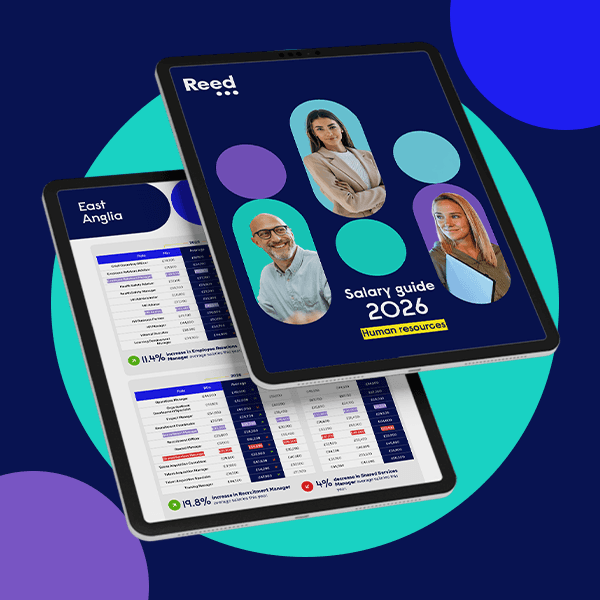
For more insights into the human resources labour market and for reliable salary benchmarks for the sector, download Reed's 2026 human resources salary guide here.