



Watch the episode
Listen to the episode
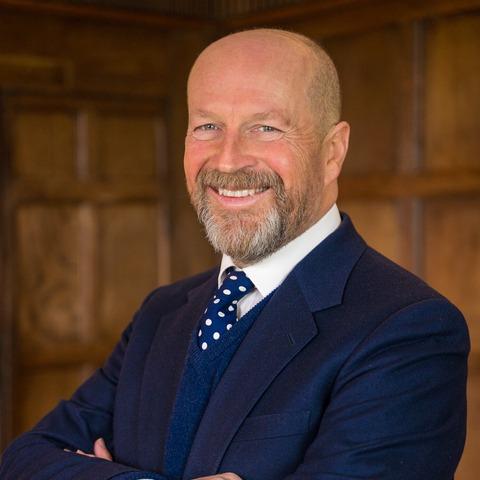
In this episode of all about business, James speaks with Andy Harries, Co-Founder and CEO of Left Bank Pictures. Together they discuss Andy's 50-year journey from a promotion scriptwriter at Granada Television, to launching his own company, selling it to Sony, and navigating the streaming revolution.
Andy explains how being rejected at 26 became the fuel for his ambition, how his early documentary work took him around the world, and what he learned directing cultural icons including the Sex Pistols, Malcolm McLaren, and Truman Capote. The conversation dives into the business of creativity, including the high stakes Netflix pitch that led to a 100-million-pound deal for The Crown, what global streamers look for when backing premium drama, and how British television has scaled to a global audience.
Andy also reflects on his transition into an executive chairman role, mentoring the next generation of talent, and why protecting British creativity and a strong BBC matters more than ever.
02:26 journey through Granada
06:02 transition to comedy and drama
09:34 The Queen and Prime Suspect
12:47 founding Left Bank Pictures
39:35 reaching out to Ken Braner
50:17 The Crown and Netflix partnership
01:04:35 transitioning roles and future projects
Follow James Reed on Linkedin: https://www.linkedin.com/in/chairmanjames/
Find out more about Left Bank Picture and Andy Harries: https://www.leftbankpictures.co.uk/
Andy: [00:00:00] I was told in no emphatic terms that I was not producer material and that I was never gonna be made a producer by
James: Granada. I
Andy: literally left the room thinking, well,
James: I'm gonna show you mate. Andy Harry's, co-founder and executive chairman of Left Bank Pictures, the production company behind the Crown, the Queen, and many more globally acclaimed shows.
James: Andy has built a career that bridges creativity and commerce, leading teams, scaling productions, and navigating the streaming revolution while staying true to powerful storytelling.
Andy: When you have a chance to work with Kee or great talent, you've just got to put yourself on the line and say, right, let's do this.
Andy: We went and did a meeting every day for one week in la and that was HBO, Fox and Showtime, and then Netflix was on the last day. They all loved the script. I mean, they would lean towards saying, seriously, a hundred million for a pile of British history. We basically thought, we're gonna be going home Saturday.
Andy: Friday night, I, I think we were going up on Friday night empty handed. They literally bought it in the room. We were [00:01:00] looking for a hundred million commitment. It nearly didn't happen because there was opposition from the senior management. We had to wait till he went on holiday before we could get it through.
Andy: So
James: how do you pull this off? Andy? Welcome to All About Business with me, James Reed, the podcast that covers everything about business management and leadership. Every episode I sit down with different guests of bootstrap companies, masterminded investment models, or built a business empire. They're leaders in their field and they're here to give you top insights and actionable advice so that you can apply their ideas to your own career or business venture
James: today on all About business. I couldn't be more delighted than to welcome Andy Harrys. He's the co-founder and CEO of Left Bank Pictures, a leading production company, and Andy has produced. Among other global hits, the Crown and Outlander. And he's been CEO for 18 [00:02:00] years and he, he's planning to become executive chairman in 2026.
James: Uh, we'll talk about that in a minute, Andy. Um, but he's won, he and his colleagues have won a host of awards, bafta, Emmys, golden Globes. I think it's fair to say Andy is a TV legend. I'm making him smile, but it's very true. And, um, I can't wait to learn more about your journey and your ideas and your way of thinking about television, Andy, but let's start at the beginning.
James: Well, at least the beginning of your journey in television. I think you started in Grenada, in Manchester. I did,
Andy: in fact, uh, rather oddly, uh, uh, seeing as we are approaching December, it was exactly 50 years ago as a young 21-year-old, uh, I got a job at Grenada, um, as a promotion script writer, which is, uh, which is basically defined as the person who writes the trailers that used to go out between shows in, in the old broadcast days.
Andy: So, you know, come up later tonight, you can enjoy it, blah, blah. All that is actually written and, and, and our job was to make the [00:03:00] trailers and write it. So it was a fantastic introduction to, um. To television, and I was incredibly lucky to get a job at Granada. I, I had been a journalist. I'd started up on a newspaper at 17, so I'd done a year in a paper, then gone to university at Hull, studied politics, went back to the, to the paper in holidays, uh, just to try and keep my hand in and to, and to, frankly, to get a bit of money.
Andy: Um, but I was lucky really because I was given a bit of a steer quite early after university, um, where I, well, that was my last year. I was applying for jobs and I went to an interview in Newcastle for the, oh. What was it called? The Ty the Echo, I think it was called the Newcastle Echo of the paper. Right?
Andy: It was a Thompson paper, actually, it was part of the Thompson graduate scheme. And this guy, very wise, uh, editor, was interviewing graduates essentially to, he was taking on one or two. They took one or two, one in each of the places at regional papers. And where, when he tapped me more about what excited me, uh, which was, you know, traveling overseas and, uh, you know, just the kind of [00:04:00] world events, he said, you're doing the wrong thing.
Andy: It's the wrong job. You don't wanna be a journalist in newspapers. You wanna be in tv, TV's that if you wanna travel television's a place to, to be. And he was right.
James: Well, you've done quite a lot of traveling. I've done a lot of traveling. I've done
Andy: a lot of traveling and a lot of exploring. And I met a lot of people because for a good chunk of my career I was essentially involved in documentaries and news.
Andy: Um, and, you know, that took me, you know, sort of, I mean, you know, all over Africa, a lot of all over, uh, south America. And, um, yeah, I mean, I, you know, extraordinary range of experiences as any documentary maker, uh, tends to have.
James: So this was primarily with independent television. It was later. I
Andy: mean, I, I stayed at Grard for five years, from 21 through to 26.
Andy: Uh, when James, this is, I hope this is encouraging to people. People always think you've had, oh, you had a, a great old life, Andy. It's just gone up and up and up.
James: Yes. Well, it
Andy: wasn't the case actually, when I was 26 years old, I applied for my third producers board because in those days it was quite formally [00:05:00] structured.
Andy: It was a very unionized industry in those days. This was pre-PA. Um, and, uh, I applied for my third producers board and I was told in no emphatic terms that I was, uh, um, I was not producing material and that I was never gonna be made a producer by Granada. And the guy rather helpfully said at the end, he thought I should do another, another trade altogether.
Andy: Right. So that was that. But, uh, but you know, so how wrong was he? Well, yes, as it turns out, sitting here now, he was wrong. And he was,
James: but didn't telling you that make you more determined to show him he was wrong. I
Andy: couldn't wait to get on the, the train. Was that, was that a help or a hindrance? That It was, it was a fantastic spur.
Andy: It was. He literally, he literally left the room thinking, well. I'm gonna show you, mate. Exactly. Probably worse. Well, I'm not gonna swear I was just a very nice podcast, but I, I, but absolutely no, and it literally, it was like jet, jet engine fuel inside me to think, oh, I'm gonna to, I'll show you. And I was incredibly lucky.
Andy: 'cause this was the early mid eighties and at just at that time, channel four was being set up. So there was a flood [00:06:00] of new production companies that were being set up to make shows for Channel four. And I, my services were, you know, actually in demand. The timing was, did your paths ever cross again with the man who gave you that feedback?
Andy: No, it didn't. No, he passed actually. But I was sad to see that because I wasn't, I didn't hold him. And I mean, you know, look, I think that, so he wasn't
James: able to see your No, he wasn't.
Andy: Uh, but I think that, I think Grenada at that time had, I think the middle management in Grenada had become a bit dull, a bit boring, you know, it was a very entrepreneurial and interesting company to be a youngster in it.
Andy: Had a great ethos. It was very. Pro North, it was sort of very anti-establishment. It was certainly, uh, broadly left, not, not right. I mean, just adding, you know, this is a
James: commercial TV station. Yes. Yes. But, you know, that's interesting.
Andy: The roots of Grenada, you know, when they were set up by the Bernstein family, it was set up in such a, uh, an extraordinary way, a very entrepreneurial way.
Andy: They chose when ITV was, they, they sold off [00:07:00] basically the regions of ITV to commercial companies in the fifties. The Bernstein family decided to go to, uh, to go for a franchise. And, and, and the, the reason they went for what became Grenada, which was the northwest of England, was because it had the high highest rainfall in the uk.
Andy: And they argued or, or felt that the, the area with the highest rainfall where it would be, would be where they watched television most. And therefore, if you look Well, that's inspired, inspired. It's always raining in Manchester, isn't it? So you can, so, so on top of that, they, they, I mean the, the, the, the, the inspiration of the Bernstein family went further.
Andy: They, they then, uh, they constructed a, a very, uh, it's still there today. It's now a so house, of course. But it, it, it extraordinary sort of late fifties building. Yeah. And on the top of the building, they put a tower as if it's beaming out television. It's entirely made of wood. It had no function whatsoever, but it looked like it was beaming this sort of television out to the northwest and then the nothing there.
Andy: So that, that was, that was a
James: set rather than a real set satellite. And then downstairs
Andy: they had [00:08:00] studios 2, 6, 8, and 12. So when you say, oh, you're in Studio 12, oh, you've got 12 studios? No, and four studios. Very clever.
James: I can see there's a lot of smoke and mirrors in this. There's a lot of smoke and mirrors this world of television and I think
Andy: this, this, this culture inside Granada produced a sort of, you know, well, we'll show 'em up north, you know?
James: Yeah. So there's a sort of northern pride about it. Huge northern Pride.
Andy: Yeah. Yeah. And, and and and yeah, it was a north and, and it sort of instilled you. There was uh, there was a kind of there, you know, whereas the BBC was sort of educate and entertain. I think it was Granada was more, not cause trouble, but push it.
James: You provoke it more for people who can't see you right now. And I should tell 'em that you're holding me fist up and really beating what you're saying. Yeah. As real figure yourself. Well, I was kind
Andy: of a, quite a rebellious character, which is probably why they actually got rid of me at first time round, but.
Andy: Not rebellious so much, but I, but I've always been quite impetuous and quite sort of, I, I, I find [00:09:00] authority a little ing. But you haven't
James: been afraid to sort of have conflict at work?
Andy: No, I've had conflict. I don't think I would need to go into that in too much. I had one or two fights. Oh, literally fights.
Andy: Yeah. Literally. Yeah. No, I'm not proud of that, by the way, but I, I, I mean it's
James: in your Wikipedia, it's not sort of primary.
Andy: Yes, I know. I know, I know, I know. I, I, I, I, I, I, I, I don't think I have a temper per se, but I have a sort of short fuse when it comes to things, when I think I'm right and someone else is wrong.
Andy: And it has led to me throwing a punch or two a couple times. Well, I'm a safe
James: distance from,
Andy: but as I say, I don't, I don't think it's something to be proud of. No, I dunno why it's in the Wikipedia. Well, young men do
James: and maybe regret later edit
Andy: the Wikipedia. But anyway, yes, it did. It did. Yeah. Yeah.
James: Yeah. But so, but you are obviously passionate about your, I mean, one other way of looking at that is you feel you care about what you do and deeply you're passionate about your work.
James: Deeply. Yeah.
Andy: No, I mean, I'm incredibly lucky 'cause television is suited, my personality. Perfectly. And that's what I realized when I got there. I mean, I was an okay journalist. I could write decently, but I wasn't a great writer. You know, I, I have a very short attention span. Uh, I'm [00:10:00] a bit a DHD, uh, and I'm dyslexic.
Andy: So all, all these sort of things combined for perfectly in television where, where, where everything is done on a bit of a rush and you could do a bit of everything. You film a bit and produce a bit and edit a bit and direct a bit and all that kinda stuff. And particularly if you're doing news or documentaries, that's that ability to basically be across everything, uh, be able to do everything and anything is really helpful.
Andy: Um. It, you know, it was ground.
James: So then you went to, you got involved with Channel four commissioning?
Andy: No, not commissioning. I mean, I was, I was always worked for independent companies, so,
James: so you they were commissioning you at the time? Yeah, they were commissioned, yeah. Not me
Andy: directly. You. Well, so who did you work for after Granada, after you left?
Andy: So, yeah, and I worked I whole succession. I was for 10 years after Granada from about 30, from being about 28, no, 27, 28 till about 37, 38. I was a freelance director. Right. And that was pretty rare in those days. It was unusual. And I worked mainly for Southbank show, for Melvin Bragg and for Alan Yto. But Arena and, and I did a lot of art [00:11:00] shows.
Andy: I made profiles of people like Malcolm McLaren and the Sex Pistols, Truman Capote, Lenny Henry, um, Mario Vargas, YOA, the Peruvian novelist. There are, there were just basically. Subjects or stories or people that I was in interested in. And I, I, I gave, you know, I gathered enough experience to be able to sell shows to, directly to arts channels, essentially.
Andy: So straight in, so, you know, they were great adventures. I mean, you know, on the Malcolm McLaren and the Sex Pistols one, I went off to New York for three or four months and just lived there, you know, had dinner with Andy Warhol rocked around New York. So you became friends with these people basically?
James: I did.
James: I
Andy: can
James: imagine. Yeah. I, I think when the
Andy: documentary maker, you, you have to sort of, you just sort of move in beside the person you are, you are making a film about and, and, and, and that, and it can, and that led to extraordinary, uh, moments and experiences. I mean, one wishes, one had the experience of wisdom later to apply to some of those, uh, moments, you know, but I mean, all the films were good and, and were great fun.
Andy: What,
James: what, what do you think of when you say [00:12:00] that? I
Andy: just think sometimes, you know, looking back, I just wish, uh, well, I wish some of my, I could, I, I, I've, I've long wanted to. Yeah. That's ridiculous, isn't it? But I mean, the Malcolm McLaren, the Sex Pistols, when you look back now, that's 50 odd years since, since all that, that was not 50 years.
Andy: Years, isn't it? Almost? Yeah, it's almost 50 years. Yeah. And I always wish, I'd love to go back. I shot so much stuff, none of which, a lot of which was not in the film would be great to re-edit, to go back to those rushes and reassemble that film in a different way because so much of it is fascinating and a fascinating portrait, not just of a, of a, of a, of a rock band, but obviously of the times, you know, that whole punk thing was so, you know, part of, of, of, of the UK in that, in those mid seventies, which was a pretty.
Andy: A pretty depressing time.
James: What if doing good was the smartest business move you'll ever make? I'm James Reed, CEO of Reed. In my new book, karma Capitalism, I reveal how being a Philco, that's a company where at least 10% of [00:13:00] shares are owned by a charitable foundation, has become our business superpower.
James: Companies like Lego, Ikea and Novo Nordisk share the same fulco identity. These businesses last longer. Inspire loyalty and make a bigger impact on society. This book is Part Manifesto, part Practical Guide. Karma Capitalism is available now@karmacapitalism.org. Being a good business is good business.
James: Those rushes, I'm, I guess from Malcolm McLaren, the Sex Pistols, uh, they, they don't exist anymore, I imagine. Sadly, they
Andy: don't. I did check actually a few years ago, but they were, they've been, they've been thrown out a great deal of, um, television, uh, sixties, seventies, eighties. Stuff was thrown away. I had a infamous experience as a presenter.
Andy: Uh, a rather, um, unwise producer thought I should be on the telly and present the news, which I did. Oh, so you were the news presenter for three months? I was, I was bad to [00:14:00] terrible on most days. And, uh, watch this in Granada, was it? Yeah, this was in Granada and finally led to a terribly awful experience in the show where I basically messed up everything and I read the news on rehearsal in six minutes and then finally read it live in three and was left looking at the camera looking go.
Andy: And then I then messed up an interview with a MP down the line, and I just went from bad to worse. It was, it was horrible. Now the good news is it doesn't exist.
James: Oh, I see. So we can't find this to clip in for the thank Lord. It's the only time
Andy: I've ever been grateful that, uh, TV live. So that was no longer.
Andy: Do they
James: keep material Now? They
Andy: do much. Yes, they do. Yes. Yes. It's, yeah. Yeah.
James: So if you, if that had been now, it would be Yes. In some archives. Well, I wouldn't be telling the story somewhere. People could watch it, but, so, so that, I suppose that was your experience in front of camera. You've been. Decided this
Andy: wasn't, this wasn't, this was a step sideways and indeed backwards one might say.
James: Right, right. So what made you make the transition [00:15:00] from documentaries to drama to scripted?
Andy: Oh yeah, that's a, that's an interesting question. That's a, that's a good question actually. What, what really happened was that I was always fundamentally interested in comedy, but I couldn't, I didn't, I couldn't get into comedy per se.
Andy: Granada didn't really do any comedy. So when I was a kid and was doing the news shows and the doc, the news stuff, there wasn't really any, uh, there was some comedy, but it wasn't something, I dunno why, but just felt like a bit of a, not so much a closed world, which something I couldn't get into. Uh, and the way into it for me was making essentially a documentary about Lenny Henry actually, and Lenny lived near me in Hammersmith.
Andy: This is, i'd you'd to just moved down from Manchester to London. I'd started working at the South Bank Show on a freelance basis. So it wasn't so every, basically I had to, every idea I, I had to sell it to Melvin or a ton, but Melvin was my preferred choice at the time. And I went to the corner shop and, uh, there was Lenny Henry, uh, buying some milk.
Andy: So I thought, oh, he would be interesting because, you know, he was a young black comedian. He just [00:16:00] married, um, into new comedy by, by, by marrying Dawn French. And he obviously lived locally. So I followed, followed him discretely back to see where he lived. I didn't know him at all, right? So I, I clocked where he lived and I then went back to the house and I thought, you know, south Picture never does anything about comedy.
Andy: And they certainly never done anything about a black comedian. And in fact, Lenny is sort of probably the first black comedian anyway, pretty much. And, uh, so I, I, I probably wrote to Melvin, I can't remember I wrote him or rang him. Anyway, he, he was very excited. So then I dropped a note back round to Lenny saying, uh, you know, you don't know me, but I live around the corner and it would be great to make a film about you.
Andy: And he agreed and we became very close friends and we, we went to New York together and I followed him up and down the road on tour and made this, this documentary. And then I made a, a sort of feature show. Um, where he, uh, of his, of his tour, which was released in the, um, in the late eighties. What I loved about working with Lenny was how, how dangerous [00:17:00] comedy felt.
Andy: Because, you know, when we took him to New York at the time, he, it means he's tall, big Lenny, and he's got this fantastic English accent. And, and, and it's strange to remember, but if you went to New York in the mid eighties and you were a, a British black guy and you opened your mouth, people nearly fell over.
Andy: I mean, they literally couldn't believe Lenny, uh, spoke with such a Well, they thought it was funny. Yeah. They thought it was really strange. 'cause they hadn't, weren't used to British black guys in a sense.
James: Right.
Andy: And, uh, we had the most experienced area, so you got
James: a lot of attention.
Andy: Yeah. But the, the point about going to New York was I was gonna put him on in a club called Catch A Rising Star and, and, and, and film the final concert, final the final time.
Andy: This was the climax of the film, just about five or 10 minutes of standup in New York. IE Lenny conquers New York. So we put him on on the Monday, Tuesday, Tuesday night. And he died a total death. I mean, he was, it was excruciating to watch him. I know why? Well, because the material just didn't work, didn't fly in New York.
Andy: He didn't understand what he was talking about, didn't understand him, and they didn't understand what he was talking about. Oh no, because comedy [00:18:00] is always inherently, you know, about experience is something, it relates to an experience. Shared, shared experiences. So the most extraordinary thing happened, or I witnessed it anyway, with Lenny and, and we had a Kim Fuller who was a, a, a writer who worked with Lenny.
Andy: And for the next few days we just tood around New York and we went to nightclubs and we did this, that and the other. We met Prince in a nightclub one night, amazingly. 'cause Prince Prince had seen Lenny's impression of him and came up to him and looked him up. And Prince was pretty, pretty small guy.
Andy: Looked up at Lenny and said, I know who you are and I know what you've done on that television show in England. But Lenny loved Prince. So he was like all over and so excited. But the point about a whole this story was that Lenny then started to write all this into a, a whole new 10 minute up. Right. So by the time he got up on the Friday night.
Andy: To record his new standup. It was all about being a British, a black British guy in New York, right? In 1987 or whatever it was at the time, 66, 6 or seven, I can't remember. It went down a storm, right? I mean, absolute [00:19:00] storm, which was, which was fantastic. But the point about the story for me was that I, I realized how, how vital comedy was and how much you could do, how quickly you could change people.
Andy: You know, how, how, how, how, how brilliant it was when you made people laugh. Yes. And what it was, and what it took to make people laugh and how brave you've gotta be, in a sense to stand in front of an audience and start telling jokes, uh, uh, uh, and be that person. So I, I just suddenly thought this was fascinating and this, so this, this really open, this really, I sort of found, I think.
Andy: Sort of roughly what I, what I wanted to do. I then worked with Jonathan Ross quite a bit, and I met Bit Reeves and Bob Mortimer. And
James: So you were started doing scripted come?
Andy: Yes, I was starting to move it, well, not entirely scripted initially, but But it became scripted comedy. Yeah, improvisers, yeah, yeah.
Andy: Yes. It was more, yes, exactly. It was a, it was a start of a journey that led me eventually to being, to being asked to be the head of comedy at Grenada, to go back to Grenada 10 years after I left in the early nineties. And that, that's, that was a good joke, isn't it? You went back [00:20:00]
James: after that sendoff they gave you.
James: Yeah. So you came back as the head of comedy? I, I, I for you. Yes. So that, so how long were you there doing that then? So I did that your second inning?
Andy: Yeah. My second innings was, was quite long. So I be, I was head of comedy and I did the Royal Family and, uh, everything with Carolina Hearn and a show called Cold Feet, which, and they were very successful and quite a lot of other stuff.
Andy: And around the same time. I started working with Peter Morgan, who's the writer, uh, best known for the, for the Crown, but he's obviously done lots and lots of stuff and lots of stuff with me. And, uh, I met him in the late eighties, and then we sort, we became, we were great friends, and then he started writing stuff for me.
Andy: He was a sort of, I don't know, he entirely described himself as a comedy writer, but he was writing comedy dramas, uh, uh, uh, in, in the nineties. I think he was, he saw himself at that time as a writer, you know, could pretty much turn his hand to anything. Um, but in time that, so this
James: was the beginning of an important partnership for you?
James: Yeah. Very important
Andy: partnership. Yeah. And I've worked with Peter off and on [00:21:00] pretty much my whole career, and there's no question that we'd done, you know, so we, we've been very good for each other. We've done fantastic stuff together. And The Crown is the, um, you know, we did the, the movie, the Queen, and then, and then, uh, a play called The Audience, which was essentially about the royal family again, and then.
Andy: The Royal family
James: has been a big thing in all the Royal
Andy: family has been a big thing. So the Royal Family, the initial Royal Family Show I did obviously was a sitcom about a family in Manchester, just called The Royals. Yeah,
James: I know. Yeah, that's a good one. Okay. Took you
Andy: on a journey and then the real royal family became, uh, yeah.
Andy: Yeah. Well, yeah. So tell me about the queen that, that was Well, the queen, the queen famous film. Huh? The, the queen came about, I think I would suggest that, that the Queen really came around, came about its roots lay in the week that, uh, Diana died, uh, in 1997 because it was such a strange week to be in London.
Andy: And both Peter and I were, if those who who were in London at [00:22:00] that time will remember, I mean, it was not, of course it was across the whole country, the shock, but I remember it. Yeah. Yeah. But in London, there was a kind of weird stillness to the atmosphere. Everyone was sort of paralyzed and these flowers were piling up outside Kenston, uh, uh, house and all that kind of stuff.
Andy: And I think Peter and I were just, um. You know, very, we were talking about it every day. What was going on? What was, what was it about Diana that people became so obsessed about? So, so, so why were they projecting so much onto her and taking so much away from her? It was really, really difficult to analyze.
Andy: And I think, I don't think we thought at the time, we'll come back to it, but it, it just never went away that sense. And when, um, so later, a little later on, Peter found this incredible voice of, of being able to write contemporary history. And the first film that, uh, demonstrates this is, uh, was a film called The Deal.
Andy: Which I produced with him, uh, for Channel four. And it was a film about how, uh, Tony Blair and Gordon [00:23:00] Brown fought it out to become the leader of the lo party in that restaurant. Yes, exactly. The Granita deal. Exactly. Yeah, I remember. Oh, that James, that's it. Yeah, that's it. It was a restaurant in Islington.
Andy: Yeah. Uh, where we actually did film the scene in the Agile restaurant for, and Peter had become very interested in, in this story, and it was a bit of a departure for him in terms of his writing, but it was something we, he, he wrote incredibly well and incredibly quickly he suddenly, suddenly found, in my view, he suddenly found his voice.
Andy: When you say his
James: voice, what, what, how do you describe that genre? Well, it's, I mean,
Andy: you know, Peter has a view of not writing anything, um, uh, which is less than 10 years. Um. Old IE will, he will not do anything that Id, he, he really wants to do modern history, but, but modern British history meant primarily, but it, he has to have at least 10 or 15 years distance.
Andy: Okay. So that he can, you know, because that's
James: so he can interpret it
Andy: and reflect on it. You get a much greater sense of really what happened. Yeah. If, if you are, if with a bit of perspective. Yeah. I mean if you try and write something, I [00:24:00] guess, you know, you couldn't really write something now about, um,
James: well that granita deal would've looked very different two years after than it would 15 years after.
Andy: Exactly. You get, well you people write books, people talk about it and you get it. Also, you can see the sense of it. It is set in the history, isn't it? You, I see how important that was. It's very difficult to judge, I think when things are happening, how important they're going to be and how important they're not going to be.
Andy: Um, you know, one, if you're looking at the history of the bbc, you might look at the, the events of this week where the director general and the head of news, uh, both departed. That could be a real turning point at the front the, of the B, BC if, if you're looking back in five or 10 years, and it may be a good thing or a bad thing, you don't, but you won't know for many years.
Andy: Well, it might be irrelevant. It might be irrelevant. Exactly. Yeah. So anyway, the, the, the, the deal was, uh, a film we made for channel four, and it was, um, critically. A big hit and also was on HBO as well. So it did, it, it did really well for us. And it, it launched Peter as a, as a proper, [00:25:00] serious, uh, writer. And it, you know, obviously didn't, didn't do me any harm either.
Andy: And I think we were, we were looking for a follow up for it. What, what, so at
James: this point, you've got your own business? No, no, I'm running, this was ITV I'm still, you're still at ITV? Yeah. No,
Andy: I, by this point I've taken over the drama though, right. I, I, I absorbed the drama department sort of slightly, uh, because the, basically because the people of, uh, who were running it, I was running the comedy department and there was a drama department alongside, I didn't have anything to do with the drama department.
Andy: It was anything to do with me. And I didn't have any designs on it, in all honesty. But at the time when they suddenly left, I thought, oh, that might be quite interesting. Uh, but I wasn't, anyway, I, I got it. And, um,
James: so
Andy: that
James: was an important moment in
Andy: your journey? It was an important moment. And I had a bit of a, there was a bit of a division, uh, ITV about whether to give it me or not.
Andy: I mean, again, I think I, I've always divided people some. Right. You know, you actually, I don't like to be divided. I, I think there's, there's always been one or two people who, uh, I think it's one or two, not really a division. Big division. Yeah. You know, [00:26:00] I have, I've always had as many enthusiastic supporters as a, as, uh, as those who, right.
Andy: So not
James: everyone wanted this to happen, but it did happen. It did happen. And your trajectory there? Well, I set, I set myself a set in a way. Yeah.
Andy: And I kind of, you know, I set myself up slightly because I, I, at the interview for, I was interviewed for the job and they said, well, what would you do with Granada drama?
Andy: Now, Granada drama had, had, had many glories in the past. It was still, it was sort still very decent, but the big glories of the past were Cracker and Prime suspect. And, um, so I said Anything to you rather boldly. Oh, I would definitely bring back Prime Suspect with Helen Mi. They all sort of leaned forward and went, oh, that, that's great.
Andy: Would you, would you? Yeah. I said you, it was a tremendous brand and you know, it's seven or eight years since it's been on, and I dunno why you, you, you know, you don't continue it and I'd like to bring it back and, you know, and the thing about Prime Suspect sold incredibly well around the world, so this was kind of music to the ears.
Andy: Here was a guy planning to not only run the drama thing, but also bring back one of the most successful shows. But I had, I had no evidence whatsoever [00:27:00] to, to, uh, to, uh, back this suggestion up.
James: Yeah.
Andy: And I got the job. And of course, they all, they obvious immediately said so great. So when's the prime suspect coming back?
Andy: And I went, yeah. Uh, right. Okay. And, you know, I, I rang up Helen Mirren's agent who just laughed. Helen's got no interest in doing private science. Bitch. She in, she's in Los Angeles. Right. I said, I know, but I mean, I, you know, couldn't she just fit it in? I mean, couldn't we, you know, I said, she said Absolutely not.
Andy: I know. No, I'm sorry. I understand. Ridiculous idea. Anyway, I persevered as one has to do. And I, I took a different tack and I, I said, look, eventually, I said, look, would you just ask if Helen would at least meet me for a cup of tea in a, in a, in a, in a nice place. Very, very fond of c Claridges. It's a good, it's good.
Andy: People love c Claridges. People do tea and c Claridges, they do tea. No one tells, um, tea and clarridge's. Right. That's a useful
James: tip.
Andy: Well, we did a lot of our research for, for a lot of [00:28:00] these films when you're trying to wine and dine and somebody, a politician or somebody interesting. It's a tea in Clarridge's is always a good one.
Andy: Um, uh, it also suggests it's not too long. It's not, that's the thing.
James: It's not as long as lunch.
Andy: Yeah. If you say lunch, they go, it's late in the day as
James: well. Five tea, just a cup on the way home. It's an expensive cup of tea, but Yeah. Yeah. Who's paying? Yeah. Anyway, so I, my
Andy: attack was when she was next in, in, in, uh, in London.
Andy: 'cause she was often flew in and put out, which she at least meet me for a cup of tea and I could put to her what I was trying to. Eventually the agent very decently said, yes. And I met Helen and I got on with her very well. She was naturally quite cautious, but I basically put to her the advantage of Prime Suspect, which was because you had a brand, because she's playing a detective.
Andy: It's a detective show, so therefore it's hugely popular. But you could do subjects that were much more, um, not just interesting, but, but, but not so much even controversial, but just edgier a, a, a much more interesting and [00:29:00] contemporary political story. That's basically what I, that I put to her. And so I, I did what, what became Prime Size Six and Prime Suspect Seven and seven was the one that won huge amount.
Andy: Well, both won lots and lots of awards, but, um, but Prime Suspect seven was particularly interesting because when Prime Suspect was launched in the early nineties, it essentially was, uh, it, it, its shtick was it's a woman in a man's world. I know that that seems extraordinary now in 2025 to be discussing that, but in the early nineties it really was still unusual and it was a very male world, isn't it?
Andy: The police. So that's what, that's why Prime Suspect had such impact and Helen was completely brilliant in it. So a final prime suspect I wanted to do was an older woman in a man's world, because that's another whole different thing. A woman in her fifties and sixties who's facing retirement but not quite out the door.
Andy: And that male resentment is, was, I think, you know, was, was very real. And, and also we made, uh, the character an alcoholic as well. And, um. [00:30:00] Anyway, it, it was, Helen was very brave and in agreeing to, to go along with this, and it was sort of, it was, it was, there were tremendous hits and they were huge in America.
Andy: And it, it really opened up my whole, uh, ambition. I think I sort of realized, because this is a long time before streaming and you know, it was still television in the uk, uh, in the early two thousands. Uh, the naughties I think it's called, isn't it? You know, it was still pretty provincial, really, you know, so to get a show that was being, being broadcast on HBO and, and going to awards in America was something, something special.
Andy: And HBO had that special fascination for me and for many of of people like me, because HBO had been producing this extraordinarily good high-end quality work. And I think we all admired it and, you know, that's what we wanted to, to, to, to, to do. Um, and so to get shows on HBO. As, as, uh, uh, actually the prime said it wasn't on HBO, but we were getting shows on HBO.
Andy: It was just, was a, was an ambition. And that's really what opened [00:31:00] me up to the possibility along with the success of the Queen, the movie to, uh, to doing it. And the, the link between all of this was, um, was, uh, Helen because, uh, I, I, I, I had a read through for one of the prime suspects when she came in. Uh, people were so pleased to see her and there was such, such reverence for her.
Andy: I just noticed that everybody could nodded as if, you know, they were in the presence of the Queen. Right. And it was like a light that well, on my head I thought, my God, that's, oh God. Of course she could play the Queen, couldn't. She and I sat through this whole read to her just thinking about this, and I suddenly thought, oh my God, she's the perfect age.
Andy: The queen was in the week that Diana died. So you said it all sort of started to come together right in the middle. It, it was just a bit of a flashbulb moment to be truthful. Um, um. I mean, the story wasn't as, as simple to find, and Peter did a brilliant job in finding it, but eventually it all came together brilliantly.
Andy: We got Steven Fri to direct it and, uh, it, it all started to roll. [00:32:00]
James: It was shortlisted for an Academy Award.
Andy: It was, we went to the, we went, we went to the, uh, we went to the awards. I sat very near Martin Scorsese and he turned to me and he said, you did great getting here. And I thought at the time it was a, it was a bit patronizing, but actually on, on reflection.
Andy: I don't think it was patronizing. I think, I think we were very privileged to be there, and I was privileged to be organized. No, I think you did great getting there. It
James: was a brilliant success.
Andy: Yeah. That great. And a great, great film. Great. Yeah. The Queen was a bit of a watershed, um, for many reasons.
Andy: Firstly, it's, it, it's sex success was obviously pretty spectacular. I mean, it made a hell of a lot of money for ITB and, and for, for me, just the, it brought me into sort of a whole different level of, of, um. Recognition, I suppose, in a certain way and for Peter and everybody involved. But, but it was also, it felt like the end of my ITV career to be truthful.
Andy: I had been a bit restless at ITV and uh, I felt there was a [00:33:00] new, I felt, I mean, I knew that the, quite a few of my pals were running their own companies and there were doing pretty well, you know, and you, the, the, the, the government legislation had allowed production companies doing their own rights. So if you had made successful shows, you could make money.
Andy: Uh, but it wasn't the money particularly that I was interested in. It was really the freedom to do the sort of shows I wanted to do without being restrained. I mean, I, there, there was a moment on the Queen when it nearly didn't happen because, uh, there was opposition from, uh, the senior management and one senior manager.
Andy: Who was, uh, who didn't want to see it happen, just didn't really understand what we were doing and didn't think we should be wasting our time. We had to wait till he went on holiday before we could get it through the, um, okay. So, yeah. Yeah. And I, well, you know, that's fine, but not fine. And we got it through, so it was okay.
Andy: But I just thought, you know, I think there's, I think there's a different way of doing these shows. And if we are now in a different game, if we're able to make movies that make money and what have you, then maybe I should take the plunge and, and, and start [00:34:00] up a company. And that was pretty daunting if I was honest with you.
Andy: I mean, that took a long time as my wife remembers, you know, to hum and hash. Should I, shouldn't I? I was, I was on a big salary. You got three kids. Um, that's hard to do
James: later in a
Andy: career, isn't it? A successful career somewhere. I was ING 50, right? Yeah. And I thought, who gees, you know? And, and my wife wanted to just look after our, we were blessed with a daughter.
Andy: And she wanted to stop work and just write books and look after the daughter. So that was no income coming in there. And I said, okay. Right. And it was so, it was hairy and, uh, but I thought, well, why not? You know? Uh,
James: looking back, you're glad you did this. Clearly. It was the best, one
Andy: of the best things I ever did.
Andy: Of
James: course,
Andy: I'd looked at other things, talked to other people, but it's
James: important for people listening, I think, to hear that. Yeah. Yeah. Because lots of people wonder, should I make that movie? But
Andy: I, I, I had for you. It works. It was, yeah. I mean, I had conversations with quite a few other companies about joining them as partners and this and that, but none of [00:35:00] them really seem to be, give me the, the potential excitement of doing it on my own, you know?
James: So you really wanted just to do your own thing? I mean, just to have the freedom and independence. I think I
Andy: just wanted to be unleashed. I think there was the entrepreneurial spirit of it sensible. You wanted, oh, you know, God damn it, why don't I just do it? And people would say, God, Andy, go do it. You know?
Andy: Um, um. We did, but I mean, so this was 18 years ago looking, this was 18 years ago. Exactly. So we set it up left bank pictured. Why'd you call it that? Yeah, that's a good question. I, I, I couldn't decide for many months about what to call it, and it was a sort of, it was a shower moment. It was a bit of another light bulb moment.
Andy: I ha I ha I am prone to these. I, I mean, you'll laugh. Yeah. It's left because, um, my, I politically lean left rather than Right. Right. Uh, if you're gonna whole university positive, I should be, I shouldn't, right? Yeah. Okay. Yeah. Left. It is. Yeah, go on. Um, that was one thing, but the second thing was that, uh, [00:36:00] bank suggests security, uh, reliability, safety, and that's very important.
Andy: So I was really thinking about the image of the company. What was the, what was the name and what you can project. It was really important. So I'd give a lot of thought to that. 'cause I knew you're setting up a company and people, what's the name? What are they? Why? So you got head
James: and heart in there.
James: Mm-hmm. You've got head and heart with Left Bank. Yeah. Ex. Exactly.
Andy: Exactly. So, so, so that, so that was basically it. So it was the kind of left bank, and of course the left bank is the arty party of, arty part of Paris, which we all liked to swing down galleries and stuff like that. So it felt, it had a resonance of familiarity.
Andy: And, and, and, um, I was very struck by a friend of mine who had left whole university around the same time as me. And he had set up a big, what he did, he had a, I dunno how, why, but he had a van, a white van. And so he used to move a lot of, a few of us. When we left university, he'd do the, uh, removals. Oh, right.
Andy: I'll load up your van. Anyway, this led to a setting up a removals business in London. And he called, he, he, he, he, he, he [00:37:00] decided. To, to put two things together. Kad Duggan Square and the Tate Gallery, and he called it Ka Duggan Tate.
James: Oh, that's quite a famous removal company.
Andy: Exactly. But you see, you well phone them.
Andy: They've been around for years. It must be They called Kagan. Do you know what I mean?
James: It was just a guy from whole university.
Andy: It's just,
James: it's a bit like the Stein, whatever. It's just another chance from Holt. Yeah. Oh, well, good for
Andy: him as well. So I think Left Bank was that. I, that's what had had to, I have would remembered that story and I thought that's what I, I need that sort of familiarity so people feel it's a company that Absolutely.
Andy: 'cause the thing about if people are gonna, you know, can be broadcasters are gonna give you some serious money. Yes. They need to be reassured that you are, you, you, you are. And you
James: thought the word Bank would help with that. Yes. I, that's interesting.
Andy: And
James: it did,
Andy: did it? It did. I think. I think it did. You can never tell.
Andy: But I mean, so the, the, the idea of the company was it Left Bank Limited and, and, and, and it left. Bank Pictures limited and it would, uh, we were set out to be adver to make ambitious global drama. Drama for an [00:38:00] international market. Place because that's where I thought it was going. Right. 'cause I could see, I couldn't see the streamers.
Andy: I mean, I'm not that, I'm not, I'm not, um, no. That, that farsighted. But I, I definitely could see the, the need to grow drama in a bigger way that would work in different countries around the world. That's what I got a taste for. Right. With doing the prime space and Grenada and then up. So what did you start off with, with left?
Andy: Well, we start, well one of the very early shows was, uh, Ken Braner in Wallander, which was a bunch of books that, uh, had not been made. Uh, there were a bunch of detective books in Sweden. They were very good books actually. And, uh, someone called me up and said, uh, would I be interested? And, and, uh, uh, and my father-in-law was Michael Fra.
Andy: And he was a big fan of the writer. Right. And it wasn't really Michael's thing, but I had remembered this is where you take sort of, um, what is it? It is, it's a, it's a, it's a, it's a network of different inferences and moments. So around this time, Michael was writing a play called Copenhagen, which is one of his best, best.
Andy: So he's spending a lot of time [00:39:00] in Denmark and he called in on the way back from the airport to our house and dropped one of Henning Mekel, he's the novelist books off, and said, I don't really read crime novels normally, but this writer is really extraordinary. You should have a book. And at the same time, this producer called me, uh, from Denmark, say he'd got the rights, will I be interested?
Andy: And I just thought, there's a confluence here, you know? Yeah. And confluence is really interesting, I think. And it's confluence and in and instinct combines. I think bang is, I dunno why. Gotta get in there. Bang.
James: Yeah.
Andy: And, and so, so that was, that was, that was, so they had them raw material. I don't know quite what it was that made me reach for Ken Braner.
Andy: I didn't, I knew Ken's assistant quite well. I just suddenly thought, I thought. You know, I was just thinking about trying to think about who would do it, who would, who would make a difference. And Ken was having one of those periods where he, he slipped away a little bit from visibility. You know, I don't, I mean, I don't mean that he was in, he was [00:40:00] in the doldrums.
Andy: I don't think he was at all. But I, he hadn't done anything desperately high profile for a while. And I called up this assistant and I said, is there about any chance, do you think Ken would in any way be interested in doing this? And she said, well, funny enough, he does like these novels. And I said, do you think you'd meet me for a drink?
Andy: I promise you we met for the, in the pub for 20 minutes, which shook hands, and that was it. Fantastic. Yeah. I said, look, just be a partner. We'll just shake hands. It's no, there's no need for, I mean obviously we paid him well, but it wasn't about trying to, I think you are, when you work, have a chance to work with Kee or great talent.
Andy: You've just got to put yourself on the line and say, right, let's do this. As partners, we are, you know, we'll work together. You are, you know this, it's your show. As much as I mine, we are gonna make it with you and for you and all that kinda stuff. We'll give you full support and bang, you know. But I'm really interested in listening to your view on it and how the character should be.
Andy: I mean, you are dealing with someone like Ken. He's proper, he's really proper, you know, incredibly impressive experience to work with him. And we did four series of it. It was fantastic. Yeah. [00:41:00]
James: So that really got your business. Really got
Andy: business. Yeah. And then I did another show, which really, the funny thing is that Wanda was good.
Andy: It was the B, B, C and it sold well around the world, which is so, it was everything I wanted to make cinematic television. That was the. Key phrase that I would drop everywhere. Cinematic television, which is really just about having ambition to be honest with you. It's just shooting it. Well, using, yeah. Um, the, the best technicians you can and the best directors you can find.
Andy: And, and having ambition, you know, don't start here when you can start here. Start here. Let's start higher. Let's just go even higher. Let's start, let's blue screen. What do you think we could, if, if all the stars aligned, could we achieve? Well, that's what we're gonna start. That's, and then maybe finish even higher.
Andy: Who knows? Aim High. Absolutely.
James: That's
Andy: your motto. Oh, no, I'm hearing it. I, no, no.
James: Makes complete sense to me. Yeah, yeah. No, I
Andy: mean, I bit, I'm a bit obsessive, but I mean, why not? What's cinematic television? Cinematic television. But so the other rather bizarre, and I've told this story a few times, but it was, was involved a book that I picked up, uh, in an airport on the way to see Peter [00:42:00] Morgan for some project or other.
Andy: Peter Morgan had a place in, uh, Austria. Well, we used to ski quite a lot and um, 'cause he was married to an Austrian essentially. And, uh, so I often, uh, flew out to see him and we'd spend weekends together and stuff, stuff like that. And I used to have that, well, I still do when a plane is delayed or what have you.
Andy: I don't, I usually just go stand in a bookshop and just look and just let whatever is in front of me, circle in front of my eyes. Just see, just see if something falls out. Something catches. But,
James: but you're kind of doing this 'cause you're looking for an idea. Is that Yeah, just looking for anything. Is there a story here that library Yeah.
James: Is there's, yeah. That might make cinematic television. Absolutely. And you know, there is, but there will be some way having a well, right in front of, of my
Andy: eyes, and this very particular occasion was this book all packed up, well piled up, which was an action thriller and it was called Strike Back. And uh, uh, and I think the tagline was, you know, uh, uh, a Sky TV report is kicked that by, uh, [00:43:00] the Mujahideen, something like that.
Andy: Picked it up, bought it, bugged it in my, in my rock sack, and went off, never read it. So three or four weeks after the trip to Austria, I had, I suddenly realized I had this meeting at Sky Television, who, and the head of drama, I really liked her. She was, she was smashing it. She was sort of a pal, but she'd never commissioned anything.
Andy: 'cause I didn't have much money at that time. So I didn't really expect to be selling anything. I just thought, go in, have a nater, have a bit of a gossip, have a coffee with her and come home. But I, but I did remember I had the Sky book, so I just threw it into the briefcase and, um, went to meet her. Anyway, we chit chatted away for about 10, 15 minutes and she suddenly input, said, listen, listen, great news, great news.
Andy: I've got money. It's gotta be a book and something entertaining. And, and, and, or maybe even action, I said, I said, stop there, stop there. Got pulled the book out. This is it. This is your new series. It's, she said, that's great. What is it? I said, what's the story? I said, you know, it's just, don't worry about the story.
Andy: Goes bang and uh. [00:44:00] She went next door and came back with an order of 10 shows. Really? Yep. And then you had to read the book? No, I never read the book. Not my job to read the book matter.
James: What happened next then? How do you make the show? You know what? Of course I rushed out
Andy: the meeting. First call was to my lawyer, right?
Andy: I said, Charlie's called Charlie. That's a lovely Charlie. He's been working for a long time. I said, Charlie, I don't care what you're doing. Drop everything. Ring this guy, writer's agent immediately. And by the, by the by the rights. Don't, don't, don't take no for an answer. And close today, please. Um, anyway, we got it.
Andy: So it was a bit hairy, so I was sending a book I didn't even have, nevermind I haven't read. Yeah. Anyway, its, I've told that story a few times. You have to have to take a leap here in there. I'm getting leap. But impression, that series went on to eight series and we, and we did it with HBO, not the first series, but HBO came in on the second and then it ran for eight series.
Andy: That's what made left bank all the money. And when we sold initially to Sony after four years, it was strike back. [00:45:00] That had driven the, um, driven the old bottom line right up to make us very bottom. So this
James: was, so, so from 2007 to 11, you were making Strikeback? Yeah, yeah, I was making loads of shows, but the Strikeback was the one that made the money thing.
James: And then in 2011, Sony came in and bought, bought a stake in your Well, that's sort
Andy: of rather odd thing happened actually, because, you know, I mean, I'm gonna be honest, we started life back with three people, four people. Three or four people. Mm. I mean, that was it. And you know, we had an absolutely hard line rule.
Andy: No lunches, no taxes, no expenses. And we all paid ourselves, I dunno, a hundred thousand or 125,000, whatever it was. Anyway, that's what I was paying. Um, you had, we had just no, no real development money or we were gonna spend anything. It was almost worth spending our own money, you know? Well, it was our own money, but, um, I sold 25% of the company to set, kick it off to the BB, C for a million quid.
Andy: So we were sort of worth 4 million. From kickoff point. And so that was the money you [00:46:00] had to finance what you were doing. So we had a million quid to keep us going. Yeah. For as long as we could. And a million quid doesn't really go very, very far. Even in, not if you're paying people No, no. And, and, and your offices and everything.
Andy: Mm. So, um, we, we, and we, it took us about six, eight months I think before we got a commission. Well, uh, we got one at ITV and we got Walland, we got a couple other things. And then we got strike back, I think year two or three, I forget now. So yeah, the first couple of years were very testing and um, but then it started to, to to accelerate very quickly.
Andy: And, um, and then I suddenly got a call after four years. I had not really thought about this at all actually, but I, I got a call from, uh, I think it was Studio Canal, French Company who said, what could they, could they, uh, oh, canal Police? Maybe it was Canal Police. It doesn't matter. Anyway, so anyway, these French guys rang up, could they come and have a meet?
Andy: They were interested in our company. I said, yeah, sure. You. Pop in and popped in and said, look, you know, we're interested in buying you. And I nearly fell off the [00:47:00] chair. I said, why do you wanna do that? He said, well, obviously making a lot of shows, you must be making a lot of money. We haven't seen your books, but we assume you are.
Andy: I said, uh, well, uh, you know, I dunno, I guess. Anyway, this puzzled me a little bit and I, I went, and then another couple of people ran me up and I, uh, and I, I, I was so sort of consumed with the shows. It wasn't that I didn't know what was going on. I didn't know what was going on. But I, I hadn't really ever thought about selling the company to be truthful.
Andy: I just wanted a company that I, that I could make the shows without, not without interference either. I just wanted to make the shows in an environment that, that, that I, that would be creative and would be supportive as opposed to challenging. So, uh, I went along to see a very wonderful lawyer, mark, and I said, I'm a bit puzzled.
Andy: All these people keep, um. Keep, keep ringing me up. He said, oh, well look at your figures. Got the figures up. He said, well, well, your EBIT iss gonna be 4 million this year. I said, yeah, yeah. Well, it's [00:48:00] quite good, isn't it? He said, well, mean, it means you're worth 40 million. I said, what, what? You said it's about 10, maybe, you know, eight to 10, but let's assume 10.
Andy: She asked about with about 40 minutes. I, I just thought, Jesus, he said, so you were surprised at those you weren't. I hadn't even, I just hadn't even thought about it. Yeah. And then so we, then we went into this, this, so I thought, I, when I went back and obviously talked to the troops, I said, what do you think?
Andy: I mean, they'd all had, they all had it. I mean, we, I wasn't the sole. Um, I mean, I was the B BBC at 25% of the, the other 75% pretty well. Everyone who had started with me had a decent a chunk. Anyway, I said, what do you think? Should we, I mean, should we, what's the advantage of what's the disadvantage? The advantage was, was twofold.
Andy: One, obviously it was, you would get a certain amount of money, which was obviously. Good. And, and it had been quite hard, hard times. The the other one really, to be honest with you, was that the business was developing internationally quite fast. And an [00:49:00] American partner was something that seemed to be, make a lot of sense.
Andy: You can't work in America without partnering in America. You, they, they're not interested. I mean, the Americans are very, you know, I'd learned that long ago in going to America, you gotta partner up with Americans. They're not gonna let you come in and take money outta their patch without, and they're gonna get out unless they're gonna get a hefty Chong, they dues, you know?
Andy: And, um, so it did seem to me not a bad idea that we should perhaps entertain this. And then we, you know, one thing led to another and was we appointed somebody to, to help to sell the company. Um, and this was a fairly familiar route for production companies. We weren't the first to sell. Um, um, and eventually after there was a lot of interest and it was quite a process, but an interesting process.
Andy: And then eventually Sony, uh, bought the. And that was good in every respect really. Did
James: they buy out the BBC as well? They
Andy: bought the B, b, C out. I gave the BBC back.
James: So they got a good return on their
Andy: investment. 10 million in four years. I thought it was damn decent of them. Yeah, damn decent. They must love you.[00:50:00]
Andy: But the, the point was, uh, Sony were buying it over five years. Uh, so there wasn't any real immediate change. But,
James: but Sony, I mean, I think of Sony as a Japanese firm, but Sony have a huge, obviously studios in, in America. Yeah. Yeah. No, you, Columbia pictures everything. No, it's, it, it's, so you think of it as, is the American part of Sony that brought you up?
James: It
Andy: was, yeah. Exactly. The big studios and in the US I mean, it's a big company. I mean, it's not one of the biggest studios, well, it's one of the smallest studios, but still a pretty big company. Sure. And of course, all the electronics and all that kind of stuff, so were good. And so, and actually I think there's no question that, um, Sony was our partnership with Sony, which it was a partnership at that time, essentially.
Andy: Um, was vital in, in, in, in underwriting, the. Crown deal with Netflix.
James: So yeah, tell me about that. 'cause Netflix was sort of just emerge if you Yeah, I mean from my per perspective, your show, the Crown was the first thing I watched on Netflix. I remember. So this sort of came Yeah, in the UK at least. Yeah. So [00:51:00] they used the Crown so as a hook, didn't they?
James: Yeah. To us. They signed up. Did well that, that's
Andy: exactly why we got such a hefty, so how did that all
James: come about? What happened? Yeah, I'm interested, well,
Andy: basically what happened, this really, so in terms of the show, it was an extension of, uh, my relationship with, uh, Peter Morgan. So we had done The Queen, which was I Granada, that was the last thing I'd done at Granada.
Andy: Oh, ITV Then Peter did a few other things. But so we, we did some stuff together, but not very much until after I had sold the company. Peter had some reservations about working for me. I never really quite understood that. But anyway, let's, he, he, he, he felt it was, it was uneasy about working, for, working, working for left bank for some reason or other.
Andy: But when I sold the company to Sony, he completely relaxed. I said, oh, that's okay. I'll work with you now. I said, fine. So one thing led to another. First he, he, he wanted to do a play. Uh, called the audience, which was a sort of spinoff, essentially of the Crown, which was I saw it. Yeah. Good. Explain what it was, because it's a, well, it was essentially, Peter had become obsessed with the private sessions between the Prime Minister and the Queen because there's no recorded material, [00:52:00] uh, that prime ministers always sort of agreed never to write about what they took to discuss with the Queen.
Andy: And the Queen obviously has never published anything either. So in, essentially those meetings are entirely unknown what, whatever transpired. So that's sort of perfect for a writer. He can make the whole thing up. Yeah. And Peter likes to do that. Yeah. But he's, and it was very, very instinct about what, what was probably said or what might have been said.
James: I remember the Queen like Harold Wilson in the play.
Andy: Well, I think that's true. I mean, it is true. I mean, so what Peter does is draw heavily on research, and he obviously got a very wide network of people who talk to him about life in the court and the politicians, and as we all do, but Peter in particular, and he, he, he.
Andy: He, he just thought it was a great idea and, and, and could we get Helen back to do it? And I got involved with the play and we got Helen back and et cetera. So the audience was successful, was on the stage in the, in London and it went to, to New York, which is, you know, it was a great experience. I didn't get, I mean, I was involved as a producer, but I mean, you know, it ran for a few months race successfully.
Andy: And then there was a short passage of time, and then [00:53:00] Peter was noodling. He was working on film scripts and I kept saying to him, you know, Peter, you should do, you should do your big series. You know, you, you are like, there's a great American writer called Aaron Sorkin who's done some brilliant stuff and it's very, like Peter writes contemporary political, historical pieces like West Wing, stuff like that.
Andy: It's very, Peter and I met Sorkin. It was so like meeting Peter Morgan. I couldn't believe it. But anyway, I kept saying, come and be the Aaron Sorkin of the uk but he was in New York at the time as well. So eventually came back and then he, he sent me an idea initially of the young Elizabeth and the old church.
Andy: And he said, did I think it was make a movie? He'd written a couple of pages and I read it. I thought, you know, it's, yeah, this is interesting. And it's just something in this, I don't think it's a movie though. I don't think it's quite big enough to be a movie. Somehow. It wasn't quite the queen, it wasn't quite, you know, you know, so I had a long chapter to him on the phone and he said, well, there's a lot of material around this.
Andy: Maybe it's a miniseries or maybe it's a longer, I dunno. And then within like a week, he sort of [00:54:00] phoned me back, said, I think it's, I think it's, I think it's three series. I said, yeah, the Queen. So I'm at the Queen, the Queen's at the center of it. And then about two days later, he, I, no, no, it's not three, it's six.
Andy: It's six, six series. We change the cast every two years. The queen's at the heart of the whole thing. And, uh, it's gonna cost a fortune and it's only worth doing if we get the money, but it could be brilliant. I said, well, that sounds great. I mean, it's, I mean, but I was, that's a
James: good summary of what it turned into.
Andy: Well, I mean, to be honest with absolutely what Peter wanted, he, he wrote and we delivered. I mean, it never, it never changed, it never. But the, the, the challenge of the crown just to, to try and be down. Was it Peter? I mean, so did I I wanted to do it really well. That meant a big budget. We knew that ITV couldn't afford it.
Andy: We knew that the BBC couldn't afford it, and we knew that the BBC probably couldn't do it. They probably could have done the early years. Okay. But they're gonna get into a lot of old hot water and because of
James: the
Andy: politics of it. Yeah. Once you get into Diana, all that kinda stuff. Yeah. Once you get nearer to the present times as we did, they became, [00:55:00] they would, we knew the B BBC would become very, would be very challenging for them because of them, they're inevitably close links with the palace.
Andy: So we didn't, so we didn't quite know how we were gonna make that work, but we, so it was not good. And then so we thought, well, it, we, we, we, we knew somehow we had to find an American partner that we thought HBO would probably maybe do it with one ITV or channel four. What sort of budget were you thinking for this first season?
Andy: Well, it became 5 million. An episode for 5
James: million. And how many episodes in a season? 10. So 50 million starting price. Yeah.
Andy: Yes. But it's wasn't, it was a bigger ass than that because we were asking for two series at a go. So we were asking for 20 hours.
James: So you're looking for a hundred million dollars. We were looking
Andy: for a hundred million commitment.
Andy: It was Right. So there are many people who can write that sort of check. Breathtakingly
James: bonkers. Yeah. Okay. So how do you pull this off, Andy? Well, it's pretty amazing. Uh, a lot of people enjoyed the Crown. So what did you do? I want hear this story.
Andy: Well, we set up a week in, in the first week in January, whenever it was [00:56:00] 2013 or 14.
Andy: I got no 2012 or 13. So we'd had the BBC and ITV interest pre-Christmas. And then we, we went, there's myself and Peter Morgan and Stephen Dory, the dread. And we went and did a meeting every day for one, for one week in la and that was HBO, and F, Fox and Showtime and whoever else it was. And then Netflix was on the last day.
Andy: And each of the, uh, four US broadcast big broadcasters, they, all, the bosses were there for us, which is impressive. But also, I mean, you know, Peter, Stephen, daughter and Peter are, I mean, if not even, not me. I mean, they are big names, Oscar nominated and all that kinda stuff. So you'd expect that. They all liked the idea.
Andy: They all, Peter had written the first script. They all loved the script, but you know, I mean, they would lean towards saying, seriously, a hundred million for a pile of British history. I mean, really. Can't you do a miniseries about Diana? Like just four hours? That's what, that's what they wanted to do.
Andy: That's what they wanted. So there were, the conversations were intelligent and smart and thoughtful, [00:57:00] uh, but there were a pass. And so we ticked, you know, towards that final meeting with this, this. So you must've,
James: you must've got the message back at this point from the others. Had you or were you thinking all this consulate at this point it's all
Andy: passing.
Andy: They were all passing. So you knew
James: this was your last shot.
Andy: So by the Thursday night, we basically thought we're gonna be going home Saturday or Friday night, I assume. I think we're going up on Friday night. Um, empty handed. Good try. Nice idea. Ambitious project. Just one for the draw. Yeah. But, but Netflix were interesting.
Andy: They'd up, I mean, obviously they'd been around for a little while, but they had only just, just started doing, producing original programs.
James: Talk me through the meeting. What happened?
Andy: Well, they were all there. So I had, I had rung the head of Sony studio, just say, would you make, please make sure that, uh, Ted Sandro is in the, in the room.
Andy: I mean, we thought he probably would be, but I wanted to double check that he would be, 'cause. Else. We hadn't met Ted Sanders at this point, but we, yeah. Cindy Holland and Ted Sanders were the two people we had to have in the room. You gotta always get the bosses in the room. They're the decision makers.
Andy: They're the decision makers. Don't, there's no point in going punting to people Oh. Aren't make decisions, [00:58:00] it's just a waste of time. So this is good advice for people who Yeah. Always do in the, you can't always cure it, but you gotta do, but you've gotta try. Yeah. And it was my job to make sure they were in the room.
Andy: That's, I mean, that's what I'm as the producer. Yeah. So I'm not, I'm, I'm sort of pitching, I, you know, it's, Peter is really pitching, you know, Peter's on the line here. It's Peter's script, you know, it's Peter's idea. It's his script. Steven is a brilliant director, but, you know, he's, he's always gonna get work as a director.
Andy: And I'm obviously the, the, the, you know, the person's gonna make sure it's all gonna happen, but I have to make it happen. This is the key point, the selling point. Mm-hmm. This is the, this is when I really have to. Where you have to deliver. Yes, absolutely vital That I, I, you know, and this is actually, I have to be honest with you, I love this moment.
Andy: Um, uh, I do love selling, but it's hairy and it's, it's, and that's not terrifying, but it is terrifying if you fail. It's just, you know, it's, anyway, anyway, we didn't, uh, so what happened? So it works way, did they work
James: on it last day? Yeah, uh,
Andy: uh, it, it was, they literally bought it in the room. I mean, Ted said [00:59:00] This is fantastic.
Andy: You know, we, we sort of discussed it and they asked a couple of questions and, uh, Ted said, this is fantastic. We want this, you know, this is great. And we were like, oh God. I mean, I literally can't, you were a little bit surprised
James: but not showing it
Andy: to her. Uh, and Peter said, and he, and he said to Peter, have you got any, any questions?
Andy: And Peter said, um, um, I don't want any notes. And Ted said, that's fine, Peter. No notes what they're picking up a hundred millions worth and there's gonna be no notes. I mean, it's like, it's unreal. And someone, actually, I met someone recently, he said, so when you say
James: no notes, what's that mean?
Andy: Well, because when, when you writers hand in their scripts, they normally get piles of executive notes back saying they don't like, what about this bit?
Andy: And what about that? Oh, so you've got no notes. No, and
James: that's, I didn't know that's what you meant. Yeah, no, that sounds So, that's interesting. So Peter was very excited. So you just got exactly what you wanted. Really. Pretty,
Andy: pretty much,
James: yeah.
Andy: And I met someone recently that's,
James: that's probably why it was so good.
James: Yeah. I mean,
Andy: well, I, I think, well, Peter would argue that's absolutely it. There was very not, there was a lot of support but no interference, which is, it was a different thing.
James: Yeah.
Andy: But, uh, [01:00:00] I met someone recently who said, I remember you. I was seeing you, Andy, on a plane coming back from your Netflix meeting where you sold the crown.
Andy: He said, you were just literally so happy you were done bouncing around the airplane. I bet you were. So that was the
James: beginning of what turned out to be a pretty incredible journey.
Andy: It's an incredible journey. And of course, what we realized in the fullness, in, in time was that we were in the right place at the right time, that Netflix had already decided.
Andy: At that time we were selling Netflix. Were only in the uk. Us and a bit of Scandinavia. That's all right. No, none else. But they had obviously planned their global rollout and they were looking for
James: really good content.
Andy: Yes. And content with ip, as you know, this mysteriously much used phrase ip, uh, intellectual property.
Andy: And you can't get a much better piece of British IP than the royal family, to be honest with you. I mean, that's a bit crude, but it's true. It's true. So it was perfect for all English speaking territories. Everyone was familiar with the Queen. So, you know, we, it was great. And, and, and, and they were very good [01:01:00] to their word.
Andy: They, they, the money was not a problem. The support system was fantastic. They took incredible time and care to launch the show properly. And we were at the vanguard of something amazing, which was global television. Uh, I mean, suddenly, instead of making shows that just dropped in Wakefield and Warrington and, and, and Wilmslow.
Andy: Um, they're dropping in, I can't, through
James: Angola and Wyoming and Yeah. Yeah. Wichita. Yeah. I mean,
Andy: somewhere else, you know, with suddenly you were getting, you, you were being told that, you know, 30 million people have been watched it this week around the world, world, 30 million, that sort of thing. I mean, it was, yeah.
Andy: Yeah. That's very
James: satisfying. Yeah.
Andy: It was just a wholly different thing. And it, we had these global drop dates, you know, you know, November the 27th, the crown drops around the world. Wherever you are, you might, you know, I mean, this is just extraordinary coming through. So this is a
James: new, new, yeah, yeah, yeah.
James: Form of Televis mean television
Andy: has totally changed at the time, the 50 years I've been working in television from those humble days of, you know, writing trailers for, for, for gran television through to kind of [01:02:00] having global television shows drop. Unbelievable. And, and of course the, you know, the, the, the show grew.
Andy: Exponentially with Netflix growth. So the, the, the, the, the figures of the show just go up and up and up and up and up and up, as did the budget. Five. But the budget needed to in a sense. So the
James: budget went up. Up. So you wanted to do cinematic television. Yes. This was the sort of exemplar of that.
Andy: It was.
Andy: And I, I, and so
James: how much did you get to per episode? You started off at five? Yes. Well, it doubled, basically. It doubled. So you were spending $10 million an episode over the last pounds. I think actually pounds. That's why that's $14 million, almost at 30 million. We,
Andy: we weren't desperately outta line with a lot of, I mean, the Game of Thrones and all that.
Andy: I mean, there were, you know, it wasn't, it wasn't the most expensive. The Game of Thrones is huge production. Yeah. Yeah. I mean, there were, there were, there are other television shows which were more expensive than The Crown. Many of them and 'em, and mostly American actually. But I think for the uk we were extraordinary.
Andy: I mean, it was the first UK television show that had been, had that sort of global success and, you know, and, and we were able to use the best of British crews, the best of British actors. I mean, there were [01:03:00] so many. Pluses about it. It was an amazingly, uh, beautiful journey for 10 years actually to, I mean, no television shows without its problems in its challenges.
Andy: There were of course, plenty of those along the road, but it was an incredible experience.
James: Well, one, one interesting sort of, I think it, it popped up as a challenge periodically. It was writing a drama about people who are living, living people.
Andy: Yeah.
James: And sort of how they might re react or what, whatnot. Well, you can't libel them though.
James: It's, it's, you can't libel it. It's pretty
Andy: straightforward. If you are, if you libel them, you're gonna be in trouble. So all the crowd scripts, uh, are, are very carefully, uh, legal. Mm. Uh, we never libel people. We never say things that we, we can't support. It's very carefully researched. I, I mean, of course it's all imagined.
Andy: Of course it's, but Peter's very, very clever and I think his understanding of family drama, 'cause that's what it is essentially. Um, and the creation of those characters are a pretty. Pretty close to, I think an interesting
James: consequence that I think many people didn't [01:04:00] see is that the royal family, or particularly the Queen, ended up more popular after the Crown than she
Andy: was at the beginning of it.
Andy: No doubt. There's, there were huge impact. Huge impact, but, but a really positive one for the royal family. Yeah. The Queen had the same thing, actually, by the way, the movie, right. The same thing is that prior to, you know, post Diana and all that stuff, the queen was at quite a low ebb in terms of popularity, as was the royal family generally.
Andy: But the Queen, the movie really turned it round, which was ironic 'cause because they were not, they were, they were very suspicious of the movie being made. And when we, when, when we were trying to film it, we were essentially banned from everywhere in Scotland, apart, anywhere, anything that was owned by, uh, British people was a bit of a.
Andy: No, no go. We had to go to the old scans who owned quite a bit of Scotland these days. Really? Yeah. I mean, it changed once the movie came out, but, but initially, I, I mean, I understand that there were people were so the
James: man from left bank sort of did good for the royal family as it turned out. It as an irony.
James: Yeah.
Andy: That's, uh, yeah. You smiling quite, quite jokes. Exactly. You didn't say like, I didn't [01:05:00] say I was a Republican James.
James: No, no, no. That's, no, that's good. Well, you're clearly not. No, I'm not. I'm not. Yeah. So, so then you taking the story forwards, now you are sort of, you, you, you mentioned you're thinking about changing your.
James: Moving from CEO to executive chairman, that's something. Well, I think you mentioned before, look, I've had
Andy: a fantastic ride. We've done a lot of great shows and we're still doing a lot of great shows. We got, you know, department Q and this city is ours, our two big hits this last 12 months. And that, and that's great.
Andy: But I did for the last year or so, we started to think, I mean, Sony fully owned the company now, and that's a really good thing. Um, you know, we've gone on a journey and our success has been, uh, underwritten and supported by Sony and they continue to be very incredibly helpful, um, in tougher times with distributing the shows so that our ambition and their ambition remains aligned.
Andy: So that's all good. But I did sort of feel increasingly maybe the next five, 10 years, I, I could. Um, I could spend my time being [01:06:00] on more creative projects rather than actually running the company. And I don't say that the, I think running the company is fantastic, but I've done it and I've done it pretty well.
Andy: I hope, I mean, we made a lot of money for everybody for 18 years and, and so I decided to talk to somebody about stepping away, not stepping off, not retiring, and not stepping away from the company completely, but taking a different role. That sort of, uh, it's called executive chair. I mean it, and it's, and it's part-time, it's non-exclusive, but it allows me to stay across two or three of the shows that I've always been invested in, uh, and to support our new CEO's, Charlotte Moore, who's come in from the B, B, C and to play a, just, you know, perhaps a wiser old man sort of type role.
Andy: I dunno what, what that means exactly. No. So,
James: so it's a transition in a way. I, but you obviously like the creative work. I much, I do, but I
Andy: also think that knowing when. To get off the train is as important as knowing when to get on the train in a sense. And I, I, I, I have thought a lot about it, and I've read quite a lot about it and thought quite a lot about it.
Andy: And I, I, I just didn't wanna be [01:07:00] that person where people go, oh, he's, you know, he sort of lost it, or he can't be bothered anymore, or, you know, he's not in touch with the new, with the new trends or thoughts or writers or what have you. I mean, television is an endlessly swiftly moving business. You've got YouTube, you've got ai, you've got all these things affecting it and changing it and challenging it.
Andy: And I think that's great. And Left Bank needs to be absolutely there to, to meet those challenges and work out for the next five years. You know, Sony expect that they want that and they need that. And a five year plan is something that, uh, you know, that that's, that's somebody younger and more energetic and maybe coming in from a different position, maybe managing it in a different way.
Andy: Gotta be a good thing. I want, they might
James: be young, but I, I suspect it'd be hard to be more energetic. Well, that's what I'm seeing you now. No, I, I've hearing your stories, the energy's gotta be still bad. You've got plenty of that. Yeah. So that, that definitely apparent to me. But what, just, I feel our conversation's coming towards an end.
James: Have you got anything in production at the moment you want to Yes. Float or tell us a little bit [01:08:00] about just so we, well, yeah, no, that'd be, it might be interesting to our listeners.
Andy: Well, I've had a, I've quite a long relationship with James Graham, the writer. Who I think is
James: absolute. So what's James Graham written for?
James: People who, who maybe dunno who he is. Oh, well, well his current. Quite a lot of good stuff. Yeah, it's quite
Andy: a lot of good stuff. Yeah. Yeah. Uh, James Graham's written Dear England, which is the very successful play about Gareth Southgate. That is our current project. 'cause we're turning that play into a four parter for the BBC.
Andy: And we're right in the middle of that now, and it's going out next May on b bbc. And
James: could you change the end? So England wins. Yes. We, no, we can't change the, it'd really, we can't change the end, but we can,
Andy: we have got Thomas Tuchel in it, so we Oh, we like super Thomas
James: Tle in this part town. Um, Jane,
Andy: I also did quiz with James, which was another highly successful player about the Millionaire.
Andy: Uh, who was it Millionaire, right? Was it Oh, what the,
James: the, the one that cough, the major,
Andy: the coughing major. Yes. Uh, that was great fun. And we got some other projects with James. I mean, James, like Peter Morgan is just an incredibly exciting writer who, who, who, who wants to make sense of the modern world, the British [01:09:00] world.
Andy: And that's what really interests me. You know, I'm a British producer and I, I like to make stuff about the uk. I think I, I mean that's, it's what interests me and I think it's what interests other people. Actually, beyond the uk, if you're making shows that are intrinsically British, they get it. They understand it and they really enjoy it.
Andy: So, well, that's
James: so good to hear. 'cause we, we get to consume a lot of stuff from America. We do. So we need to have British producers producing really. But the
Andy: demand for British stuff is very good. I mean, I didn't make adolescence. I wish I had have done, but I mean, look at that, that is in many senses, quite a small piece.
Andy: But its impact has been huge. Why? Because it's about something which. You can relate to wherever you are in the world. You know? Yes. The anxieties over the internet and, and teenagers, et cetera, et cetera, et cetera. It's brilliantly written. It's beautifully perform, and it's UK at its absolute best. And I think there is no doubt that in this, uh, in this country, we have a fantastic television and film industry.
Andy: We are very, very, we have fantastic technicians and great story makers. As with musicians, we, we've always had a long run [01:10:00] of people who make great music. And we've, and similarly, we, we, we have great artists who make great television. And that's something we've got to, um, um, look after and nurture and, and, and preserve.
Andy: Cultivate and encourage, cultivate and encourage and, uh, a healthy BBC is, is certainly one of the most important ways to doing that. Well, that's very topical. Well, I, so yeah, I passionately believe in the BBCI think it's, you know, I fear a terrible, I don't think this will happen, but I fear a sort of, you know, that the BBC could fall, uh, like Brexit, something that happens without people really fully realizing the, the consequences and understanding the consequences, and then living with the consequences afterwards.
Andy: I really hope that can, I don't think it will happen actually, because I think too many people understand and love what the BBC can offer. And I'm not trying to get away from all the controversy over the news division, but I think in every aspect of our life, the BBC is, is a huge important, and it's what makes us, you know, very unique in the [01:11:00] world.
Andy: You, no, nobody else has, uh, uh, uh, a standalone, publicly funded. Um, well, so much
James: great material content that they produce and, but that's why we, we
Andy: develop new talent. There is what absolute, I mean, you know, the future of our industry is gonna depend on having something which is intrinsically British and about British talent.
James: Well, I should declare my hand here. I once worked with the PVC Andy, and I agree with what you've just said.
James: I always ask two questions at the end, uh, all of my guests that I'm going to, uh, fire at you, Andy. The first question is, um, what gets you up on a Monday morning?
Andy: Ah, what gets me up on a Monday morning? Well, well, uh, I, I, uh, what do I say is Tuesday? Isn't it actually, uh, well, I am, I have become fanatical about exercise, so the answer is really very simple.
Andy: I mean, one of my three or four trainers, you've got a team of trainer, I've got a team of trainers. I, I have rather more than I need. Um, and, and [01:12:00] one or two, I just can't quite lose 'cause I like 'em. And the other two, the, the, they're trying different things. But I, I I, I've been being bit silly. I mean, they, some of their own videos, some of them are you, you know, just, but you get up,
James: what time do you get up to do that?
Andy: Six. I get up at 6, 6 30 every day and then I train for seven for an hour. Right. So I do different things. I do Pilates and I do, uh, I did that today as well. Yeah, it's good isn't
James: I think It is. I think it's being fit. So weight lifting had to weight
Andy: weightlifting today. It was really, it was great. I mean, I, I, I'm not trying to, you know, everybody knows the advantages of, um, of keeping fit.
Andy: And I, I've always kept fit, but I'm much more fanatical about keeping fit now. I, it gives me the energy, it makes me sleep better. Yeah. So that, so I, I, and the other thing, I suppose it's at the same time, I, it is always full of ideas. I, I, it is, you know, what's the pro whatever project I'm mulling Yeah. You know, is, is in my head and I'm starting to reach for a podcast or a piece of paper or something, you know, I've got obsessed about making a film about Led Zeppelin at the moment.
Andy: Which will only mean something to people over 40, but Stairway to Heaven, [01:13:00] it's a great story part. It's a great band, but it's a great story and it hasn't, it's never really been told anyway. It doesn't, you know, oh, please
James: do it. I'd like to watch that.
Andy: But, you know, there's always, there's, it's not quite an idea of the week, but I mean, every, you know, there is a, and, and then the surf leader stuff, and I find that the stuff, the idea that stays with me and I just, I can't, if I can't quite let it go, then it's, it is for real.
Andy: Then I've really gotta to ha give it a crack. Uh, music things are particularly hard, actually, to be truthful for many reasons. Writes and the personality of, of people involved in bands and stuff like that. But I mean, they, they are popular if you can get it right, you know, so. Yeah. Yeah.
James: Well, good luck with that.
James: And my last question, Andy, from my book. Yes. James, why you 101 interview questions you'll never fear again is where do you see yourself in five years time?
Andy: Well, I hope that's five years. That's interesting. I hope that I've got, uh, a small Cory of, uh, of much the same as I intend to be from January onwards.
Andy: Actually, a little bit of, I teach a little bit in the National Film School and I'm on the board of the National Film School, so a little [01:14:00] bit of putting back, which I really enjoy apart from anything else. Um, a little bit of, uh, curating and producing projects or miniseries that, that really excite me and with writers that I really admire and.
Andy: You know, a fair bit of, enjoy myself in walking and, and sailing and, you know, holiday with
James: Yeah. Get a bit of time outdoors.
Andy: Bit of time out. Yeah. Time out. I like, I do like traveling. I must be honest, you know, um, I hope
James: department coup will carry on. I want say, I think
Andy: department coup was definitely carry on.
Andy: It's, it's, it's a fantastic show and I'm very proud of, of it, of my, of my involvement in it. But I mean, it is, you know, Scott Frank, who wrote and directed is, is really properly talented and doing it in Edinburgh was really great. I brought, um, you know, I've helped to bring a couple of shows to Scotland and that's giving me great pride to, honestly, I mean, I'm, I'm all offering because we should
James: say you were born in Inness.
James: I
Andy: was born Vanessa, and so I, I feel my Scottish roots quite in, uh, my mother's passed, but, uh, [01:15:00] she, you know, I wore a kilt till I was 12. Oh, good for you.
James: So I hope some of the time in the future will take you back to Scotland. Exactly. Yeah. Thanks for coming to talk to, it's been real. Thank you.
This podcast was co-produced by Reed Global and Flamingo Media. If you’d like to create a chart-topping podcast to elevate your brand, visit: http://flamingo-media.co.uk/