What if you took someone from 2016 - let’s call her Mira - and dropped her straight into your workplace today? Would she blend in, or would she feel like a time traveller in a parallel universe? While the major changes of the past decade - AI and hybrid working - get the headlines, a host of quieter shifts have redefined what it means to work, communicate, and belong. Let’s step into Mira’s shoes and see just how far (and fast) the workplace has evolved.
A look back to 2016
Before Mira begins her time‑traveling adventure, it’s worth setting the scene to remind ourselves of the world of work in 2016 - a year defined by change, uncertainty, and the early rumblings of the technology-driven future.
Employment was high, and the new National Living Wage promised fairer pay for millions. But the landscape was far from settled. Political upheaval following the Brexit vote created widespread uncertainty for businesses and employees alike. At the same time, a wave of high‑profile court cases began to challenge long‑held assumptions about self‑employment and workers’ rights.
Workplace equality remained an unfinished fight. Discrimination persisted - particularly against pregnant women and minority groups - and the gender pay gap stayed stubbornly wide. For those seeking justice, the introduction of tribunal fees created new barriers, making it harder than ever to bring discrimination claims.
Technology was evolving, but cautiously. Automation and digital innovation were beginning to reshape industries, yet conversations were dominated by concerns about robots replacing jobs. AI was starting to make headlines, but more as a looming threat than an everyday tool.
This is the world Mira steps away from: a place caught between hope and frustration, where traditional hierarchies were being questioned, and technology was on the brink of a revolution - but still with one foot firmly in the past.
Hybrid working: the biggest leap
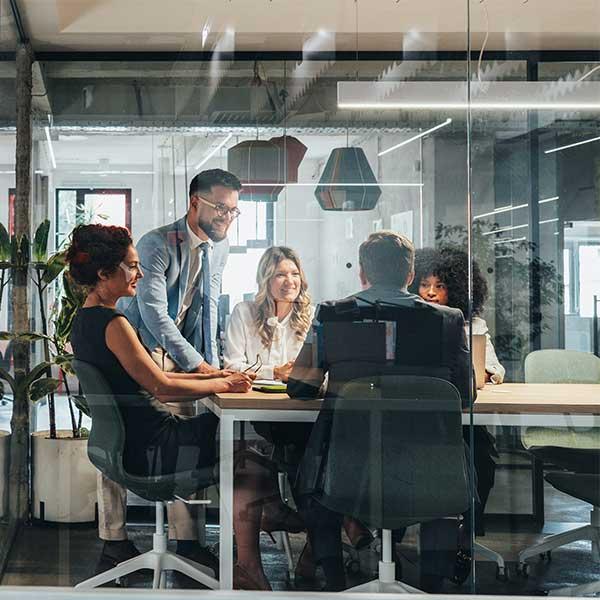
Upon entering the 2026 workplace, Mira’s first revelation would be the nearly empty office floor. She’d see a half-full office, with colleagues logged in from their homes, local co-working spaces, or even other countries. In 2016, commitment was measured by face time at your desk; flexible working was a rare treat or one-off exception. By 2026, ‘the office’ is more of a concept than a location and the idea of being chained to a single desk from nine-to-five seems archaic. Collaboration is intentional, not just proximity based. Teams fluidly blend in-person moments with seamless digital interaction, valuing trust and output over hours clocked on the premises.
Meetings now mix actual and virtual participants without missing a beat, and onboarding new colleagues happens as easily from Manchester as from Madrid. Spontaneous chats at the watercooler now take place in dedicated Teams channels, yet the focus remains on building meaningful connections.
Tech overload or tech utopia?
The digital leaps since 2016 would bewilder Mira. Back then, workplace tech was defined by a transition towards cloud computing, increased mobile connectivity, and the early adoption of collaboration tools. Fast-forward: her 2026 colleagues juggle a myriad of platforms daily – Microsoft Teams, Slack, Zoom, Google Meet, virtual whiteboards, and cloud-based everything. Artificial intelligence no longer feels like science fiction but is a game-changing reality: AI schedules meetings, drafts reports, analyses data, and even reviews documents for tone or bias.
And yet, with all this progress, the biggest shift isn’t just in the tools themselves, it’s in the pace. Work now moves faster, expectations are higher, and digital skills aren’t optional but essential. For Mira, stepping into 2026 would be like stepping into a workplace that’s both familiar and utterly transformed: the same goals, the same pressures, but powered by technology she once thought belonged to the future.
Microcultures and changing mindsets
Beyond the obvious, some changes are more subtle but no less profound. Mira notices that individuality is genuinely celebrated. Dress codes are looser, rituals like digital coffee breaks or themed office days boost connection. Team culture is bespoke, shaped by the people present rather than handed down top-down.
Etiquette has evolved too. The era of formal greetings, reply‑all mishaps, and frantic landline juggling is long gone. Today’s communication blends professionalism with humanity: emoji reactions are perfectly acceptable in serious emails, quick voice notes replace long threads, and hybrid meetings accommodate real life - from doorbells and dogs barking to background chatter. The expectation isn’t flawless presentation, but presence. There’s more warmth, more humour, and a shared understanding that work-life balance is key to productivity and wellbeing.
Wellbeing takes centre stage
Mira would be stunned by how deeply wellbeing is now woven into everyday working life. The token office fruit bowl and once‑a‑year wellbeing day have been replaced by meaningful support: real mental health resources, flexible working patterns designed with neurodiversity in mind, dedicated wellness hours, and widespread access to financial, physical, and emotional guidance. Conversations, once whispered, about menopause, neurodiversity, mental health are now open, supported, and normal. Psychological safety isn’t an aspiration or a slogan anymore; it’s something people genuinely feel.
The rise of the ethical workplace
The green initiatives Mira encounters aren’t just recycling bins or bike racks anymore, it’s the rise of a new expectation: that businesses must do good, not just do well. Environmental, social, and governance (ESG) has moved from a niche acronym to a mainstream measure of how organisations behave, and employees now expect their employers to stand for something meaningful. Mira quickly sees that people want to work for companies with a conscience, where sustainability, fairness, and ethical practice are as important as profitability.
B Corps, once rare, have become a badge of honour. More organisations are choosing to commit to rigorous social and environmental standards, proudly weaving purpose into their business models. In parallel, the growth of PhilCo’s and mission-led companies means that doing the right thing isn’t a side project, it’s part of everyday operations, shaping decisions from procurement to leadership behaviour.
For Mira, what’s most striking is the mindset shift: environmental and ethical progress isn’t a marketing exercise or a corporate social responsibility (CSR) report footnote. It’s a shared responsibility, a cultural norm, and a source of genuine pride celebrated as openly as client wins or financial results.
So… would Mira survive 2026?
Standing in the middle of a 2026 workplace, Mira would probably feel a mix of awe, confusion, and excitement. Some things would be instantly familiar: the pressure to deliver, the buzz of collaboration, the thrill of doing meaningful work. But almost everything around those fundamentals - the tools, the culture, the expectations, the values - has shifted in ways she could never have predicted in 2016.
She’d see a working world that moves faster but cares more. One where technology removes barriers instead of creating them. Where people are trusted to work how and where they’re at their best. Where wellbeing, ethics, and individuality aren’t HR slogans but shared commitments.
The last decade didn’t just introduce new systems and tools. It reshaped mindsets, rewrote norms, and rebalanced priorities. If 2016 Mira walked into your organisation today, she might feel like a time traveller at first, but she’d also recognise something important: this is a version of work that people have been striving toward for years. A workplace built not only for productivity, but for people.
If you're looking for a talented employee to join your team or seeking a new opportunity yourself, get in touch with a specialist consultant today.